
.webp)
How to Find an App Developer in 2026 (Without Wasting Your Budget)
Discover practical tips and essential steps to find the right app developer for your project. Start your journey to success by reading the guide now.

To understand how to find an app developer, start by defining your app idea, required online platforms, and budget. Then explore trusted sources like Clutch, referrals, and app development companies with proven case studies. Compare expertise, communication, and process, and always validate reviews, timelines, and team experience before choosing a partner.
In this article, you’ll learn exactly how to find an app developer in 2026 without wasting your time or budget. We’ll walk step-by-step through how to define your requirements, where to search, how to shortlist candidates, what red flags to avoid, and how to outsource app developers who can actually deliver a working product.
Why finding the right app developer matters
Even though the number of software developers is constantly growing, finding app developers is a considerable challenge and responsibility.
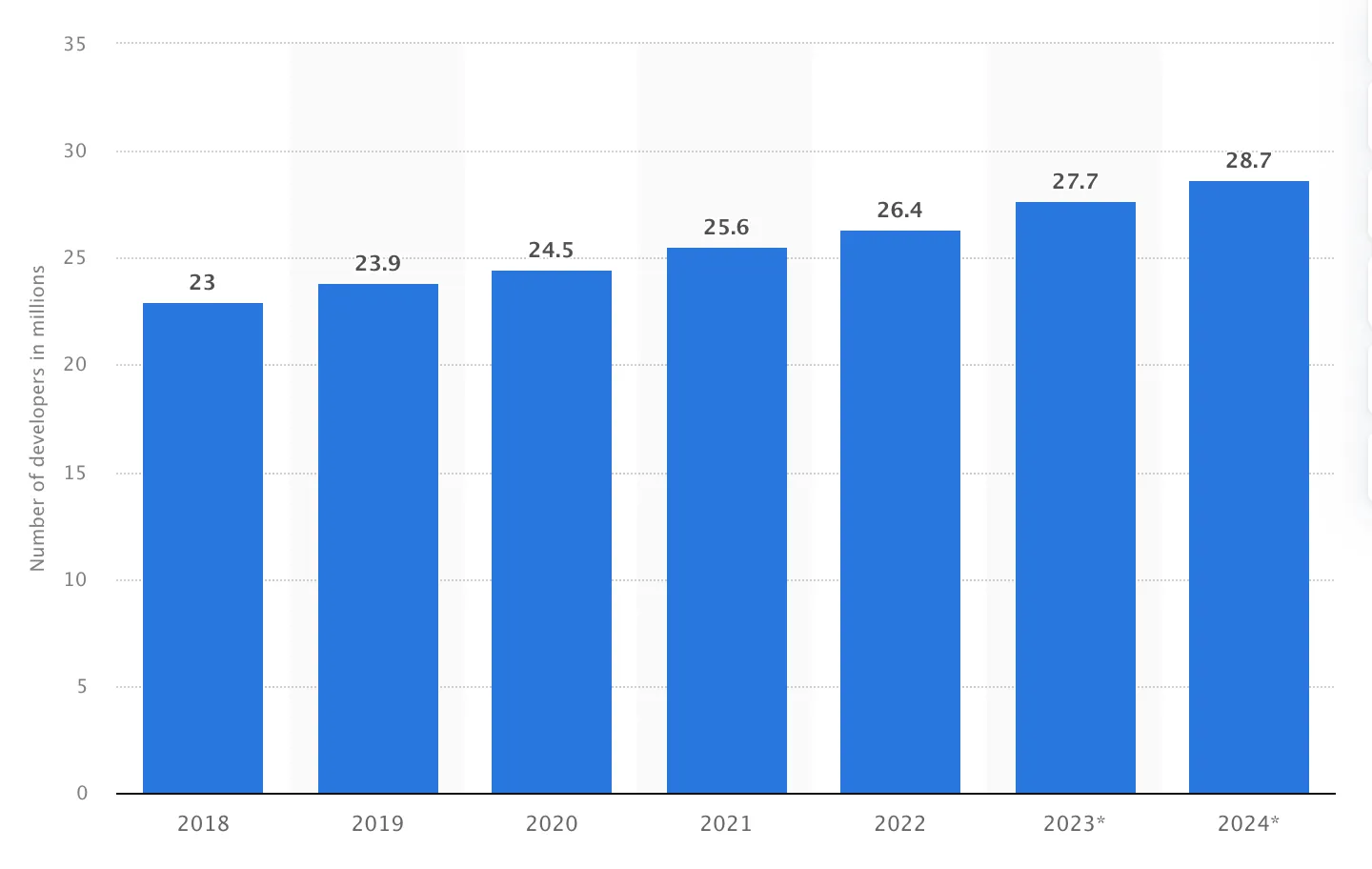
The business case for investing in mobile apps is stronger than ever. Industry research shows that app conversion rates are up to three times higher than mobile websites, while apps account for more than 70% of mobile sales for retailers that operate both channels. With stakes that high, choosing the wrong development partner can cost you not just time and budget — it can cost you the revenue your app was supposed to generate.
Choosing the right app developer or integrating with your existing team is one of the highest-stakes decisions in the entire app development process. Many founders learn this the hard way. One startup hired a cheap freelance app developer—and ended up with missed deadlines, buggy screens, and an app idea that never made it to the app store. Another team spent a full year working with the wrong app development company, only to realize they still didn’t have a real MVP, no documentation, and no path forward.
These situations happen because the developer you choose directly affects everything: code quality, speed, scalability, compatibility with mobile devices, long-term maintenance costs, and the overall project success. A truly reliable app development partner doesn’t just “develop apps”—they bring product thinking, guide your decisions, and help you align technology with your business goals.
At Empat, we’ve seen both sides: rescuing complex projects after failed attempts with the wrong teams, and launching successful mobile applications with the right mobile application developers who understand the whole development process, from idea to release.
This is why understanding how to find an app developer is very important. It deals with not just building the first version, but protecting your timeline, budget, and the future of your product.
Get clear on what you’re building before you start searching
Before you can find mobile app developers or decide how to hire an app developer, you need full clarity on what you’re actually building. This is your mini-workshop stage—getting the essentials down so you can spot the right app developers later and avoid teams that aren’t a fit. Clear project requirements directly influence budget, timelines, and the type of app development team you need.
Define your app’s goal and target audience
Start with the two most important questions every founder skips:
- What problem does your app solve?
- Who is it for—what segment, what situation, what need?
- Is it an internal tool (for employees) or an external product (for customers)?
A strong definition helps you find app developers with the right technical expertise and domain experience (fintech, healthcare, logistics, education, etc.).
Examples:
- “A mobile banking app for Gen Z users.”
- “A booking app for beauty salons.”
- “An internal logistics-tracking tool for warehouse teams.”
Each example requires very different development tools, programming languages, compliance rules, and even project management approach. That’s why clarifying the product upfront is essential before hiring mobile app developers or choosing an app development company.
Decide platforms (iOS, Android, web, cross-platform)
Next, choose where your mobile app will live and ensure it’s compatible with various mobile devices . The right choice affects cost, timeline, and the skills you need when you hire developers for startups.
Main options:
- Native iOS or Android – ideal for high-performance features, deeper hardware integrations, or if you need a polished native app experience.
- Cross-platform apps (Flutter, React Native) – faster to build, often more budget-friendly.
- Web app or PWA – good for early validation or when budgets are tight.
Decision hint:
If you’re testing the market or building an MVP, cross-platform is often enough.
If you’re building AR features, heavy graphics, advanced sensors, or device-specific functionality, native android app development or hiring iOS developers is usually better.
This decision will dictate the expertise you look for in your mobile app development team—whether you need android developers, iOS engineers, or a team experienced in mobile development across both platforms.
Outline your MVP scope, budget, and timeline expectations
Now, translate your idea into something actionable for an app developer team.
MVP means the smallest set of features that delivers real value to users—nothing extra. This keeps your software development solutions costs realistic and speeds up your time-to-market.
Create three short prep items:
- Feature list: separate must-haves (core value), nice-to-haves (later), and future features.
- Rough budget range: think in brackets, not exact numbers (e.g., $20–40k).
- Timeline expectations: when do you want your MVP live? (e.g., “4–6 months”).
Setting these helps any software development company or software outsourcing team understand whether they can realistically handle your entire project.
Mini checklist: are you ready to start searching for mobile app developers?
- ✔ Problem & audience defined
- ✔ Platforms chosen (iOS, Android, cross-platform, web)
- ✔ MVP feature list
- ✔ Budget range
- ✔ Rough timing
Once these are clear, you’re finally ready to start finding and hire app developers, comparing talent, and evaluating which app development services or mobile development companies fit your product, timeline, and business goals.
Check out our blog to learn how to outsource web development.
Choose the collaboration model that fits your stage
Before you hire anyone, you need clarity on how you want to work. Your collaboration model directly affects budget, timelines, and the quality of your final product. Below are the three most common options—and how to choose the one that fits your current stage.
Freelance app developers
Best for:
- Small side projects
- Very limited budgets
- Simple apps or specific one-off tasks (e.g., integrations, UI updates)
Pros:
- Lower upfront cost
- Flexible engagement
- Good for isolated tasks
Cons:
- You manage everything: roadmap, communication, QA, deadlines
- Higher risk if a freelancer disappears or gets overbooked
- Hard to scale or add missing roles like backend software engineering, web design, QA
Freelancers can be a great fit early on—as long as the scope is small and expectations are realistic.
In-house app developers / an internal team
Best for:
- Companies with a long-term, product-led roadmap
- Startups with stable funding
- Businesses ready to invest in salaries, benefits, HR, and management
Pros:
- Full control and daily collaboration
- Deep product expertise stays within your company
- Highly aligned team culture
Cons:
- Recruitment takes time and money
- Difficult to scale team size as priorities change
- Requires product leadership, engineering management, and internal processes
In-house works best when you already know exactly what you're building and expect continuous development for years.
App development companies / dedicated teams
Best for:
- Teams needing a complete setup (PM, UX/UI, developers, QA)
- Founders who want a long-term product partner, not just task executors
- Businesses that value predictability, a proven process, and post-launch support
Pros:
- Cross-functional team from day one
- Established delivery processes, tooling, and communication standards
- Easy to scale capacity up or down
- Faster kick-off compared to hiring in-house
Cons:
- Higher monthly cost than a solo freelancer
- You need to invest time into selecting the right partner
Where Empat fits in:
- Full-cycle product team: discovery → UX/UI → development → launch → support
- Expertise across fintech, healthcare, marketplaces, SaaS, and EdTech
- A repeatable delivery framework that reduces risk and accelerates time-to-market
Comparison: freelance vs. in-house vs. app development companies
| Criteria | Freelancers | In-house Team | Development Company / Dedicated Team |
|---|---|---|---|
| Cost | Lowest upfront | Highest ongoing cost | Mid to high, predictable |
| Speed to Start | Fast | Slow (months to hire) | Fast (1–3 weeks) |
| Team Composition | 1 person | Depends on hiring | Full cross-functional team |
| Best for | Small tasks, low-budget MVPs | Mature long-term product needs | Startups & companies needing speed, structure, and expertise |
Where to actually find good app developers
Once you know your app idea, target audience, and MVP scope, along with potential for multiple projects it’s time to explore where to find mobile app developers or hire app developers for your project. There are multiple channels, each suited to different project sizes, budgets, and risk levels.
Clutch, GoodFirms, and B2B directories
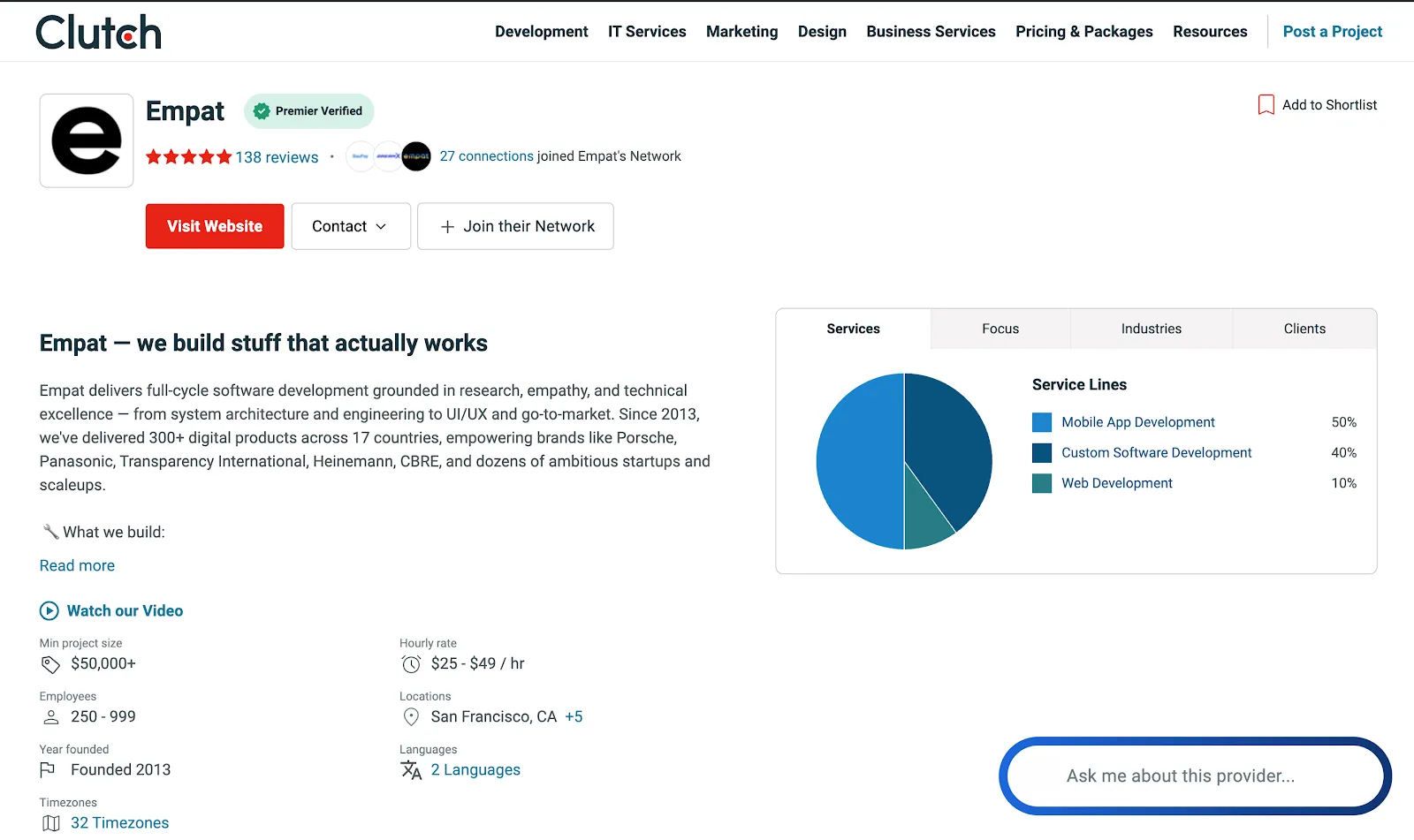
B2B directories like Clutch and GoodFirms are excellent for finding a reliable app development partner or mobile development company. Here’s how to use them effectively:
Steps:
- Filter by Mobile App Development, budget, location, and industry
- Check review count and average rating
- Review case studies to understand their app development process
- Consider company size and team composition
Shortlist criteria:
- 4.8+ rating
- At least 10–20 reviews
- Clear mobile app portfolio showing experience in your app type
Directories help you compare multiple app development companies side by side before reaching out.
Freelance platforms
For smaller scopes or one-off tasks, freelance app developers can be found on platforms like Upwork, Toptal, Fiverr, and similar hiring platforms.
What to look for in profiles:
- Total hours worked and job success score
- Company's portfolio of completed mobile applications
- Repeat clients as a sign of reliability
When to use:
- Testing a single mobile developer or a freelance developer before committing to a larger project
- Small tasks like prototyping, bug fixes, or specific UI design elements
Referrals, communities, and networks
Your personal and professional network can be a goldmine for finding app developers. Ask in:
- Startup communities and accelerators
- LinkedIn groups or Slack channels
- Industry-specific forums
Benefits:
- Warm introductions usually mean higher trust
- Can uncover experienced developers not actively listed on platforms
Tip: Even with referrals, always run your own vetting process—check portfolios, tech skills, and references.
What a “good shortlist” looks like
Once you’ve explored directories, platforms, and referrals, create a shortlist to make evaluation manageable.
Example criteria for a strong shortlist:
- 3–5 app development companies
- 1–2 freelance app developers
- Relevant industry or similar mobile app development experience
- Solid reviews and clear communication from the first contact
Sample shortlist template:
| Company / Freelancer | Location | Hourly Rate Range | Industries | Notable Projects | First Impressions |
|---|---|---|---|---|---|
| Empat | Remote / US | $50–$70 | Fintech, SaaS | Dr. Alexa, Monitree | Responsive, clear process |
| [Freelancer Name] | Remote | $40–$60 | eCommerce | Booking App | Good portfolio, small team |
This method ensures that when you hire app developers or a mobile app development team, you start with a curated, high-quality pool instead of wasting time on unfit candidates.
How to shortlist and evaluate app developers
Once you have a shortlist of app developers or app development companies, the next step is careful evaluation. This ensures you hire the right app developer or mobile app development team who can turn your app idea into a high-quality product.
Review companies' portfolios and case studies
Start by examining each candidate’s past work. Look for:
- Apps similar in complexity or industry (fintech, healthcare, SaaS, eCommerce, etc.)
- Evidence of business outcomes—e.g., increased signups, engagement, or revenue
Good signs to watch for:
- Named clients (where possible)
- Screenshots, UX flows, and metrics showing user-friendly interfaces
- Projects demonstrating experience across android app development, development for iOS devices, and cross-platform apps
For example, Empat showcases case studies with clear MVP development, mobile app development services, and results that highlight app performance and project success, without disclosing sensitive client data.
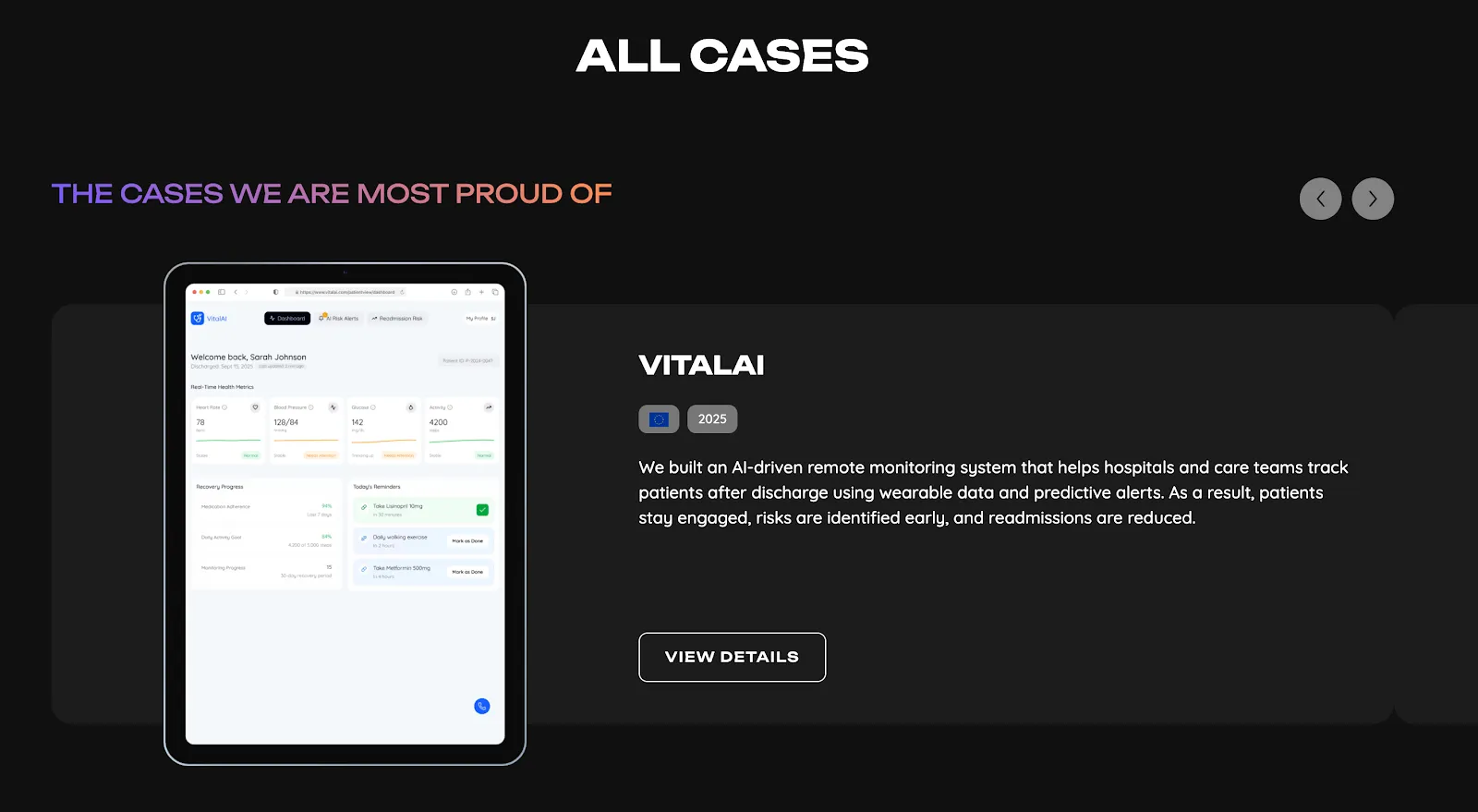
Click to review Empat's case studies
Check technical skills & tech stack fit of mobile application developers
When you hire a full-stack developer or, for example, hire AI developers, a technical skills must align with your project’s needs:
- Experience with the platforms you’ve chosen (native iOS/Android or cross-platform)
- Backend and integration expertise (payments, APIs, cloud services)
You don’t need to be technical yourself. Ask:
- “What tech stack would you choose for this project and why?”
- “What similar mobile applications have you built using that stack?”
This ensures the app developer team can handle your development process and deliver reliable mobile app development.
Verify credibility: reviews, references, testimonials
Don’t rely solely on star ratings. Dig deeper:
- Read reviews to understand the story behind the score
- Ask for 2–3 references and questions such as:
- “How did the team handle unexpected changes?”
- “What was communication like week to week?”
- “Would you hire them again?”
This step is crucial when hiring mobile app developers or a software development company, ensuring you choose a reliable app development partner.
Assess their communication and process
Strong communication is key for complex projects. During calls, ask about:
- Discovery & scoping process
- Frequency and channels of communication
- Who your main point of contact will be
- How the team handles delays or changes
Red flags:
- Vague or evasive answers
- Overpromising on timelines without understanding requirements
At Empat, the process is structured around:
- Weekly sprints with demo sessions
- Dedicated project manager as your main point of contact
- Transparent updates for the entire project
This approach ensures you get predictable results, high app performance, and a user interface that meets your business goals.
Understanding cost, timelines, and contracts
Knowing what drives development costs and how different collaboration models work is essential before you hire remote app developers. Understanding these factors helps you plan realistically and avoid surprises during your mobile app development process.
What influences the cost of hiring mobile app development
Several factors determine the cost of mobile app development:
- Feature complexity – More advanced features, such as AR, AI, or in-app payments, increase cost
- Number of platforms – Native iOS, Android, or cross-platform apps each affect budget
- Integrations – Payments, maps, third-party APIs, or existing systems
- Design depth – Basic UI vs. custom user interface and user-friendly interfaces
- Seniority of the team – Experienced mobile developers or a full app development team cost more
Tip: Cost without context is misleading. A simple MVP may cost significantly less than a complex app, but both require careful planning to ensure success.
Hourly vs fixed-price vs dedicated team
Hourly:
- Good for evolving scopes, small tasks, or testing features
- Risk: Costs can grow if poorly managed
Fixed-price:
- Works when project requirements are clearly defined
- Risk: Scope changes may lead to conflicts or delays
Dedicated team (Empat’s approach):
- Ideal for ongoing mobile development and complex projects
- Offers flexibility, iterative improvements, and team continuity
- Combines developers, graphic designers, QA, and project managers under one process
Empat’s teams often operate in a dedicated team model, providing a predictable workflow, transparent timelines, and ongoing support after launch.
Contracts, NDAs, and IP ownership
Protect your investment by clarifying legal and contractual aspects before hiring:
- You should own all code, assets, and IP once paid
- NDA if confidentiality is important
- Milestone-based payments to reduce risk
- Clear termination conditions
Mini checklist for contracts:
- ✅ IP clause included
- ✅ Payment schedule defined
- ✅ Scope and change process agreed
- ✅ Maintenance/support terms specified
Following this structure ensures your app development process stays on track and your mobile app developers deliver according to your expectations.
Red flags and common hiring mistakes
Hiring the right app developers can make or break your mobile app development process. Understanding warning signs and common founder mistakes ensures you get a reliable mobile app development team and avoid costly setbacks.
Red flags in developers and agencies
Watch out for these warning signs when evaluating app developers or app development companies:
- Unrealistic promises – “We’ll build your app in 2 weeks dirt cheap.”
Why it matters: Such claims usually lead to rushed work, buggy mobile applications, and low app performance. - Refusal to share portfolio or references
Why it matters: Without proof of past app development projects, you cannot verify technical skills or experience in your industry. - No written proposals / vague estimates
Why it matters: Lack of clarity can create misunderstandings, scope creep, and unexpected development costs. - Poor communication in early stages
Why it matters: Early communication issues often persist, causing delays in the post development process and missed milestones.
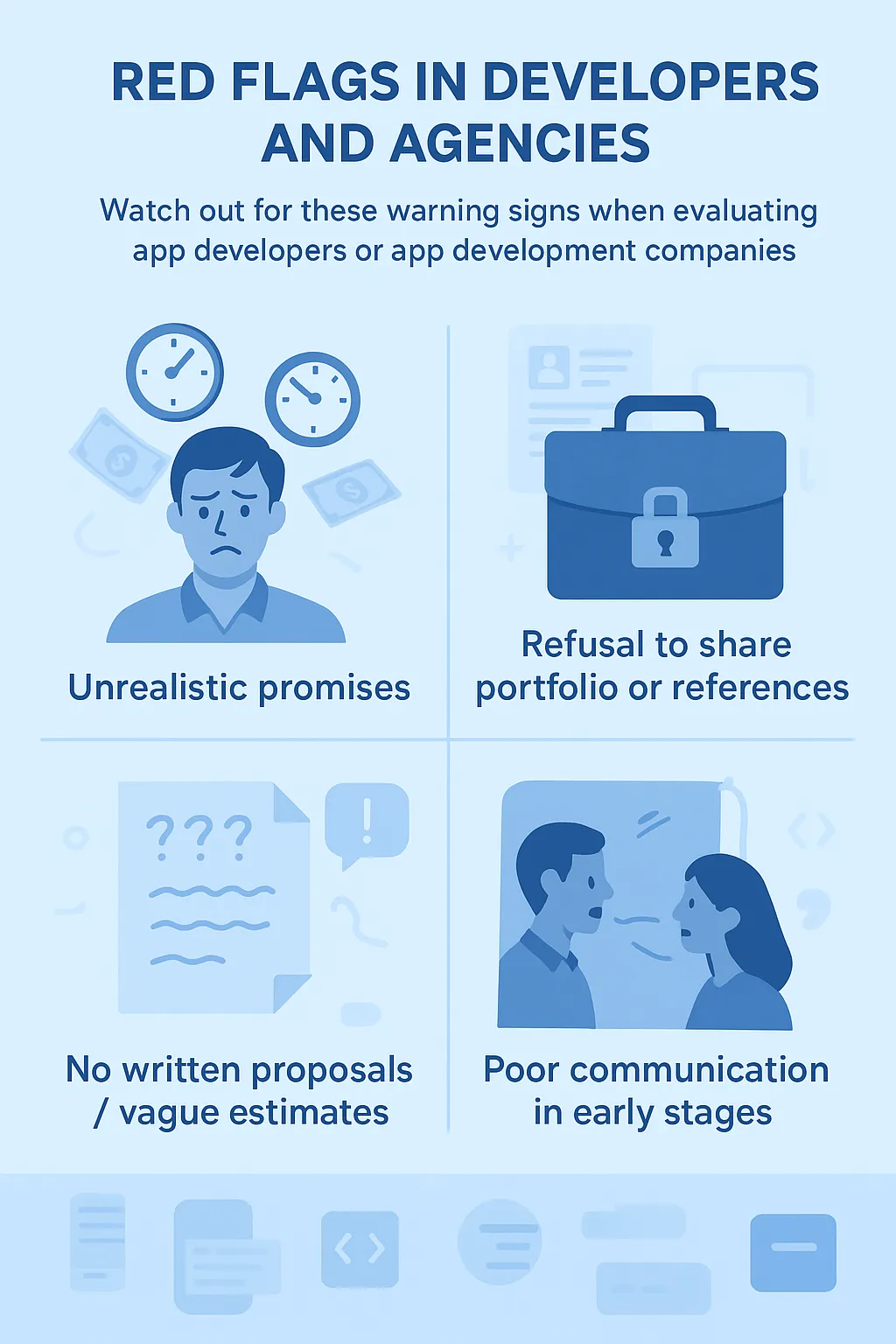
Pay attention to how responsive and clear they are in the first few conversations—it’s often a predictor of long-term collaboration.
Mistakes founders commonly make when hiring mobile app developers
Founders often make avoidable errors when hiring mobile app developers or building a mobile development team:
- Choosing solely on price
Better alternative: Evaluate experience, portfolio, technical expertise, and track record alongside cost. The cheapest option is rarely the most effective. - Starting without a clear scope
Better alternative: Define project requirements, MVP features, target platforms, and key programming languages before starting your search. - Not asking about post-launch support
Better alternative: Confirm ongoing support, bug fixes, updates, and team availability after launch. This ensures your mobile app stays functional and competitive. - Not aligning expectations on communication
Better alternative: Set clear communication channels, reporting frequency, and points of contact from day one to avoid delays and misunderstandings.
Addressing these mistakes upfront significantly increases the likelihood of project success and a smooth app development process.
What working with Empat looks like
After learning how to find app developers and what to watch for, partnering with a full-service app development company like Empat can streamline your mobile app development process and reduce risks.
Empat in 60 seconds
Empat is a software development company specializing in custom web and mobile apps. With over 300 projects completed for startups, scale-ups, and enterprises across 12 industries, including clients backed by Y Combinator and Forbes 30 under 30 founders, Empat combines product-focused thinking with practical execution. Their teams are designed for startups software development and growing businesses seeking a reliable mobile app development team that can handle complex projects and deliver user-friendly interfaces.
Our process from idea to launch
Empat follows a structured, collaborative app development process that aligns with your business goals:
- Intro call & discovery – Understand your app idea, target audience, and project requirements
- Clarifying scope & priorities – Determine MVP features, platforms (iOS, Android, cross-platform), and budget range
- Proposal & timeline alignment – Set realistic milestones and development costs expectations
- Kickoff with a dedicated team – Cross-functional mobile app developers, designers, QA, and project managers start the work
- Iterative development & regular demos – Receive updates, provide user feedback, and track app performance
- Launch, ongoing support, and scaling – Continue improving the mobile application, add features, and maintain stability
Throughout, Empat emphasizes transparency, predictable communication rhythms, and collaborative decision-making to maximize project success.
When Empat is the right partner for you
Empat is the right choice if:
- You want a partner, not just an app programmer
- You care about long-term scalability and maintaining user-friendly interfaces, not just a quick hack
- You’re ready to invest in a serious product and work with an experienced mobile app development team, rather than a low-cost freelance developer
“If that sounds like you, share your idea with us and we’ll help you figure out the best way to build it.”
FAQ
How do I find a reliable app developer for my startup?
To find a reliable app developer, start by defining your app idea, target audience, and platform needs. Shortlist candidates or app development companies based on portfolio, case studies, and reviews. Check their technical skills, project management process, and experience with similar apps. References and sample projects help verify credibility before you commit.
What is the best place to find app developers?
You can find mobile app developers through multiple channels:
- B2B directories like Clutch or GoodFirms for vetted companies and reviews
- Freelance platforms such as Upwork or Toptal for individual developers or small tasks
- Referrals and networks through startup communities, LinkedIn, or accelerator programs
- Job boards if you’re hiring in-house developers
A mix of these approaches ensures you discover experienced developers who match your project requirements.
How much does it cost to hire an app developer in 2026?
Development costs depend on your app development process, scope, and team type:
- Simple MVP with limited features: lower cost, shorter timeline
- Complex mobile apps with multiple platforms, integrations, and custom UI: higher cost
- Freelancers usually charge hourly, while app development companies often provide dedicated teams or fixed-price projects
Keep in mind that the cheapest option isn’t always the most reliable—investing in a skilled mobile app development team ensures better app performance and long-term scalability.
Should I hire a freelancer, in-house developer, or an app development company?
It depends on your project scope, timeline, and budget:
- Freelancers – good for small tasks, side projects, or cross-platform apps with limited features
- In-house team – ideal for long-term product-led development and companies with ongoing mobile development needs
- App development companies like Empat – best for full-cycle mobile app development, including UX/UI design, backend, QA, and ongoing support
Choosing the right collaboration model ensures a smoother post development process, reliable delivery, and better alignment with your business goals.


