

CTO as a Service Cost: How Much Startups Pay for Fractional CTO Support in 2026
The product is moving. Customers are asking for more. The roadmap is growing. But the company still does not need — or cannot yet justify — a full-time CTO.

Most startup founders reach a point where technical decisions start getting expensive.
The product is moving. Customers are asking for more. The roadmap is growing. But the company still does not need — or cannot yet justify — a full-time CTO.
That is where CTO as a Service comes in.
Instead of hiring a permanent executive, startups can bring in senior technical leadership on a part-time, project-based, or ongoing retainer model. This approach aligns with the broader rise of flexible executive leadership noted by Forbes. The cost is more flexible, the commitment is lower, and the company still gets help with architecture, roadmap decisions, engineering leadership, vendor control, and investor-facing technical strategy.
But how much does CTO as a Service actually cost in 2026?
The short answer: it depends on the scope, seniority, and engagement model. A fractional CTO can cost from $70–$150/hour, while broader CTO as a Service engagements may range from $5,000–$15,000/month for ongoing leadership.
The longer answer is more useful — because two companies can both “hire a CTO as a Service” and pay very different amounts depending on what they need.

What CTO as a Service Usually Includes
CTO as a Service is a flexible model where a company gets access to senior technical leadership without hiring a full-time Chief Technology Officer.
In practice, this can include:
- technology strategy and roadmap planning;
- software architecture decisions;
- codebase and infrastructure audits;
- engineering team leadership;
- technical hiring support;
- vendor and outsourcing control;
- investor due diligence preparation;
- MVP planning and product development oversight.
The role is not the same as hiring a senior developer. A developer builds features. A CTO decides what should be built, how it should scale, what risks need to be avoided, and how the technical roadmap should support the business.
For startups, this distinction matters. A wrong architectural decision, poor vendor choice, or weak engineering process can become much more expensive than the CTO engagement itself.
That is why many early-stage and growth-stage companies use CTO as a Service for startups before they are ready to hire a full-time CTO.
CTO as a Service Cost in 2026
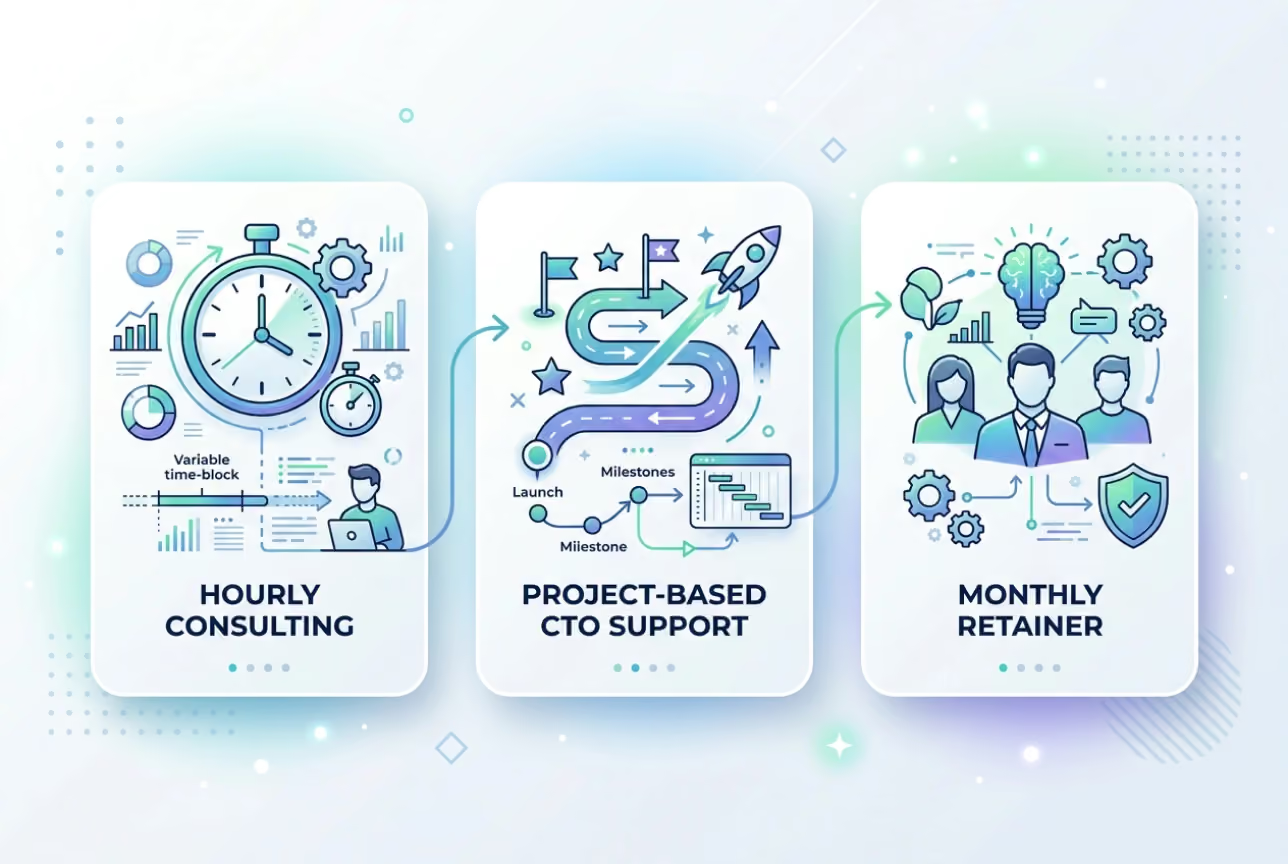
CTO as a Service pricing usually falls into three main models:
These ranges are broad because CTO work can be very different from company to company.
A startup that needs five hours of technical advisory per month will not pay the same as a SaaS company that needs weekly leadership meetings, architecture review, hiring interviews, vendor control, and investor preparation.
The right question is not only “How much does CTO as a Service cost?” but also “What technical decisions do we need this person to own?”
Fractional CTO Cost vs CTO as a Service Cost
The terms “fractional CTO” and “CTO as a Service” are often used together, but they are not always identical.
A fractional CTO usually means a senior technology leader who works with your company part-time on an ongoing basis. This can be 10, 15, or 20 hours per week depending on the stage and workload.
CTO as a Service is a broader model. It may include fractional CTO work, but it can also cover short-term advisory, project-based consulting, interim CTO support, or a mix of strategic leadership and hands-on delivery.
For fractional CTO pricing, the typical range depends on seniority:
A mid-level fractional CTO may be enough for technical planning, roadmap support, and basic team guidance.
A senior fractional CTO is usually a better fit when the company has complex architecture, a growing engineering team, investor due diligence, regulated industry requirements, or a product that needs to scale.
What Affects CTO as a Service Pricing?
The cost of CTO as a Service is not based only on hours. It depends on the level of responsibility.
Here are the main factors that affect the final price.
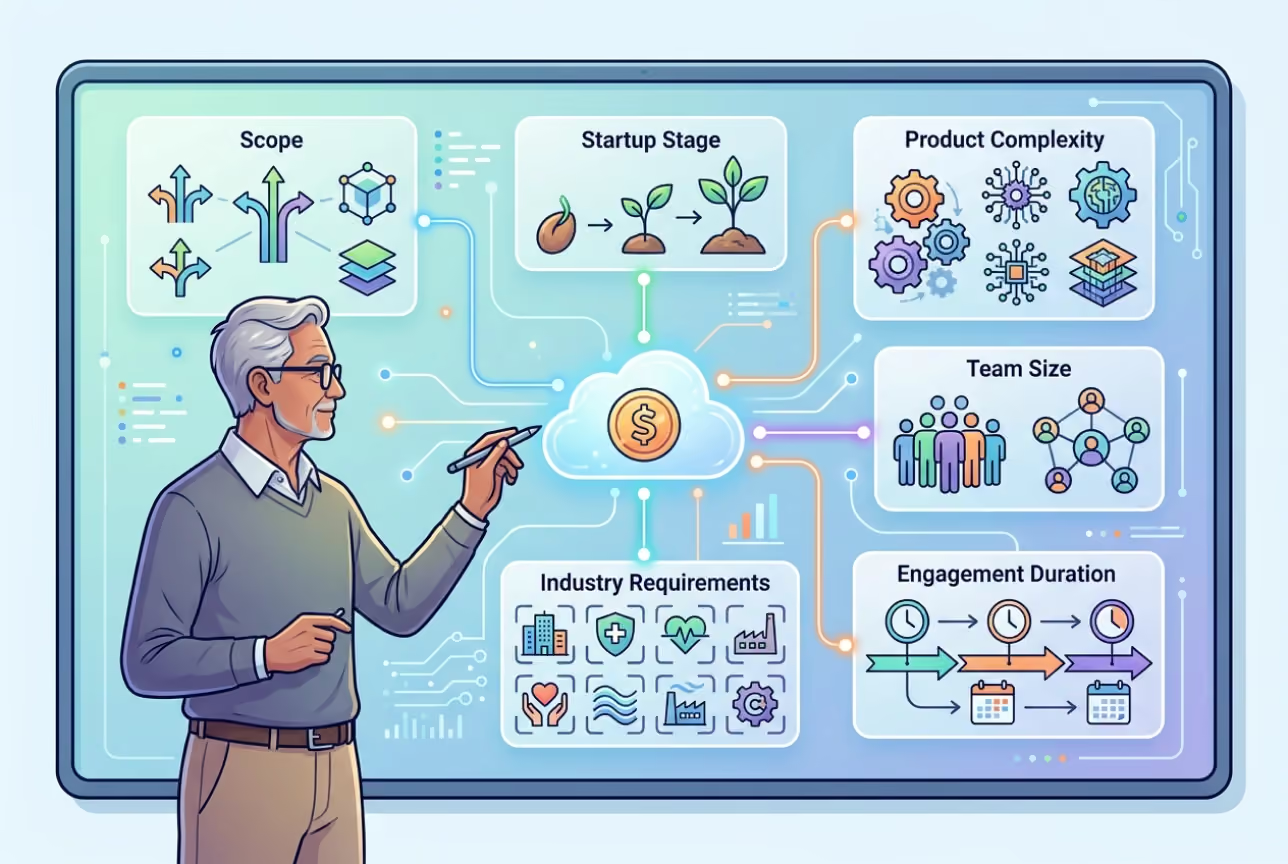
1. Scope of responsibility
A light advisory role is cheaper than full technical ownership.
For example, a CTO who only joins monthly strategy calls will cost less than one who owns architecture, hiring, vendor management, roadmap planning, and investor documentation.
The more decisions the CTO owns, the higher the engagement cost.
2. Company stage
Pre-seed startups usually need help with product validation, MVP architecture, and technical planning.
Seed-stage companies often need stronger engineering processes, hiring support, cloud infrastructure decisions, and technical due diligence.
Series A companies may need a CTO who can prepare the product and team for scale.
The later the stage, the more complex the role usually becomes.
3. Product complexity
A simple web platform does not require the same CTO involvement as a fintech product, healthcare app, AI system, marketplace, or high-load SaaS platform.
More complex products require deeper architecture decisions, stronger security thinking, and more careful planning.
4. Industry requirements
Healthcare, fintech, insurance, legal tech, and other regulated industries often increase the cost of CTO support.
The reason is simple: mistakes in compliance, data protection, payments, or infrastructure design can become expensive later.
A CTO with relevant domain experience can reduce that risk.
5. Team size
If the company has one or two developers, CTO involvement may be mostly strategic.
If the company has a larger engineering team, the CTO may need to set standards, review architecture, improve delivery processes, support hiring, and help managers make technical decisions.
More people usually means more coordination and more responsibility.
6. Engagement duration
Short-term work can be priced hourly or as a fixed project.
Longer engagements often move to a monthly retainer because the CTO becomes part of the company’s leadership rhythm.
For ongoing growth, a retainer is usually more predictable than hourly billing.
CTO as a Service Cost by Startup Stage
Different stages need different levels of technical leadership.

For early-stage startups, the goal is usually not to build a large engineering department immediately. The goal is to avoid technical decisions that block growth later.
That is why CTO as a Service often works well together with product development services. The CTO shapes the technical direction, while the delivery team turns that direction into a working product.
Is CTO as a Service Cheaper Than a Full-Time CTO?
Usually, yes — especially before the company needs daily executive-level technical leadership.
According to the U.S. Bureau of Labor Statistics, computer and information systems managers — a category that includes CTO-related roles — had a median annual wage of $171,200 in May 2024.
CTO as a Service gives startups access to senior technical leadership without turning it into a fixed executive salary too early.
This does not mean a fractional CTO is always the final answer.
At some point, a company may need a full-time CTO. That usually happens when technology becomes central to daily operations, the engineering team grows, and leadership decisions need to be made every day.
But before that point, CTO as a Service can be a more flexible and cost-effective option.
When CTO as a Service Is Worth the Cost
CTO as a Service is worth considering when technical uncertainty starts slowing the business down.
Here are common signs:
- your developers are building, but no one owns the technical roadmap;
- product decisions depend on technical guesses;
- the team is shipping slower as the codebase grows;
- you are preparing for investor due diligence;
- you need to hire engineers but cannot evaluate them properly;
- your cloud or infrastructure costs are growing without clear control;
- you work with an outsourced development team and need stronger technical oversight;
- you are building an MVP and want to avoid expensive architectural mistakes.
In these situations, the cost of CTO as a Service is not only about paying for advice. It is about reducing the cost of wrong decisions.
A good CTO helps the team avoid rebuilding the product, hiring the wrong people, choosing the wrong architecture, or spending months on features that do not support the business goal.
When You Probably Do Not Need CTO as a Service Yet
Not every startup needs a CTO immediately.
You may not need CTO as a Service if:
- the product is still only an idea with no technical scope;
- you already have a strong technical co-founder;
- your team is small and delivery is still simple;
- you only need one developer for a basic website or prototype;
- there are no major architecture, hiring, or scaling decisions yet.
In that case, it may be better to start with product discovery, technical consultation, or MVP planning before moving into a monthly CTO engagement.
The best CTO as a Service engagements start when there is enough technical complexity to justify senior leadership.
How to Choose the Right CTO Engagement Model
The right pricing model depends on what you need the CTO to do.
Choose hourly consulting if:
- you need a quick technical audit;
- you want a second opinion on architecture;
- you need help preparing technical questions for vendors;
- you are not ready for ongoing involvement.
Choose project-based CTO support if:
- you are planning an MVP;
- you need a product architecture plan;
- you are migrating infrastructure;
- you are preparing for investor due diligence;
- you need a defined outcome and clear budget.
Choose a monthly retainer if:
- you need ongoing technology leadership;
- your engineering team needs direction;
- you are hiring developers;
- you are scaling a SaaS or marketplace product;
- technical decisions affect business growth every week.
The monthly model usually works best when the CTO becomes part of the leadership process, not just an external advisor.
How Empat Works with CTO as a Service Engagements
Empat’s CTO as a Service model is built for startups that need both strategy and execution.
The CTO helps define the roadmap, evaluate technical risks, choose architecture, support hiring, and align technology decisions with business goals. When needed, Empat can also support delivery through product, engineering, and design teams.
This matters because many startups do not only need advice. They need someone to connect technical strategy with actual product development.
A typical engagement may include:
- discovery call and technical context review;
- current architecture or product audit;
- CTO involvement plan;
- technical roadmap;
- team and vendor recommendations;
- delivery support through Empat’s engineering team;
- regular leadership syncs.
For startups that are not sure whether they need a fractional CTO, full product team, or another model, the first step is usually a conversation about stage, budget, roadmap, and technical risk.
If you are comparing options, start with CTO as a Service and the broader CTO as a Service for startups page.
The Practical Way to Think About CTO Cost
CTO as a Service cost should not be evaluated only as a monthly expense. It should be compared against the cost of technical uncertainty.

A wrong architecture decision can lead to a rebuild. A weak hiring process can create months of delivery problems. Poor vendor control can turn outsourcing into constant rework. Lack of technical leadership can make the team build fast in the wrong direction.
That is what CTO as a Service is meant to prevent.
For many startups, the best model is not the cheapest one. It is the one that gives enough senior technical leadership for the current stage without forcing the company into a full-time executive hire too early.
FAQ
How much does CTO as a Service cost?
CTO as a Service typically costs $79–$300/hour for short-term consulting, $5,000–$50,000 for project-based work, or $5,000–$15,000/month for ongoing technical leadership. The final price depends on seniority, scope, industry, team size, and engagement duration.
How much does a fractional CTO cost?
A fractional CTO usually costs $70–$150/hour. Mid-level fractional CTOs may range from $70–$80/hour, or around $2,800–$3,200/month for part-time involvement. Senior fractional CTOs usually range from $80–$150/hour, or around $4,500–$8,000/month.
Is CTO as a Service cheaper than hiring a full-time CTO?
In most early-stage cases, yes. A full-time CTO can cost $150,000–$300,000+ annually before equity, benefits, and recruiting costs. CTO as a Service lets startups get senior technical leadership without taking on a permanent executive salary too early.
Can CTO as a Service help with MVP development?
Yes. A CTO can help define the MVP scope, choose the right tech stack, plan the architecture, reduce unnecessary features, and make sure the product can scale after validation. This is especially useful when paired with product development services.


