
Vibecode Rescue
We help startups and product teams recover unstable AI products through software rescue services, code stabilization services, and technical due diligence services. Empat turns fragile builds into products that are safer to launch, easier to scale, and stronger in front of investors or stakeholders.





Since 2013, we delivered
over 300 projects for 23 markets

.svg)




AI Tools we use at Empat





Case study AI
See how Empat helps teams recover fragile products, restore delivery confidence, and move digital platforms toward stable, scalable execution.
%201.avif)

ShredSpots

ShredSpots is not just an app, it was created from a dream to spread the comfortable skating experience among those who practice skating sports. ShredSpots is now a community with 200k+ skaters and 100k+ skating spots.

.avif)
obimy
Obimy, is a mobile application that brings together loved ones who are at a distance from each other. This app has more than 10M downloads on iOS and Android.


HealUa
.avif)
The HealUA app facilitates Ukrainian doctors in seeking expert assistance from colleagues worldwide.

We cover every detail of your entire project for success
We conduct thorough market research and analysis to identify new growth opportunities. We'll also help you validate your ideas and test your assumptions.

We're all set to bring your project to life, no matter the scale! Just share your idea, and we'll take care of the rest with the best possible implementation.
Empat provides mobile app development consulting services designed to deliver innovative solutions, streamline operations, and ensure faster time to market.
Enjoy being ahead of the curve
Check out reviews and press mentions. Short and sweet, find out what we do that customers love us.



Get your Personalized Software cost & time estimates
Generate Personalized Software cost & time estimates.
What's Included in Our AI Product Rescue & Stabilization Services
Technical Due Diligence & Product Assessment
We assess the current state of the product, architecture, code quality, technical debt, security risks, and delivery blockers to understand what is salvageable, what is risky, and what needs immediate attention.
Code Stabilization & Risk Mitigation
We stabilize unstable codebases, patch critical issues, reduce release risk, and restore control over systems that are breaking under real-world use or scaling pressure through code stabilization services.
Architecture Review & Recovery Roadmap
We review the architecture, integrations, dependencies, and infrastructure to define a realistic recovery plan that balances urgency, product value, and long-term maintainability.
AI Product Rescue & Delivery Recovery
We take over distressed AI products, fix critical blockers, replace broken assumptions, and move the build toward usable delivery with senior engineering oversight.
Scalability, Security & Launch Readiness
We address the issues that stop products from scaling or passing stakeholder review, including reliability gaps, weak architecture, unstable integrations, and release-readiness problems.
Post-Rescue Modernization & Growth
Once the product is stable, we support modernization, cleaner architecture, feature recovery, and the next delivery phase so the team can move forward with confidence.
How We Rescue and Stabilize AI Products
At Empat, product rescue is not about adding more developers to a failing build. We use technical due diligence services, code stabilization, and senior engineering control to identify what is broken, reduce risk fast, and restore the product to a state where it can be launched, scaled, or confidently shown to investors.
We audit the current state of the product. We review the codebase, architecture, infrastructure, dependencies, release process, and product risks to understand what is actually going wrong — this software project rescue audit sets the baseline for recovery.

We identify the highest-risk issues first. We focus on the blockers that affect stability, delivery confidence, scalability, security, or investor readiness.
We decide what to stabilize, replace, or rebuild. Not every broken system needs a full rewrite. We define the most realistic recovery path based on time, budget, and product goals.
We stabilize the codebase and delivery flow. We reduce production risk, fix critical issues, restore development control, and make the system safer to change.

We validate the product through technical due diligence. We assess whether the product can support launch, scaling, fundraising conversations, or transition to a healthier delivery phase.

We prepare the product for the next step. That may mean release recovery, stakeholder review, pilot launch, team handoff, or a structured rebuild roadmap.

After stabilization, we help teams modernize the product, reduce technical debt, and move toward a more scalable and predictable delivery model.

Product Rescue & Stabilization Across Key Industries
Healthcare
We rescue healthcare products that struggle with unstable workflows, documentation issues, integrations, scaling pressure, or launch blockers. The goal is to stabilize the build and reduce risk before growth or compliance pressure increases.
Education
We help education platforms recover from brittle code, failing releases, and product logic that breaks under real use. That includes stabilization of learning flows, content systems, teacher tools, and AI-assisted product features.
FinTech
We stabilize fintech products that face architecture risk, weak transaction flows, unreliable integrations, delivery breakdowns, or technical debt that threatens product trust and investor confidence.
Retail
We help retail and commerce teams recover digital products affected by unstable search, personalization issues, workflow failures, scaling bottlenecks, or fragile AI-driven customer experiences.
Need to Rescue an Unstable AI Product?
Work with Empat to audit, stabilize, and recover a fragile product through software rescue services, technical due diligence services, and senior-led delivery recovery.
FAQ
What are software rescue services for AI products?
Software rescue services help recover unstable, delayed, or fragile AI products through audit, software stabilization services, risk reduction, code recovery, and a structured path toward launch or scale.
What is the difference between software rescue and technical due diligence?
Software rescue focuses on fixing and stabilizing the product, while technical due diligence focuses on assessing the product's health, risks, scalability, and readiness for investment, launch, or transition.
Can you stabilize a product without rebuilding it from scratch?
Yes. In many cases, we can stabilize the codebase, reduce delivery risk, and restore control without a full rewrite. The right decision depends on the architecture, technical debt, and product goals.
When does a product need code stabilization services?
A product usually needs code stabilization services when releases are risky, critical flows break often, the codebase is hard to change, scaling introduces failures, or the team no longer trusts the system.
Can this help before fundraising or investor review?
Yes. Rescue and technical due diligence are often useful before investor conversations, acquisitions, or product review because they expose technical debt, architecture risk, and delivery weaknesses early.
Do you work only with AI-native products?
No. We can work with AI-native products, AI-enhanced platforms, and broader software products where AI features, generated code (e.g. from Lovable, Cursor, Bolt, or other AI-coding tools), or unstable integrations create delivery and scaling problems.
What does your technical due diligence include?
It typically includes review of architecture, code quality, infrastructure, integrations, security risks, team practices, delivery process, scalability issues, and the product's readiness for launch or growth.
How do we get started?
The first step is a discovery call. We review the product state, rescue context, business goals, and urgency, then recommend the most suitable path: audit, stabilization, recovery roadmap, or deeper technical due diligence.
Read our blog
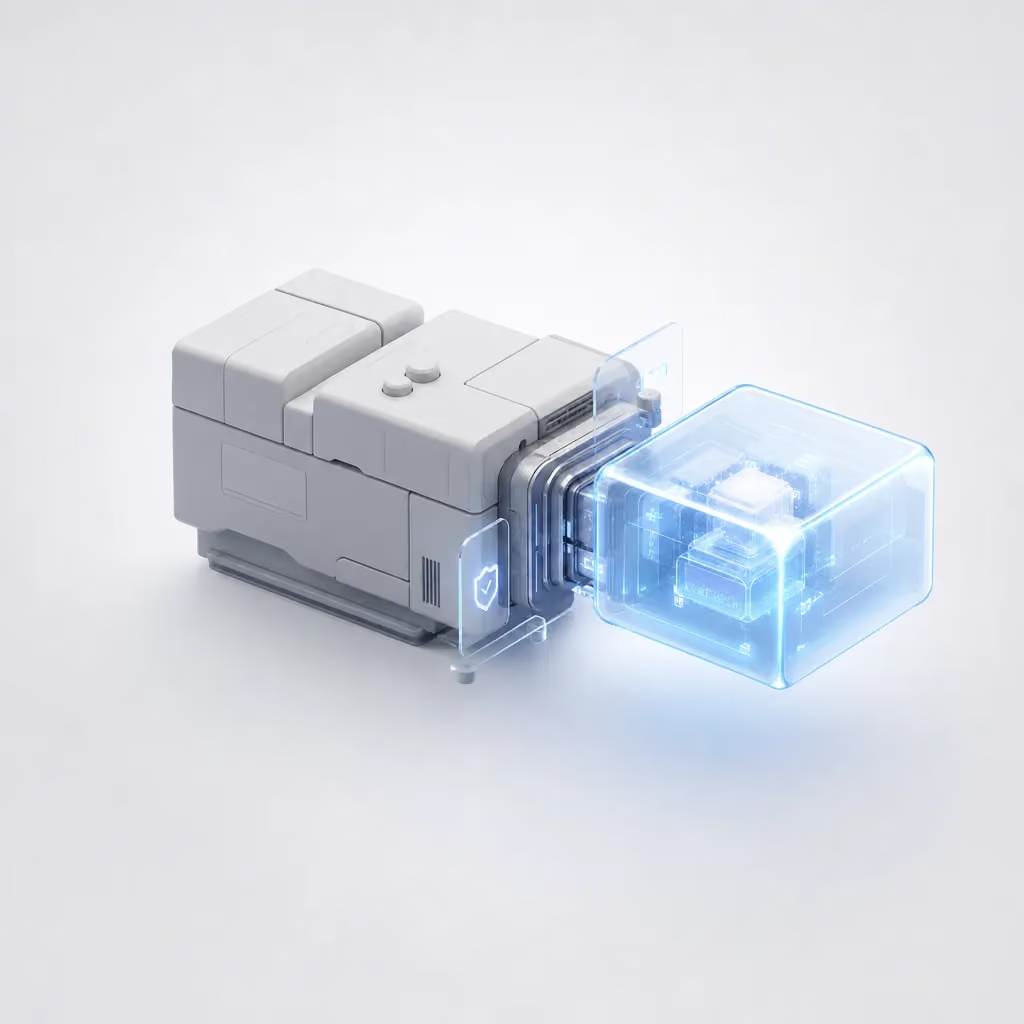
AI Integration Services: Adding AI to Systems You Already Run
AI integration means adding intelligence to systems you already run, which is a different problem from building an AI product from scratch. This guide covers the four integration patterns, what each one touches in your existing stack, where these projects actually fail, and what the work costs.
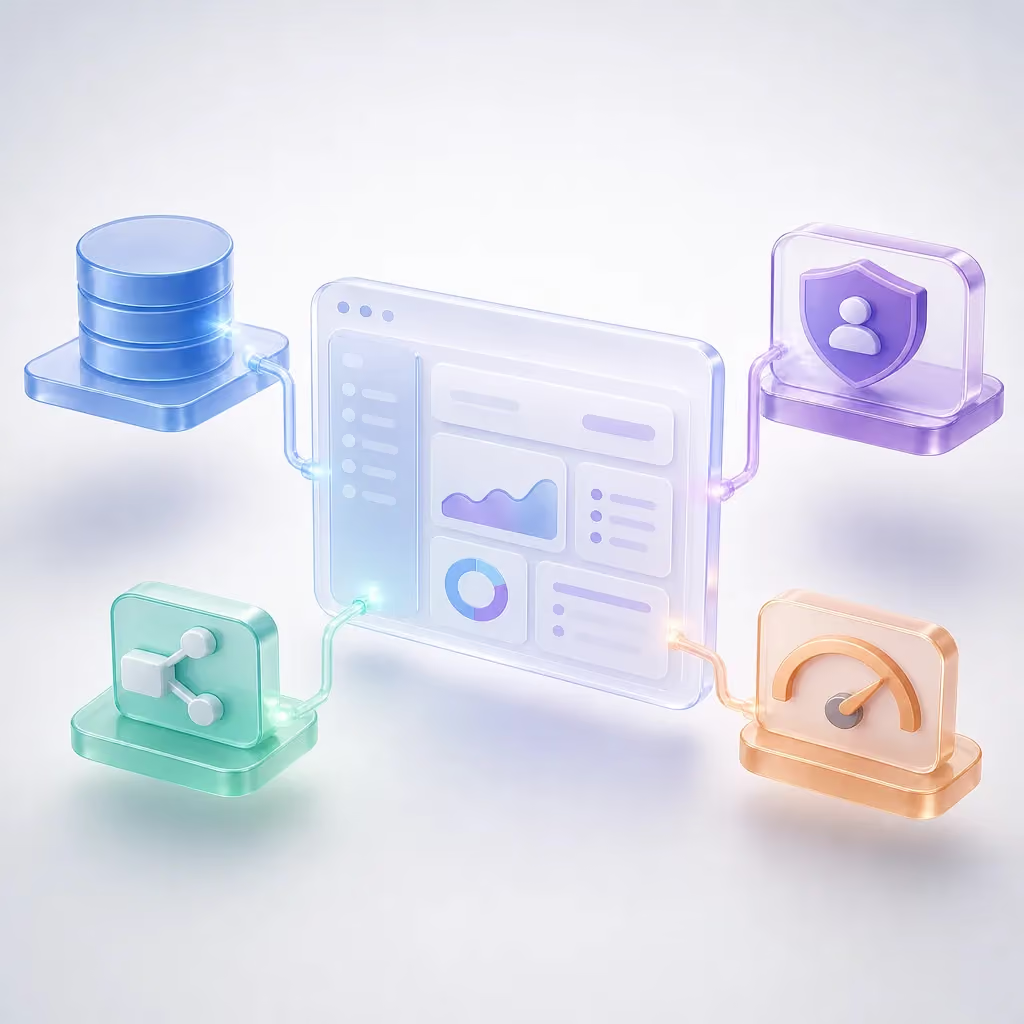
Web Application Development Services: What to Build With, What It Costs, Who to Hire
A web application is not a website with more pages, and pricing one like a website is how projects go wrong. This guide covers what web application development services include, how to pick a stack in 2026, which architecture decisions are expensive to reverse, and how to evaluate a development company.

