

How to Hire a Backend Developer
Need a backend software engineer? Here’s what to look for, how to assess skills, and when to go freelance, in-house, or partner with an agency.

Hiring backend software engineers can be one of the most critical steps in building a strong, scalable product. When you set out to hire backend engineer, you’re looking for the person who will make your application function smoothly behind the scenes — managing databases, APIs, integrations, and server logic that users never see but rely on every second. A skilled backend engineer ensures that your product isn’t just visually appealing but also stable, secure, and ready to grow with your business needs.
In this article, we’ll explore what backend engineers actually do, which skills to look for when hiring, and how to choose the right talent to fit your company’s goals and tech stack.
What do back-end developers do?
A backend software engineer works specifically on the backend of applications. They code for the processes that are happening behind the scenes, similar to the inner workings of a machine that keeps it running smoothly. A front-end developer, however, works on the visual elements that a user sees and interacts with.
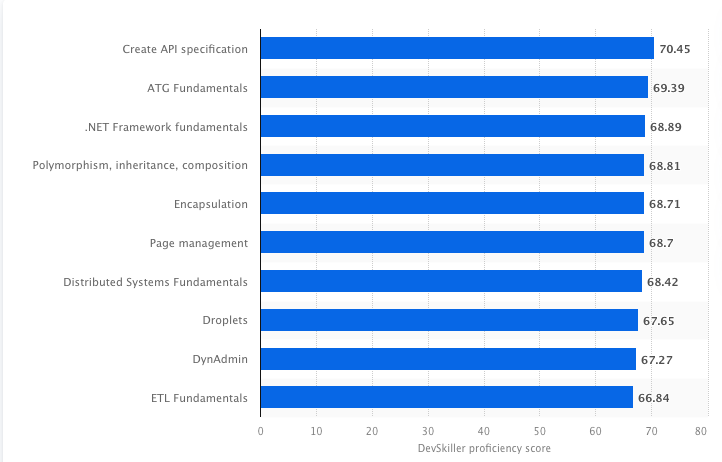
When reviewing job descriptions and job boards to hire backend developers, pay attention to the key points and skills and responsibilities listed. The backend developer focuses on application logic, integration, API, database, domain expertise, and, essentially, without their work, a client would not be able to have a seamless web experience. To better understand how specialized backend solutions work in various industries and meet project requirements, consider reading an article about custom healthcare software development. It covers the most difficult backend solution for the medical industry.
Some typical responsibilities of a back-end engineer include:
- Database management, storing and retrieving data as well as processing through secure and effective means. A backend developer works with databases such as Google Cloud Platform, PostgreSQL, FastAPI databases, MySQL, and MongoDB.
- API development and application programming interface (API) is an instrument through which different applications, systems, and services communicate with each other. The backend engineer develops RESTful or GraphQL APIs that allow frontend-to-backend communication.
- Building dynamic web applications using Node .js, Django, Ruby on Rails, Rails Spring Boot, and Spring Boot.
- Network security implementation involves data encryption, authentication, and access control to ensure sensitive information is protected from cybersecurity attacks.
- Performance optimization is responsible for ensuring proper efficiency and speed of backend processes so that applications can handle high traffic loads and be scalable.
Dedicated back-end developers rely on frontend teams, DevOps engineers, and product managers to help build stable and efficient applications. On the other hand, frontend engineers focus on the user interface and experience, and DevOps developers manage the whole infrastructure and deployment, product managers make sure business-oriented needs are satisfied, and backend engineers integrate all these moving parts.
For businesses, hiring backend developers is critical to ensure functionality, helping ensure systems stay reliable, safe, and scalable. Whether it's an e-commerce website, SaaS application, or artificial intelligence platform, a strong approach to backend operations fosters long-term business scalability and seamless user experience. To better understand how functionality relates to aesthetics in digital products, it's useful to explore web design vs web development
When should you hire backend engineers?

Knowing when to hire back-end developers as AI software engineers can depend on your company's needs and where you are in the development process. Here are some key moments when companies need to hire backend staff and evaluate each candidate carefully.
Building an application from scratch. When you're building your own mobile application, web application, or other cloud software, you need to find back-end developers to help build the proper backend architecture to launch your new application.
Needing to scale an already existing solution. When you have users, you need your application to be able to manage more requests, users, data, and transactions. In this case, your in-house or remote back-end developers can help fine-tune performance and make sure that scalable features are added so the application doesn't go down or crash.
Integrating third-party solutions. When you're integrating payment processing, CRMs, or cloud solutions, you need backend engineers to ensure that your application can do so in a secure and effective manner using API integrations.
Increased security and compliance requirements. When your business involves customer data, payment processing, or medical information, you're going to need heightened security measures to comply with regulations such as GDPR, PCI DSS, and HIPAA. All backend developers need to understand compliance expectations and security practices to eliminate
Different companies have distinct backend needs:
- Early-stage companies – Agile MVP development and rapid unit testing.
- Established companies – Systematic processes for growth.
- Large enterprises – High-level security and scalable solutions.
At Empat, we provide you with the expert backend developers and tools you require for your specific project, from zeroing a build to scaling solutions to integrating with legacy systems. Let's build robust, effective, and scalable backend solutions!
Essential skills to look for in a dedicated back-end developer
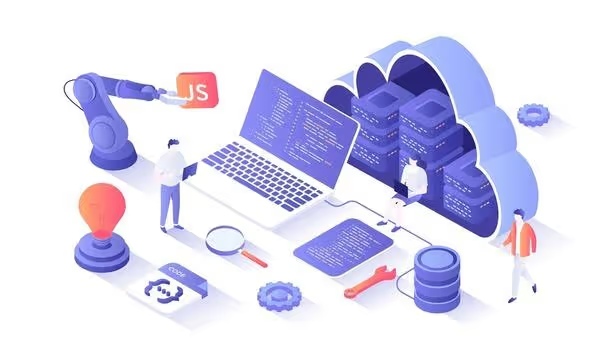
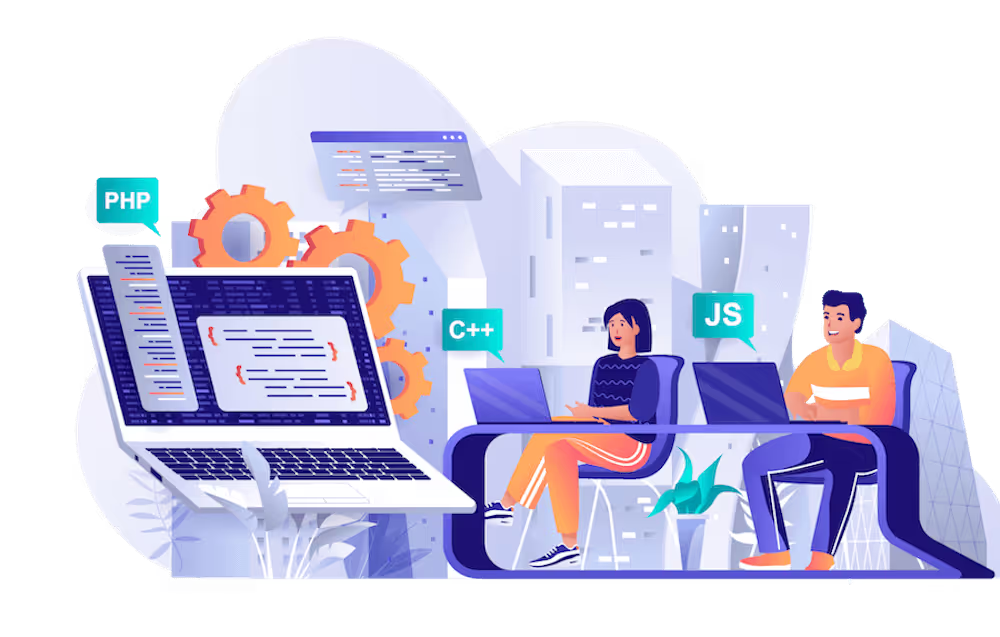
With the growing demand for skilled backend engineers, the deciding factor for hiring one is their moon sign (no, not really). The main factor is, of course, their skill pool. Backend engineers must know backend programming languages (Python, Java, JavaScript, etc.) and frameworks that make it possible for them to work in any field. Let`s discuss some of them.
Programming languages for back-end development
A backend software engineer develops and maintains server-side systems, ensuring apps run smoothly and securely. They handle data storage, optimize performance, and manage backend functionality. Knowing essential programming languages is important for success in this role.
Python
Python is a widely used backend language, popular for its cross-platform functionality and efficiency in artificial intelligence projects. Many backend engineers develop sustainable web applications with Python due to its flexibility and strong software design capabilities. Companies in San Francisco and beyond rely on Python for robust server scripts and backend architecture. This versatility makes Python particularly valuable for companies investing in fintech software development services.
Java
Java is a popular programming language for large backend projects. It's secure, scalable, and easy to integrate, making it ideal for enterprise applications and computer science education.
Node.js
Node.js lets backend engineers use JavaScript on both the frontend and backend. This specific language is ideal for building fast, interactive websites, real-time apps, and event-driven systems.
PHP
PHP remains one of the most established and widely used languages for backend development. It’s particularly common in web applications, powering major platforms like WordPress, Shopify, and Facebook (in its early years). PHP is valued for its simplicity, rich documentation, and compatibility with most web servers. Modern frameworks like Laravel and Symfony have also made PHP development faster, more secure, and easier to maintain, keeping it relevant in today’s backend ecosystem.
Database management: SQL vs. NoSQL
Databases are a critical part of backend development, determining how backend systems manage data storage and retrieval. A backend developer must understand both SQL and
NoSQL databases to select the best tools for a given development process.
SQL databases
Structured Query Language (SQL) databases, such as MySQL and PostgreSQL, are used in the back and front end of development, where technical skills in data consistency and transaction control are essential. They are commonly implemented in financial applications, e-commerce websites, and enterprise systems where a strict data structure is required.
NoSQL databases
NoSQL databases, such as MongoDB, allow backend engineers to handle unstructured data and support cross-platform functions. These databases are well-suited for scalable web applications, such as social media platforms and real-time analytics. Developers interested in big data often specialize in NoSQL for its flexibility in building high-traffic backend structures.
We have discussed many of these programming languages in our blog. You can help yourself make sense of them with a skilled developer by your side, and that`s why we recommend reading our guide on how to outsource software development for startups.
Cloud infrastructure & API development

Modern backend engineers use cloud technologies to build scalable web apps without traditional servers.
Cloud Infrastructure
Services like AWS, Google Cloud, and Azure help backend engineers manage databases remotely, improving security, performance, and lowering costs.
API Development
Dedicated back-end developers create APIs (like RESTful and GraphQL) to smoothly connect frontend developers, users, and external services.
Security best practices for backend engineering
Security is essential for backend engineers to protect data and write secure code.
Data encryption
Encrypting data helps backend developers protect sensitive information and comply with security standards.
Secure authentication
Backend engineers use tools like OAuth, JWT, and multi-factor authentication (MFA) to keep user accounts safe.
Regular security audits
Backend developers regularly conduct security audits and penetration tests to find and fix vulnerabilities before they become threats.
Backend software engineer vs. backend developer: what's the difference?

When looking for backend talent, you'll see terms like backend software engineer used interchangeably with backend developer. However, they are not entirely the same. A backend engineer is responsible for the infrastructure and future of the system. They develop the overarching plan and decide the integration points for the application infrastructure and how to make it most secure, efficient, and scalable as the company grows.
A backend developer implements the features, integrates the APIs, and fixes non-working operations to make sure everything works together. Thus, engineers are the architects of the endeavor, and developers are the contractors who make it happen from the blueprints they provide.
Ultimately, it depends on who's a better match for your assignment. Do you need a person to build an intricate, high-traffic application from scratch who has the foundation to scale and maintain for future expansion intentions? Then, a backend engineer is the way to go. Do you need a person to plug and play or add to existing backend functionality to get the job done without concern for overall system architecture? Then a backend developer is for you. It`s like the difference between mobile design and mobile development. Sounds similar, but it`s actually not.
At Empat, we give you access to both niche backend professionals in whichever direction you decide — from engineers who can build a full-stack scalable solution from scratch to developers who can enhance existing solutions or add simplistic backend features. We find the perfect match for your needs!
Hiring options: in-house, freelance, or outsourcing?
There are 3 common ways of cooperating with developers of any sort. Traditionally, there are the following three:
In-House
However, as executives want to know how to hire remote developers or remote engineers of any type, an in-house hiring solution is the way to go to get started. This methodology appears safe and allows for much more control of development. However, much must be vetted during the hiring process to avoid many pitfalls.
For example, to find back-end developer in-house, many HR issues come into play. This includes HR interviews with the developer, HR's second and third stages of the hiring process with numerous interview questions, hiring finalization, onboarding, contract compliance, and tax implications. For smaller companies, this might extend the development lifecycle considerably as such issues come into play, so it may not be the best way for smaller companies. To explore alternatives and budgeting considerations, consider reading an article about how much it costs to hire an app developer, because it has some tips that can be applied to any hiring.
Hiring a backend engineer in-house is risky for startups or small businesses that do not want to get into a situation they can't get out of when skills don't match up to needs, someone is on sabbatical longer than expected, or if there is a rigid need for developmental process flexibility and retooling.
This might work better for enterprise-level or constantly evolving business needs with set requirements. Yet those who've needed to develop extensive endeavors — whether they're dedicated to web applications or database management systems — might need more flexible solutions. In-house hiring is most effective for those companies that are already stable and can afford to hire a backend engineer, or software developer, or even hire a full-stack developer dedicated to the company in the long term.
This option is best suited for:
- Big businesses that already know what they need.
- Companies are looking to specifically hire back-end developers in-house.
- Organizations with a constant development team shortage.
Freelance

Full-stack engineers can be hired as freelancers, too. These days, with the ease of access to talent and lower cost of hire, companies literally hire freelance backend engineers from sites like Toptal and Guru, where companies get connected with people who have various backend programming and server-side frameworks abilities.
Those deemed freelance backend engineers may be the fastest hire outside a full-time, on-site position. Instead, they have the skills and technical know-how to fulfill specific short-term projects or build small websites without the pressure of an entire dev team. The catch? Most are low on communication skills.
This is precisely why the hiring and vetting process for a freelance backend engineer can be complicated. Companies have to sift through different portfolios and recommendations to find the best backend engineering skill set and personality match for the company. While they might find the ideal candidate for a small job, it's not recommended to use a freelance backend engineer for a complicated data system or multi-software engineering project.
This option works best for companies that are hesitant to get into long-term contracts or those that need niche technical expertise for their time-sensitive project. Freelancers excel in delivering high-quality results for short engagements requiring programmed interfaces, database management systems, and web-based application development.
This option is best suited for:
- Small projects with limited requirements.
- Companies are hesitant to commit to long-term contracts.
Outsourced

Outsourcing backend development provides flexibility, industry expertise, and cost savings. Partnering with companies like Empat gives businesses skilled developers and valuable services without the costs of hiring internally for a seamless software outsourcing experience.
Empat excels in clear communication and empathy, building products that users value. Outsourcing simplifies development by providing experienced engineers to manage coding, databases, and systems efficiently.
With outsourcing, companies access talented backend and full-stack developers for complex websites, apps, and APIs. Empat offers dedicated teams customized to project needs, delivering high-quality results quickly. Look into hiring an iOS developer if you plan on transferring your website to the app format.
Whether you're a startup or a large organization, outsourcing ensures your backend projects are completed effectively and professionally.
This option is ideal for:
- Small businesses with limited resources.
- Startups need cost-effective solutions.
- Big companies are looking for backend development services.
Find out how to outsource web development if you have no experience in this field.
How much does it cost to hire a backend software engineer?
Provide an overview of backend engineer salaries and hourly rates based on location and hiring model. Include estimates for in-house salaries in the US, Europe, and Asia, as well as hourly rates for freelancers. Compare these costs with outsourcing and explain how outsourcing with Empat can be a cost-effective alternative without compromising on quality.
Here is the information about the pricing of hiring a backend engineer based on different metrics. The first one is by region:
| Region | In-House Salary (Annual) | Freelancer Hourly Rate | Outsourced Monthly Cost |
|---|---|---|---|
| United States | $120,000 - $180,000 | $80 - $150 per hour | $6,000 - $12,000 |
| Western Europe | $90,000 - $140,000 | $60 - $120 per hour | $5,000 - $10,000 |
| Eastern Europe | $50,000 - $90,000 | $40 - $80 per hour | $3,000 - $7,000 |
| Asia | $30,000 - $70,000 | $20 - $50 per hour | $2,000 - $5,000 |
Hiring model (monthly rates):
| Hiring Model | Junior Engineer | Mid-Level Engineer | Senior Engineer |
|---|---|---|---|
| In-House (US) | $40 - $60 per hour | $60 - $90 per hour | $100 - $150 per hour |
| Freelancer (Global) | $30 - $50 per hour | $50 - $80 per hour | $80 - $130 per hour |
| Outsourced (Empat) | $20 - $40 per hour | $30 - $60 per hour | $50 - $90 per hour |
Best practices for hiring a backend engineer
The steps involved in hiring a backend engineer include first determining your project requirements. Know exactly what you need to deploy and operate your application in terms of required infrastructure, frameworks, and technologies. Second, decide on your hiring model; you can hire on a full-time basis or engage with a freelancer for temporary projects. Third, determine whether you want to keep the operations in-house or consider outsourcing, which is a more cost-effective, flexible alternative.
After shortlisting candidates, assess their technical skills with coding tasks, system design exercises, and live whiteboard tests. Remember that soft skills matter too — evaluate their ability to communicate effectively with frontend developers, DevOps, and product managers.
Moreover, beyond any technical testing, always ensure to review relevant experience and previous projects, as they indicate how candidates have tackled real-world issues. Extensive project experience means their familiarity with databases, APIs, and security issues. Before a potential mismatch on an international job basis for the long haul, hire for a trial period. This allows you to evaluate your problem-solving approach, adaptability, and work style before making a final decision.
At Empat, we relieve the pressure of the selection process by carefully selecting backend developers ahead of time so companies get pre-trained and seasoned backend specialists who are ready to go when the projects arise.
Why outsourcing to Empat is the best choice
Hiring a backend engineer can be a time-consuming process, but Empat makes it simple by giving businesses direct access to pre-vetted, highly skilled professionals — without the headaches of recruitment. Our team consists of experienced backend engineers who have been carefully selected for their technical expertise, communication skills, and ability to deliver results.
Whether you need full-time, part-time, or project-based developers, our flexible hiring models let you scale your team effortlessly. With cost-efficient solutions and access to global talent, we help businesses hire faster, cut costs, and maintain top-tier quality. Instead of sorting through endless resumes, you get reliable, ready-to-work backend engineers who integrate seamlessly into your processes and drive long-term success.
Final thoughts
A backend engineer is essential for ensuring scalability, security, and performance in your company's digital growth. You can hire engineers in-house for stability, freelancers for short-term projects, or outsource for flexibility and cost savings. Ideal candidates should know Python, Java, Node.js, APIs, and cloud computing, along with good problem-solving skills and a strong knowledge of backend best practices. Evaluate them through coding tests, system design tasks, past projects, or trial periods.
If you're looking for expert backend engineers without a long-term commitment, Empat provides skilled, pre-screened developers with flexible and cost-effective solutions. Whether building MVPs, upgrading systems, or scaling enterprise apps, Empat helps businesses hire quickly, reduce costs, and deliver high-quality results. Contact us today!
FAQ
What does a backend developer do?
A backend developer builds and maintains the core systems that power your website or app — including the server, database, and APIs. They make sure everything runs smoothly behind the scenes so users enjoy a fast, reliable experience.
What skills should I look for when I hire backend developers?
When you hire backend developers, focus on programming languages like Python, Java, PHP, or Node.js, plus experience with database management, API integration, and cloud infrastructure (AWS, Azure, or Google Cloud). Strong communication and problem-solving skills are also key for smooth collaboration.
What’s the difference between a backend and a full-stack developer?
A backend developer specializes in server-side logic, while a full-stack developer works on both the backend and frontend. If your project requires deep technical expertise in databases, APIs, and performance optimization, a backend specialist is usually the better choice.
Should I hire in-house or outsource backend development
If you have an ongoing project that requires constant updates, in-house backend developers are a good fit. However, if you need to move fast or scale flexibly, outsourcing backend development is often more efficient. Companies like Empat offer dedicated backend teams that combine technical depth with cost efficiency.


