

Top Mobile App Development Companies in 2026: Choose the Right Partner
A data-driven comparison of the best mobile app development companies in 2026. Reviews, case studies, pricing, and expert selection tips.

The top mobile app development companies in 2026 combine strong engineering, UX design, and proven case studies across iOS, Android, and cross-platform tech. Below, we compare leading agencies worldwide, including their strengths, industries, and pricing, plus a simple framework to help you choose the right partner.
The mobile app market will surpass $781.70 billion by 2029, making your choice of development partner one of the most important business decisions you'll make. For startups, SMBs, and enterprises, the right team directly impacts your time to market, product quality, user engagement, and long-term business growth.
This guide is designed for founders, tech entrepreneurs, web design agencies, venture funds, and companies scaling their development teams. We've included Empat among the industry's top performers due to its strong track record in fintech, healthtech, and complex B2B products, but this article remains vendor-agnostic and covers diverse options across regions and budgets.
Quick list: top mobile app development companies in 2026
Here's a compact overview of leading mobile app development companies across regions and budgets:
Empat |
Kyiv / San Francisco / London (Global) |
Research-driven fintech & healthtech apps, MVPs |
Small–Medium (MVPs) to Medium–Large (B2B SaaS) |
Radixweb |
USA |
Custom enterprise mobile solutions |
Medium–Large enterprise projects |
Softermii |
Global |
Security-heavy fintech & healthcare apps |
Medium–Large (regulated industries) |
Cheesecake Labs |
Brazil / USA |
Design-led consumer mobile apps |
Small–Medium consumer apps |
Chop Dawg |
USA |
Early-stage startups needing long-term partnership |
Small–Medium (MVP → scale) |
Intellectsoft |
USA / Global |
Enterprise mobile + AI/IoT solutions |
Large enterprise projects |
ScienceSoft |
USA / Global |
SaaS & B2B product development |
Medium–Large SaaS projects |
Goji Labs |
USA |
Strategy-first product design & MVPs |
Small–Medium (strategy + MVP) |
Buildfire |
USA |
SMBs using app builder + custom dev |
Small–Medium |
Dotsquares |
Global |
Cost-efficient, scalable development teams |
Medium–Large |
Apptunix |
USA / Global |
US-centric app development partnerships |
Small–Medium to Medium–Large |
IT Craft |
EU |
Cross-industry development with strong Clutch presence |
Small–Large depending on engagement |
How we selected these mobile app development companies
Most listicles throw together companies without explaining why they matter. We took a different approach. Every mobile app development company below was evaluated using clear, verifiable criteria that actually predict whether your mobile app development project will succeed or become a costly mess.
Verified client results & reviews
We reviewed independent platforms like Clutch, G2, and DesignRush, along with publicly available case studies and long-term client partnerships. Real performance beats promises every time. Authentic reviews and documented results show how a company handles communication, delivery deadlines, and post-launch support. Consistent positive feedback indicates reliability and reduces your risk significantly.
Technical expertise & tech stack
We assessed each company's fluency in native development (Swift, Kotlin), cross-platform frameworks (Flutter, React Native), backend skills (Node.js, Python, Java), and experience with cloud platforms (AWS, Azure, GCP). The right tech stack ensures your app stays maintainable and scalable. Expertise in platform-specific technologies leads to faster, smoother apps and a seamless user experience. Future-proof builds prevent expensive rewrites two years down the road.
Industry and domain experience
We prioritized teams with proven mobile app development projects in fintech, healthtech, logistics, ecommerce, edtech, real estate, and SaaS. Domain expertise speeds development because teams familiar with industry regulations, workflows, and user behaviors shorten the app development process. Experienced mobile app developers anticipate challenges early and design solutions aligned with real business objectives.
Security, compliance & delivery process
For regulated industries, we evaluated adherence to SOC 2, HIPAA, GDPR, secure coding standards, QA automation, CI/CD, and transparent project management practices. Security-first development prevents breaches and compliance issues that can sink your business. Robust processes reduce delays, bugs, and scope creep—especially important for fintech and healthcare apps where mistakes carry legal consequences.
Team size, time zones & engagement models
We compared team capacity, geographical distribution, and available collaboration models—fixed price, time and materials, dedicated development teams, and flexible nearshore/offshore setups. Tech startups may need lean cross-functional squads, while enterprises require large, scalable teams. Overlapping time zones and clearly defined engagement models streamline communication and speed up delivery. The wrong fit here creates friction that slows everything down.
Top mobile app development companies in 2026
Below are the mobile app development companies worth considering in 2026—a mix of global leaders, niche specialists, and strong regional players. Each profile follows the same structure so you can compare teams quickly.
Empat – Best for research-driven fintech & healthtech apps
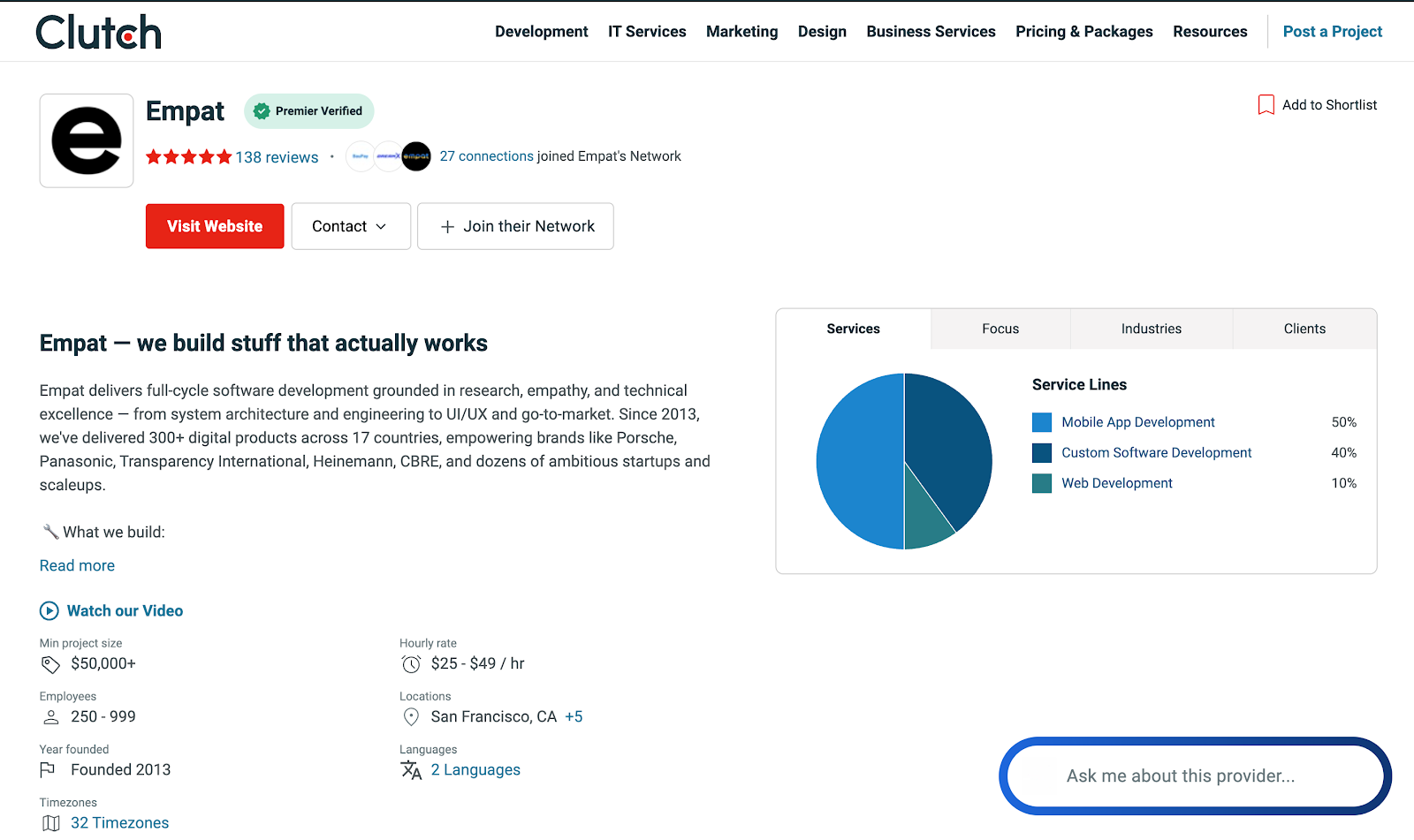
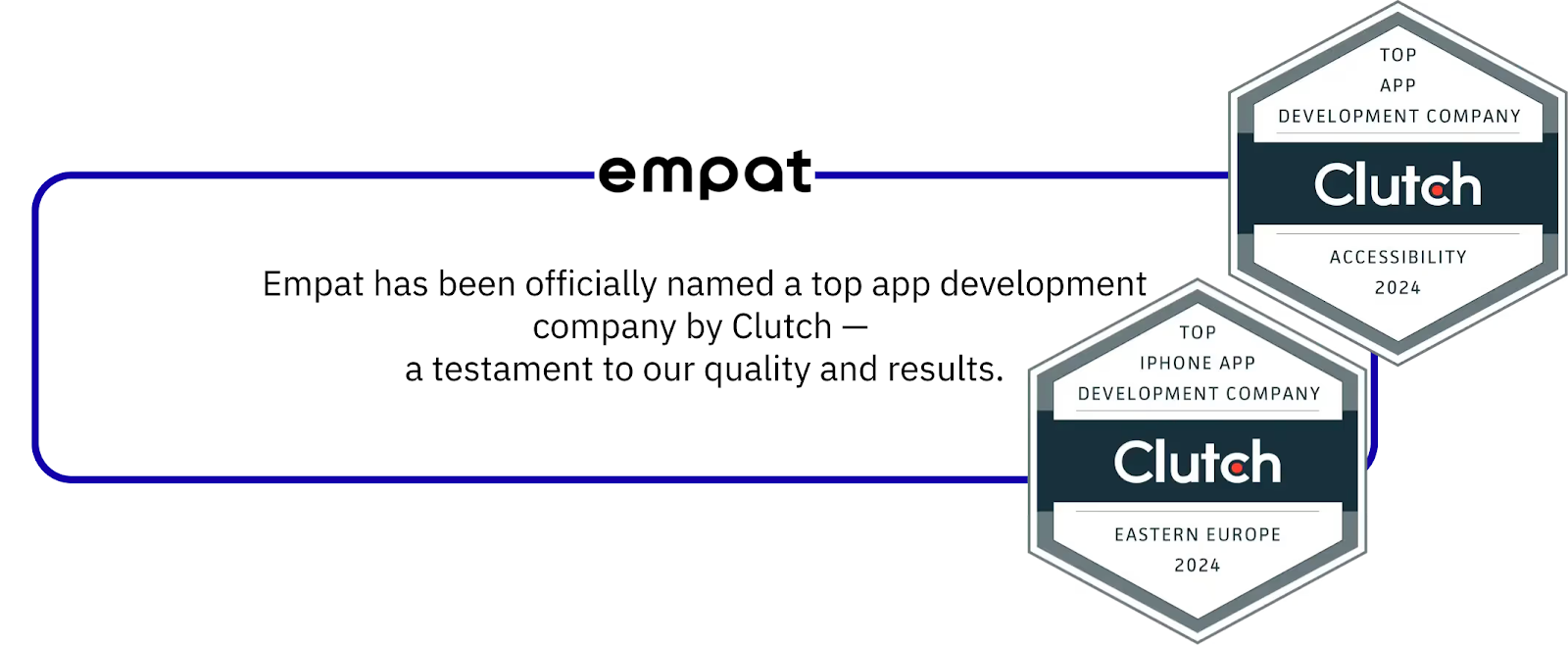
Empat is a full-cycle mobile app development company with offices in Kyiv and San Francisco, delivering mobile and web products for over a decade. The team has shipped 300+ digital products across fintech, healthtech, SaaS, logistics, and marketplaces.
What makes them stand out starts with their research-first approach covering discovery, UX, prototyping, engineering, QA, and DevOps. They bring deep expertise in fintech and healthtech, including HIPAA-ready apps and secure financial platforms. Their cross-platform and native tech stack spans Flutter, React Native, Kotlin, and Swift, while modern backend capabilities include Node.js, Go, Python, microservices, and cloud-native architectures.
Positioned as an AI development company, they can integrate artificial intelligence into mobile apps—from AI-powered recommendations and predictive analytics to LLM-based chat and custom ML models. High client retention and transparent delivery process round out their strengths.
This company makes sense for you if you're building a fintech, healthtech, or data-heavy B2B SaaS product. You need clear strategy, user research, and a predictable development process. You want a long-term partnership with ongoing support post-launch.
Radixweb – Best for custom enterprise mobile solutions
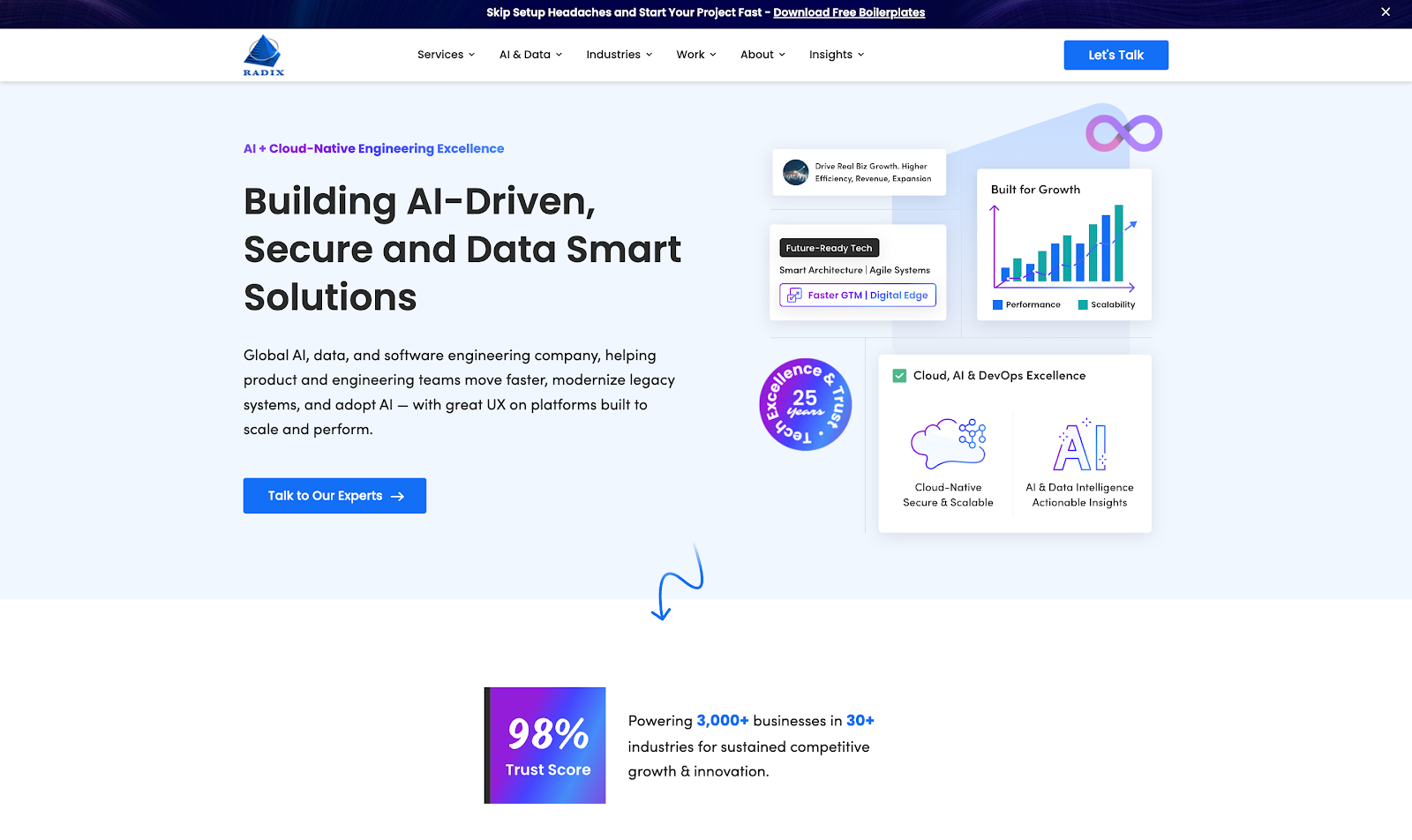
Radixweb is a long-established US-based software development company with strong enterprise engineering background and large delivery teams. They're known for complex enterprise mobile app development projects, with strong backend and integration experience across ERP, CRM, and cloud systems. High ratings across Clutch and GoodFirms back up their reputation, and they offer both mobile and broader custom software development capabilities.
You'll want to work with them if you're an enterprise needing scalable architectures and integrations, you require strict delivery processes and long-term maintenance, or you value a US-based consulting company with global capacity.
Softermii – Best for security-heavy fintech & healthtech apps
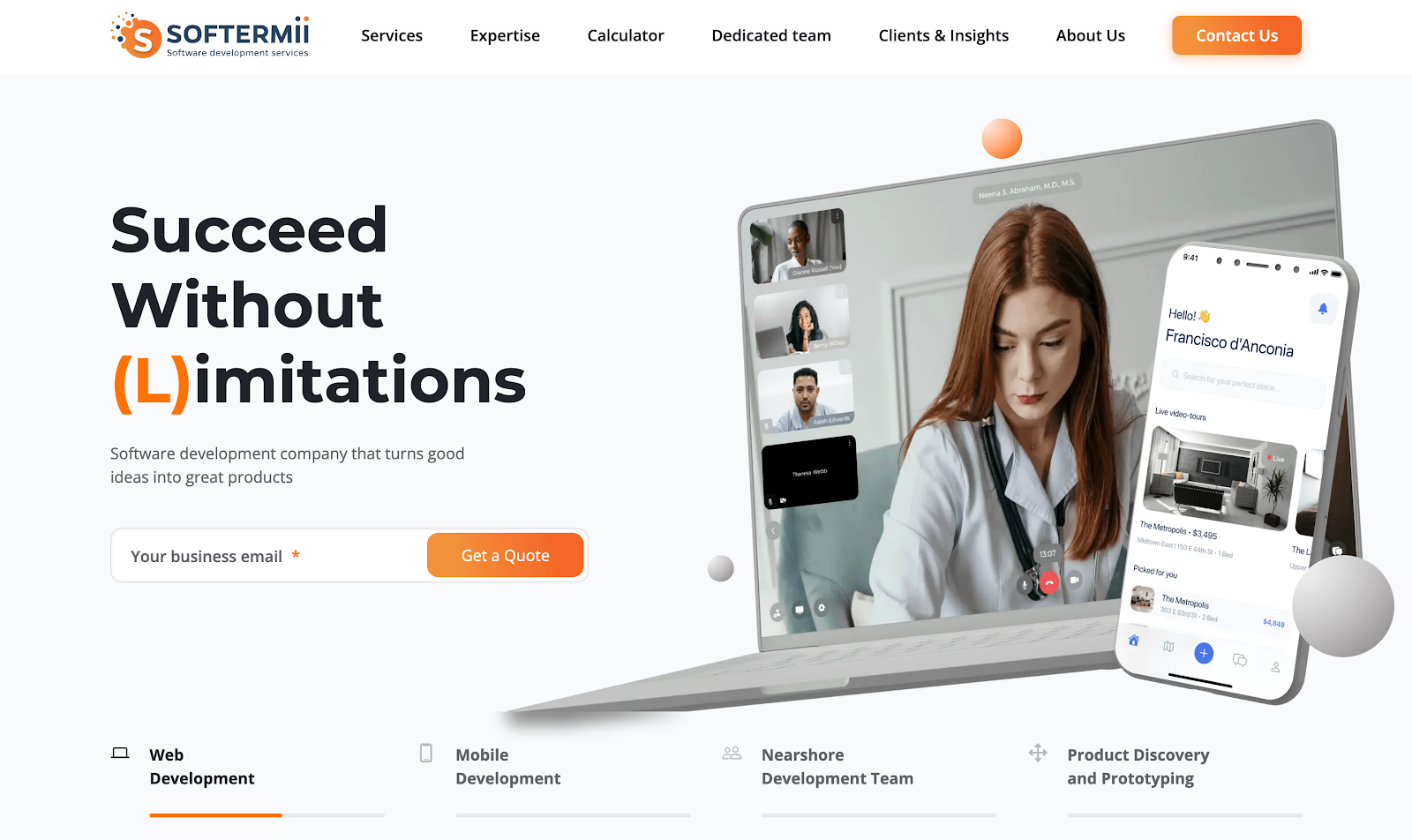
Softermii is an international app development agency known for projects in regulated industries, especially fintech and healthcare. They focus strongly on security, compliance, and data protection, with domain expertise in telemedicine, financial apps, and real estate. Their full-cycle services cover everything from graphic design and mobile app development to web development and QA, with experience in cutting-edge technologies like WebRTC and AI-based features.
They're the right fit if your app requires compliance with HIPAA, PSD2, or GDPR standards, you need custom mobile app development with advanced security layers, or you're building fintech, healthtech, or other sensitive-use applications.
Cheesecake Labs – Best for design-led consumer apps
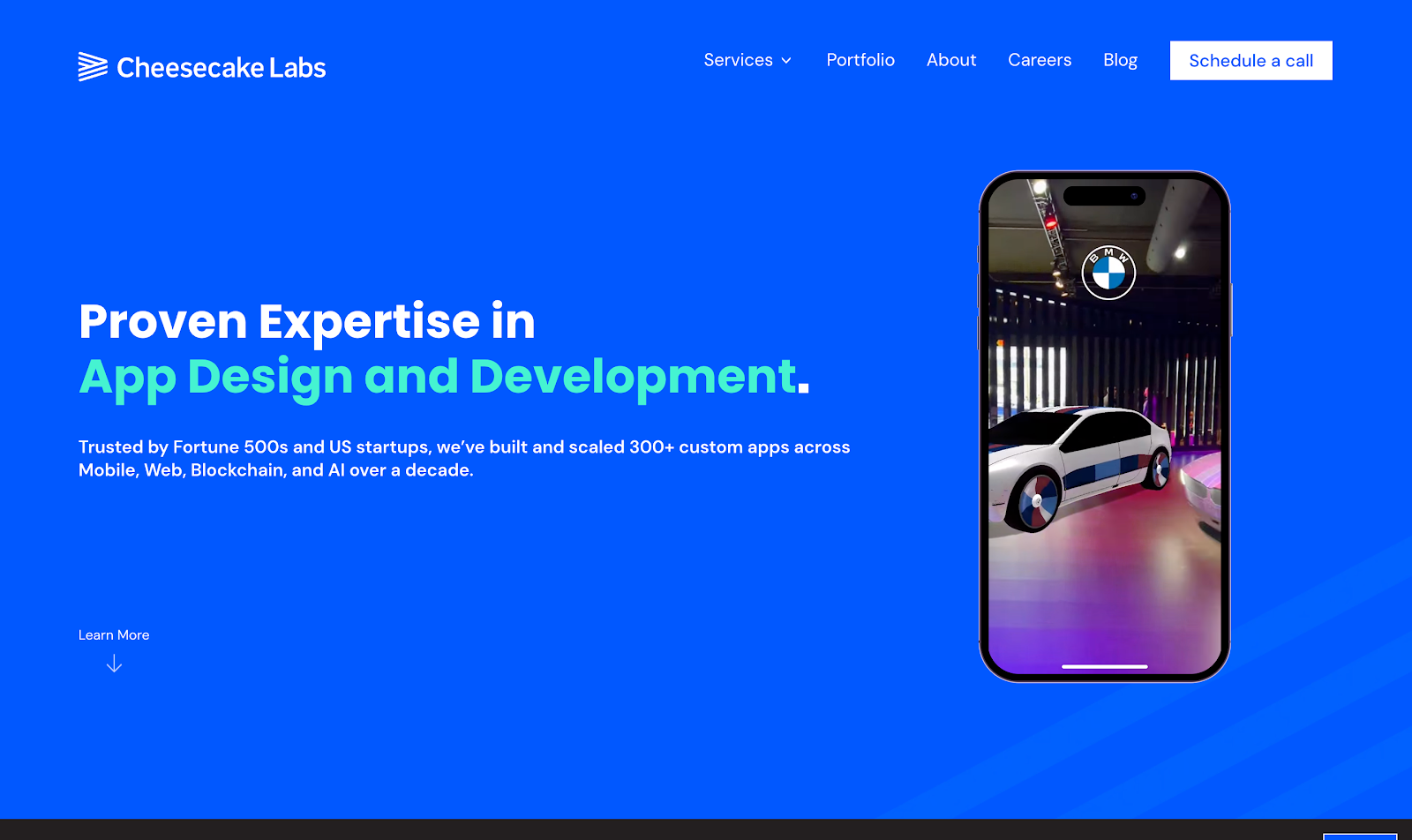
Cheesecake Labs is a design-forward mobile app development agency with teams in Brazil and the US. Strong UX/UI culture and product strategy make them excellent for consumer-facing apps with high user engagement needs. They bring experience with IoT, blockchain, and marketplace platforms, backed by high Clutch ratings and strong engineering maturity.
Consider them if you're building a consumer app where experience drives adoption, you want a design-first approach, or you need cross-platform development with premium design quality.
Chop Dawg – Best for early-stage startups
Chop Dawg focuses primarily on startups, helping them move from idea to MVP and ongoing iterations. Their startup-specialized processes and pricing structures include a long-term partnership model with predictable monthly budgets. Strong US-based communication and project manager support, plus experience across social, marketplace, and on-demand apps, makes them particularly suited for founders just getting started.
They're your best bet if you're an early-stage founder with a validated app idea, you need product guidance alongside engineering, or you want ongoing support after launch.
Intellectsoft – Best for enterprise-grade mobile & emerging tech (AI/IoT)
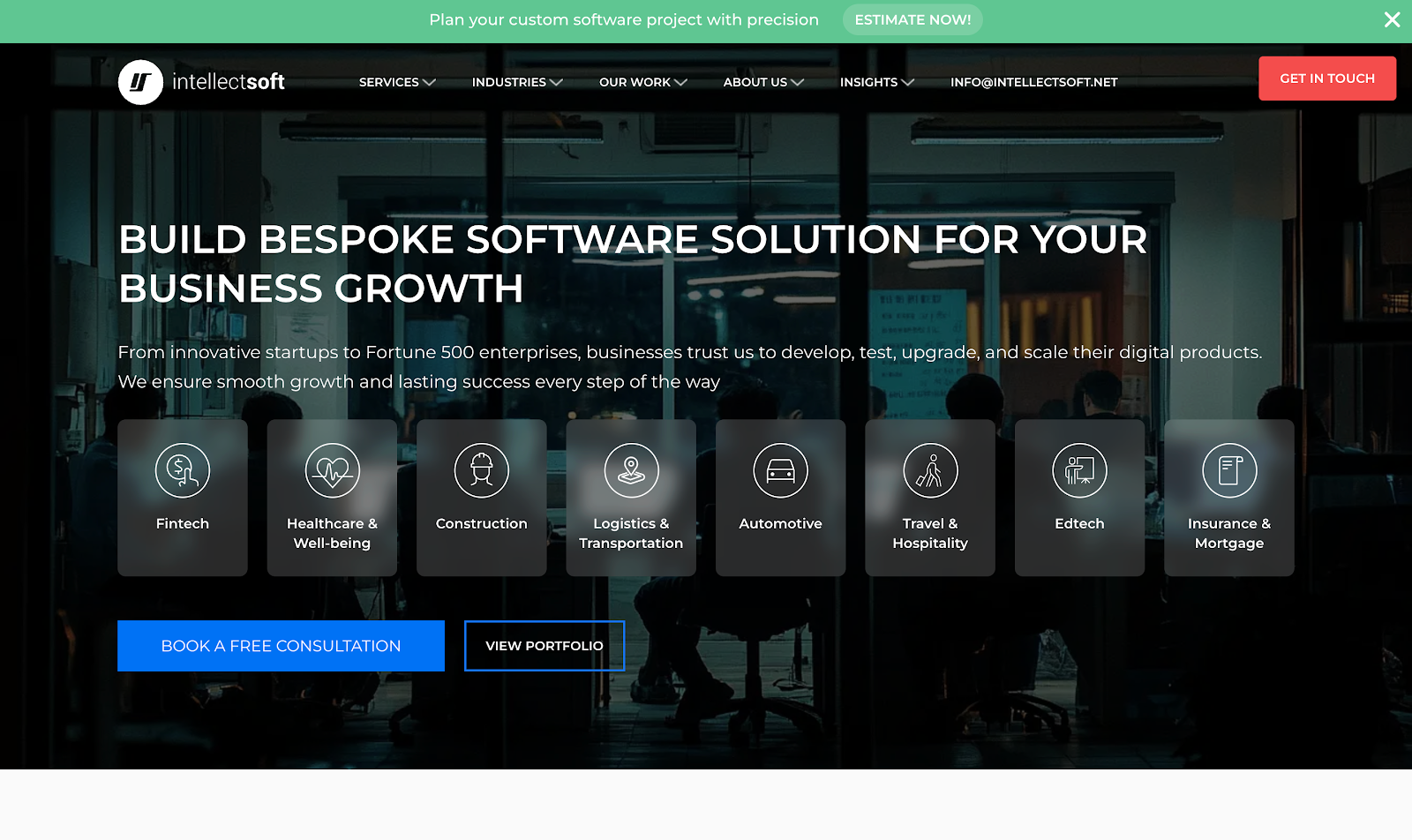
Intellectsoft is a US-based enterprise software developer known for large-scale projects and innovative solutions. Their expertise spans AI, IoT, blockchain, and AR/VR, with strong enterprise mobile app development services. Well-documented case studies and mature delivery processes make them a good fit for large corporations needing custom scalable solutions.
Work with them if you're an enterprise with complex digital transformation needs, you need innovative digital solutions, or you require long-term support and security.
ScienceSoft – Best for SaaS & B2B digital products
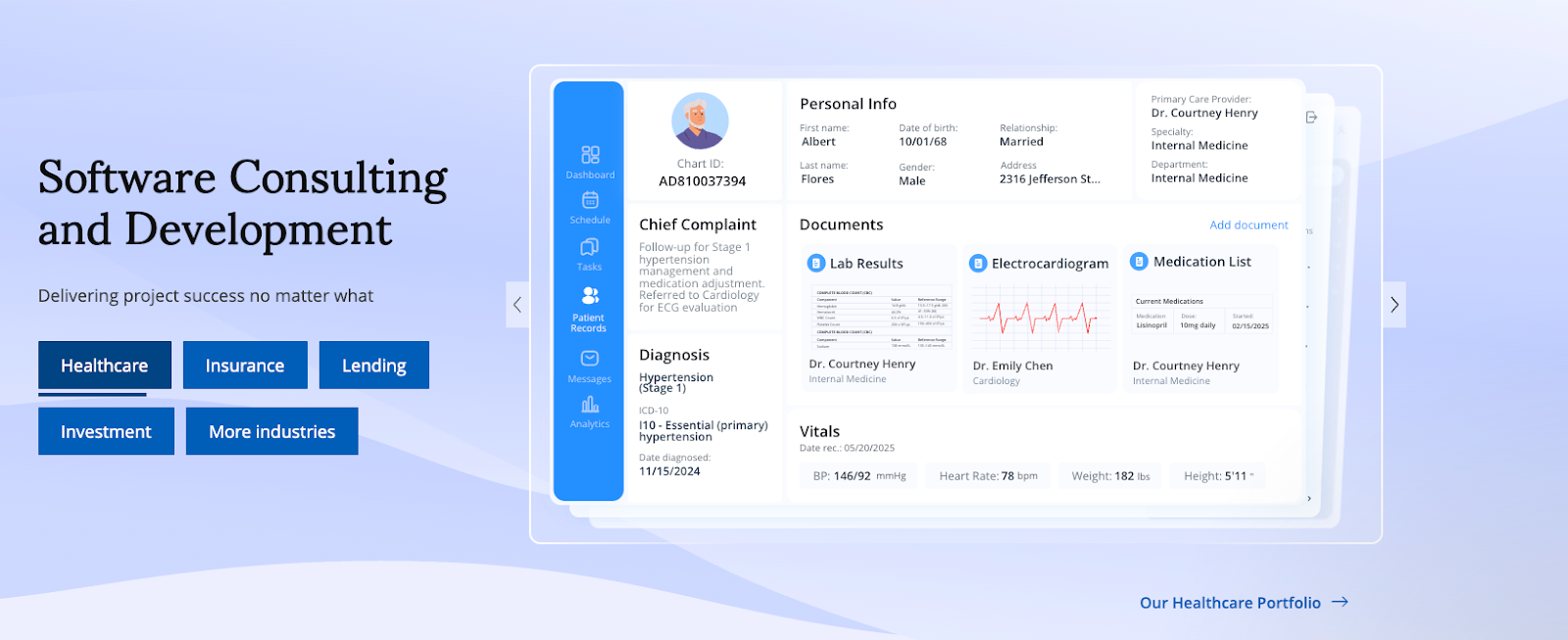
ScienceSoft operates globally with strong digital presence in the US market, specializing in B2B software and SaaS platforms. They focus on scalable, performance-driven architectures with deep experience in enterprise-grade software development. Their full-stack development covers consulting through engineering to support, with strong cloud integration expertise.
They make sense for your project if you're building a B2B or SaaS product, you need solid backend and long-term maintainability, or you want a vendor with strict processes and documentation.
Goji Labs – Best for strategy-first product design & MVPs
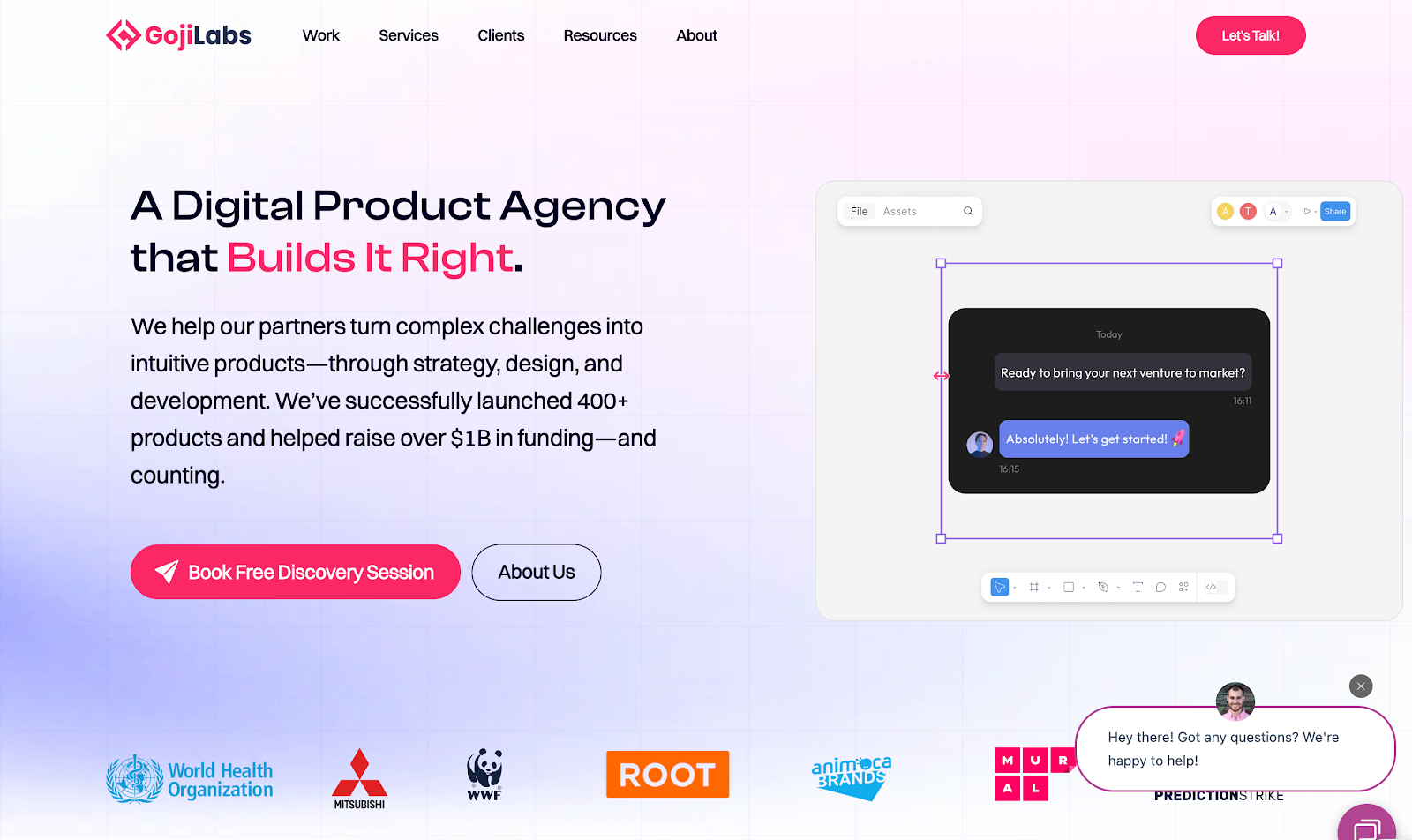
Goji Labs is a team of USA app developers emphasizing product strategy and design thinking. They're known for strong discovery and product validation processes, clean user-centric UI/UX, and being excellent for short timelines and early-stage MVPs. Transparent pricing and project management complete the package.
Choose them if you need clarity on your app idea before development, you're building an MVP with focus on usability, or you value strong design leadership.
Buildfire – Best for SMBs who want an app builder + custom development
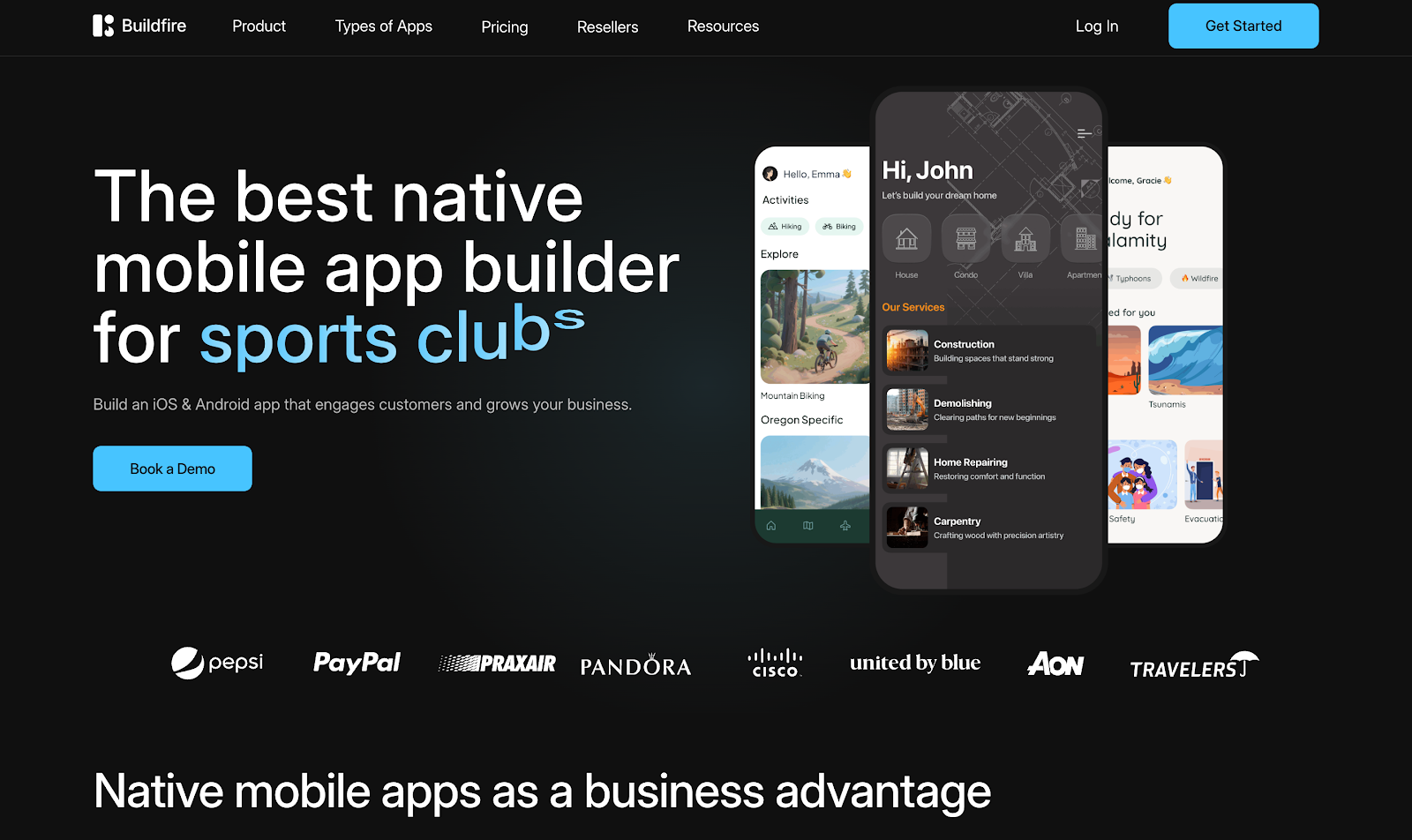
Buildfire combines a proprietary app-builder platform with custom mobile app development services and tailored solutions for small and mid-sized businesses. Their hybrid model offers DIY features plus custom engineering, making them cost-effective for non-complex apps. Fast deployment and cutting edge technology solutions come with strong support and documentation.
They're right for you if you're an SMB looking for fast time-to-market, you need simple app features without heavy backend, or you prefer a platform that scales when needed.
Dotsquares – Best for cost-efficient, scalable teams across time zones
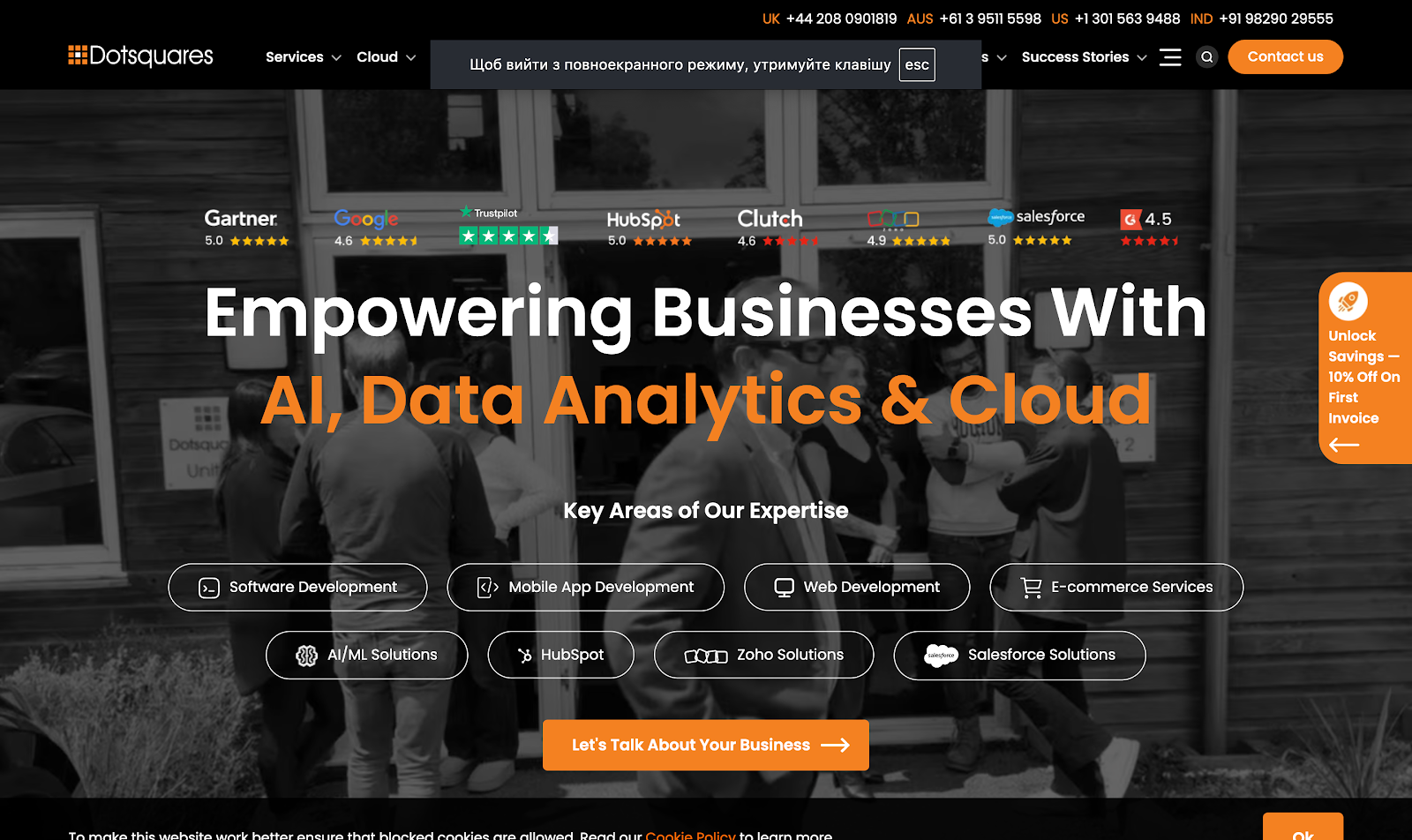
Dotsquares is a large global development company offering mobile, web, and custom software development with highly flexible pricing. Their very large team spans multiple countries, offering cost-efficient rates for long-term development teams. They can scale quickly for large app development projects and bring experience across industries and technologies.
Work with them if you want a scalable development team at competitive price, you need cross-time-zone availability, or you're building a long-term app development project with ongoing iterations.
Apptunix – Best for businesses wanting a US-centric partner
Apptunix is a widely recognized app development company based in the US with global delivery support. Strong presence across US markets combines with cost-flexible engagement models and experience across ecommerce apps, social apps, and marketplace platforms. They offer a good balance of design, engineering, and speed.
Consider them if you want US-aligned timezone but flexible pricing, you're building a business-focused or consumer app, or you need quick ramp-up and ongoing support.
IT Craft – Best for cross-industry, Clutch-driven shortlists
IT Craft is a European mobile app development company known for delivering apps across industries and appearing consistently on Clutch "Top Mobile Software Development Companies" lists. Their diverse portfolio spans logistics, education, ecommerce, and enterprise mobility. Strong engineering culture and transparent communication, plus both mobile and web app development high quality services, come with flexible engagement options including fixed price, time and materials, and dedicated development teams.
They're a good match if you need a reliable EU partner across time zones, you value clear processes and predictable delivery, or your project spans mobile plus backend, plus web.
Comparison table
Here's a side-by-side look at key factors across the top mobile app development companies:
| Factor | Empat | Radixweb | Softermii | Cheesecake Labs | Chop Dawg |
|---|---|---|---|---|---|
| Best for | Fintech/healthtech | Enterprise | Regulated industries | Consumer apps | Startups |
| Primary strength: | Research-driven | Integration depth | Security/compliance | Design-led | Long-term partnership |
| Tech stack | Flutter, React Native, Swift, Kotlin | Native + enterprise backend | Native + WebRTC, or CTO as a Service | Cross-platform + IoT | Cross-platform |
| Engagement models | T&M, dedicated teams | Software development models: Fixed price, T&M | See all models of custom fintech development services | T&M, dedicated teams | Monthly retainer |
| Time zone coverage | EU + US overlap | US-focused healthcare app development | Global | US + LATAM | US |
How to choose the right mobile app development company
Selecting the right partner determines cost, speed, quality—and ultimately whether your app succeeds in the market. Use these criteria to evaluate top app development companies and reduce risks before you invest.
Clarify your product vision & success metrics
Before you compare mobile app developers, define what success looks like. Start by outlining your business goals—what problem will the app solve, and how will it support business growth? Identify your core app features, starting with must-haves and avoiding bloated MVPs. Determine your target platforms (iOS, Android, or cross-platform) and establish clear KPIs around user engagement, retention, conversion, performance, and revenue.
Companies can only offer realistic estimates, timelines, and mobile app development services when they understand your product vision and measurable outcomes. Keith Shields from Designli explains it well: "My role is to help our customers navigate the art, science, and business of mobile app development. It's an art because your app should be beautiful enough to create a memorable user experience. It's a science because we use custom code to meet all of the client's requirements. Finally, it's a business–it's our job to turn your investment into a profitable piece of software."
Decide on budget, engagement model & timeline
Your budget and timeframe directly shape the type of app development company you should choose. For MVPs, expect to invest anywhere from lower five figures to low six figures depending on complexity. Feature-rich apps for fintech, healthtech, or logistics typically run medium six figures and above.
Understanding engagement models matters as much as knowing the total price. Fixed price works best for small, well-defined scopes but offers limited flexibility once you start. Time and materials (T&M) makes sense when you expect evolving requirements or Agile delivery—you pay for actual hours worked. Dedicated development teams suit long-term scale-ups needing continuous delivery and product evolution.
Choosing the wrong model leads to delays, scope creep, or insufficient resources—all common reasons app development projects fail.
Evaluate portfolios, case studies & domain expertise
A strong portfolio is the clearest indicator of whether a mobile app development agency can deliver high quality mobile apps. Look for shipped apps available in app stores, similar industry experience (fintech, healthtech, ecommerce, logistics), and case studies with real metrics showing time to market, improved user engagement, and revenue impact.
Domain expertise accelerates delivery and reduces risk, especially in regulated or complex mobile application development environments. Teams that have shipped similar apps understand the gotchas and workarounds that keep projects moving.
Check process, communication & time-zone overlap
A great development process ensures transparency, speed, and fewer surprises. Weekly demos and sprint reviews should be standard. Check what project management tools they use—Jira, Asana, and Linear are common choices. Verify they have clear communication channels through Slack, email, and video. Time-zone alignment matters for balancing async work with real-time collaboration when you need it.
Even the best app developers fail without strong communication practices and predictable delivery routines.
Validate security, compliance & scalability
This is non-negotiable for fintech app development, healthcare apps, and enterprise-grade systems. Check their approach to authentication, encryption, and secure APIs. Verify compliance readiness for HIPAA, GDPR, or PCI DSS depending on your industry. Evaluate whether their cloud architecture supports scale and how they integrate DevSecOps into their workflow.
Secure, scalable architecture prevents failures when user volume grows and protects you from compliance issues that carry legal and financial consequences.
In-house vs outsourced vs hybrid teams
The common question here is whether it's better to hire in-house or outsource app development. In-house teams offer full control but require high ongoing costs and long hiring cycles. Outsourced teams provide access to global leading mobile app developers, faster kick-off, and broader technology expertise. Hybrid models combine internal product ownership with an external dedicated team for engineering, QA, and delivery.
The right model depends on your stage. Startups often benefit from hybrid or outsourcing models. Enterprises may combine internal strategy leaders with specialized external software development partners.
How much does it cost to work with a top mobile app development company?
The cost of working with top mobile app development companies varies widely because every app differs in scope, features, platforms, and integrations. Most reputable companies provide custom estimates, but these ranges help you set realistic expectations.
Key cost drivers
Several factors shape the final project cost. Scope and complexity includes the number of features, backend logic, dashboards, and third-party integrations. Your choice of platforms matters—building for iOS and Android separately as native apps costs more than cross-platform via Flutter or React Native. Design depth ranges from basic UI to full research-driven UX with animations and platform-specific patterns.
Integrations with payments, CRMs, ERPs, IoT devices, AI features, or secure data pipelines all add complexity. Don't forget ongoing support covering maintenance, updates, monitoring, analytics, and new features after launch. These factors determine team size, timeline, and required expertise, which directly influence pricing.
Typical ranges by project type
These are non-binding, research-based ranges aligned with figures often referenced by Clutch, TopDevelopers, and industry directories.
An MVP for a startup typically runs $40,000–$120,000 and up, depending on number of screens, API integrations, and whether UX discovery is included. A mid-complexity B2C mobile application falls in the $120,000–$250,000+ range for apps with secure sign-in, custom dashboards, admin panels, or complex user journeys.
Enterprise or highly regulated apps for fintech, healthtech, and logistics start at $250,000–$500,000 and can go much higher. Advanced backend, compliance requirements, data privacy, role-based access, integrations with existing systems, and enterprise DevOps increase scope significantly.
Costs vary significantly by region and engagement model—a dedicated development team or long-term product partnership may fall into different pricing structures.
How pricing works at Empat
Empat operates with transparent pricing aligned with app development industry standards and what's shown on Clutch and DesignRush. Their engagement models include discovery plus MVP packages for early-stage startups, time and materials for evolving product needs, and dedicated teams for scale-ups and enterprises. Full-cycle delivery covers UX, engineering, QA, DevOps, and project manager support.
MVPs typically begin in the low six-figure range depending on complexity. Larger mobile app development projects for fintech, healthtech, and B2B SaaS scale accordingly based on integrations, compliance, and architectural requirements. The goal stays the same: a predictable delivery model, transparent communication, and custom solutions tailored to your business objectives.
Wrapping up
Choosing among the top mobile app development companies in 2026 is a strategic decision affecting timeline, product quality, and long-term ROI. By understanding your goals, evaluating technical expertise, reviewing portfolios, and comparing engagement models, you can confidently select a partner aligned with your vision.
Whether you're building an MVP, scaling a complex product, or modernizing an existing mobile application, the right app development company should offer clarity, predictable delivery, and a collaborative approach. Companies like Empat represent what this partnership should look like: research-driven, transparent, and focused on bringing awesome ideas to life through solid engineering and thoughtful design.
The market keeps growing. Your success depends on finding a technology partner who combines technical depth, clear communication, and genuine interest in your business growth.
If you're building a fintech, healthtech, or B2B SaaS product and want a research-first approach with transparent communication, explore how Empat works or reach out to discuss your project. Over a decade of shipping 300+ digital products means they've seen most of the challenges you'll face—and know how to solve them.
FAQ
Which company is best for mobile app development in 2026?
There is no single “best” company — it depends on your goals, budget, and industry. For example, Empat is a strong choice for research-driven fintech, healthtech, and B2B SaaS apps, while other companies may specialize in enterprise systems, ecommerce, or consumer apps. The right partner is the one whose portfolio, tech expertise, and delivery process match your project needs.
How do I choose the right mobile app development company for my project?
Evaluate companies based on five factors:
- clarity of process and communication,
- technical expertise in your required tech stack,
- proven case studies in your industry,
- ability to meet your budget and timeline,
- long-term support options.
Always review real client feedback, ask for detailed proposals, and ensure the team understands your business objectives—not just the features.
How much does it cost to hire a top mobile app development company?
Costs vary by complexity, scope, platforms, and integrations. As a general guide:
- Startup MVPs often start from the low six figures,
- Mid-complexity apps typically fall into the $120k–$250k+ range,
- Enterprise or regulated apps (fintech/healthcare) may exceed $250k–$500k+.
Every reputable company provides custom estimates after reviewing your requirements.
How long does it take a mobile app development company to build an app?
Timelines depend on features, design depth, backend complexity, and team size. Typical ranges are:
- MVP: 3–5 months
- Mid-complexity B2C app: 6–9 months
Enterprise or regulation-heavy products: 9–18+ months
Discovery, UX research, QA, and ongoing support can extend the timeline, especially if you scale the product after launch.


