

WordPress vs Shopify: Which Platform to Pick for Your Online Store in 2026
Launching an online store in 2026 starts for all business owners with the same step. They decide what the best eCommerce platform to choose build on?

For a founder validating a new product, a brand going digital for the first time, or an existing business planning a migration, the choice between platforms impacts the further business development. WordPress vs Shopify is one of the most common comparisons. The reason is that both of them are powerful, widely adopted, and capable of supporting serious eCommerce businesses. Today, WordPress powers roughly 43% of all websites globally, while Shopify supports more than 4.6 million live stores across 175+ countries.
But comparing them directly can be misleading. First of all, WordPress is not an eCommerce platform. it WordPress is a content management system. To start selling online, you need to add an eCommerce plugin, most commonly the WooCommerce plugin. In practice, the real decision is WordPress + WooCommerce vs Shopify.
That nuance matters because these platforms solve different problems. Shopify is a dedicated eCommerce platform built for speed, convenience, and managed infrastructure. WordPress offers far more flexibility and complete control. However, it requires more setup, maintenance, and technical ownership.
Most comparison articles lean heavily toward one side because they are written by vendors with a clear business incentive. They often simplify pricing, ignore hidden costs, and gloss over trade-offs. We know for sure that readers do not need another biased recommendation. On the contrary, they need a practical decision framework.
This guide compares WordPress with Shopify across the eight factors that actually influence platform success: setup, pricing, design flexibility, advanced features, customization, SEO, security, and scalability. By the end, you should have a much clearer idea of which platform fits your budget, technical capacity, and long-term business goals. If you need technical support while evaluating platforms or implementation complexity, these tips for hiring eCommerce developers can help clarify what skills and experience to look for.
WordPress vs Shopify at a glance: side-by-side comparison
WordPress is an open-source content management system. It cab become an eCommerce platform through plugins like WooCommerce. Shopify is a hosted SaaS platform built specifically for online stores. WordPress offers unlimited customization and lower upfront cost. However, it requires more technical setup. At the same time, Shopify offers faster setup, built-in hosting, and managed security at a predictable monthly subscription.
When comparing WordPress and Shopify, the real difference is control versus convenience. WordPress which is combined with WooCommerce, gives you full ownership of your stack, which includes hosting, design, core eCommerce functionality. You are also responsible for setup, maintenance, and security. Shopify, on the other hand, is a dedicated eCommerce platform where infrastructure, updates, and security are fully managed. It allows Shopify merchants to focus purely on selling online. This makes the comparison less about features and more about operational model, technical capacity, and long-term scalability.
Below is a clear side-by-side breakdown of Shopify vs WordPress (WooCommerce) across the most important eCommerce decision factors.
In the WordPress vs Shopify comparison, WordPress prioritizes flexibility and control, while Shopify prioritizes speed, simplicity, and operational efficiency.
What is WordPress (and how does eCommerce work on it)?
WordPress is an open-source content management system (CMS) that powers a large portion of the web, from simple blogs to complex business websites. It comes in two forms, namely WordPress.org and WordPress.com. This distinction is critical when comparing WordPress and Shopify for an eCommerce site.
WordPress.org is the self-hosted version. It gives you full access to the WordPress software. It means that you choose your own hosting provider, install themes, add plugins, and fully control performance, design, and core functionality. This is the version most businesses refer to when building a WordPress website for eCommerce.
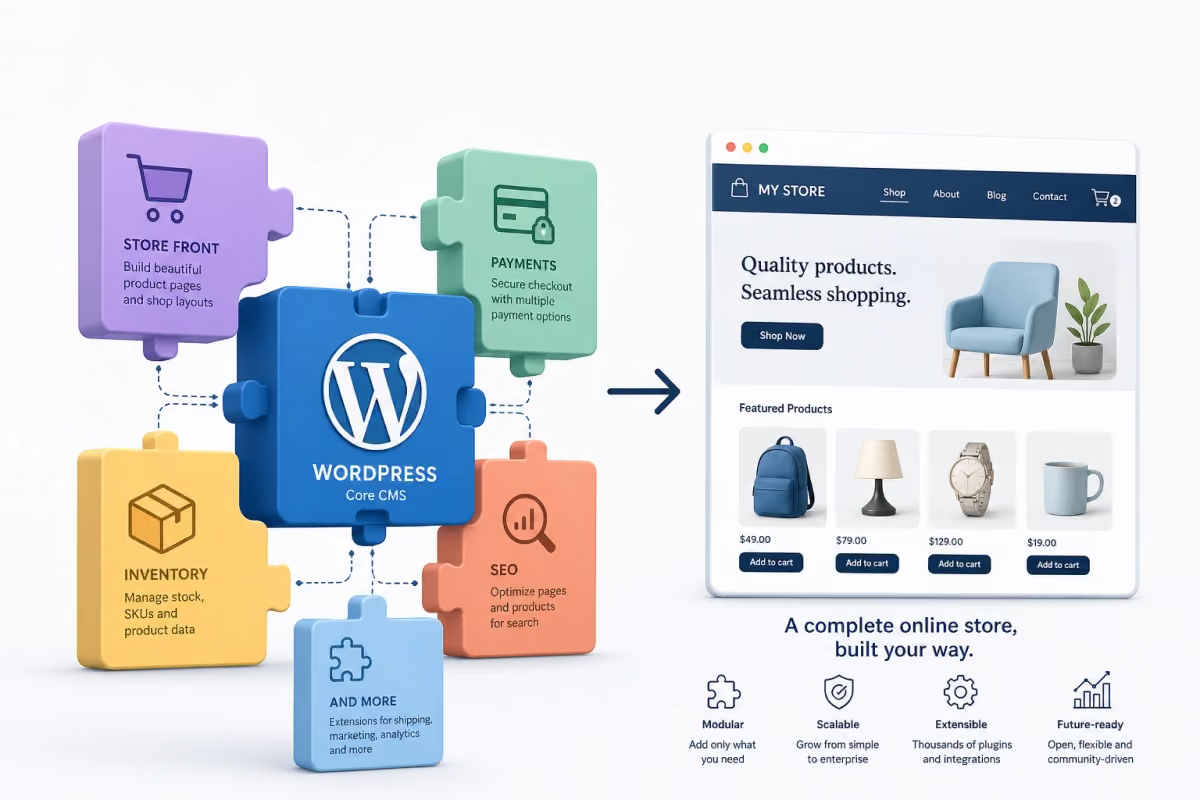
On the other hand, WordPress.com is a hosted platform that handles infrastructure for you but limits flexibility unless you upgrade to higher-tier plans. It's easier to start with. However, it's less suitable for serious eCommerce businesses that need full customization.
You need to remember that WordPress alone is not an eCommerce platform. Out of the box, it is designed for publishing content. It means that it is fundamentally a WordPress blog engine. To start selling online, you must install an eCommerce plugin that adds eCommerce functionality.
The most widely used solution is the WooCommerce plugin. It powers a significant share of global online stores, approximately 28–33% of eCommerce sites globally. It transforms a standard WordPress site into a full eCommerce store with product pages, checkout, payment processing, and inventory tools. Other eCommerce plugins include Easy Digital Downloads (focused on digital goods), SureCart, and integrations like WP Shopify, which connects a Shopify store to WordPress.
This plugin-based structure is why WordPress is often described as infinitely flexible: your store is built from additional plugins, themes from the WordPress theme directory, and third-party tools like Yoast SEO for optimization. However, this also means more setup, configuration, and maintenance compared to a dedicated eCommerce platform like Shopify.
In practice, when people compare WordPress with Shopify, they are almost always referring to WordPress in combination with WooCommerce vs Shopify. And that is the comparison this article continues with.
What is Shopify?
Shopify is a hosted software-as-a-service (SaaS) eCommerce platform founded in 2006. It provides an opportunity for businesses to create and manage an online store without handling technical infrastructure. Comparing Shopify with WordPress, Shopify represents the fully managed alternative. The platform allows control of everything from hosting and security to updates and checkout.
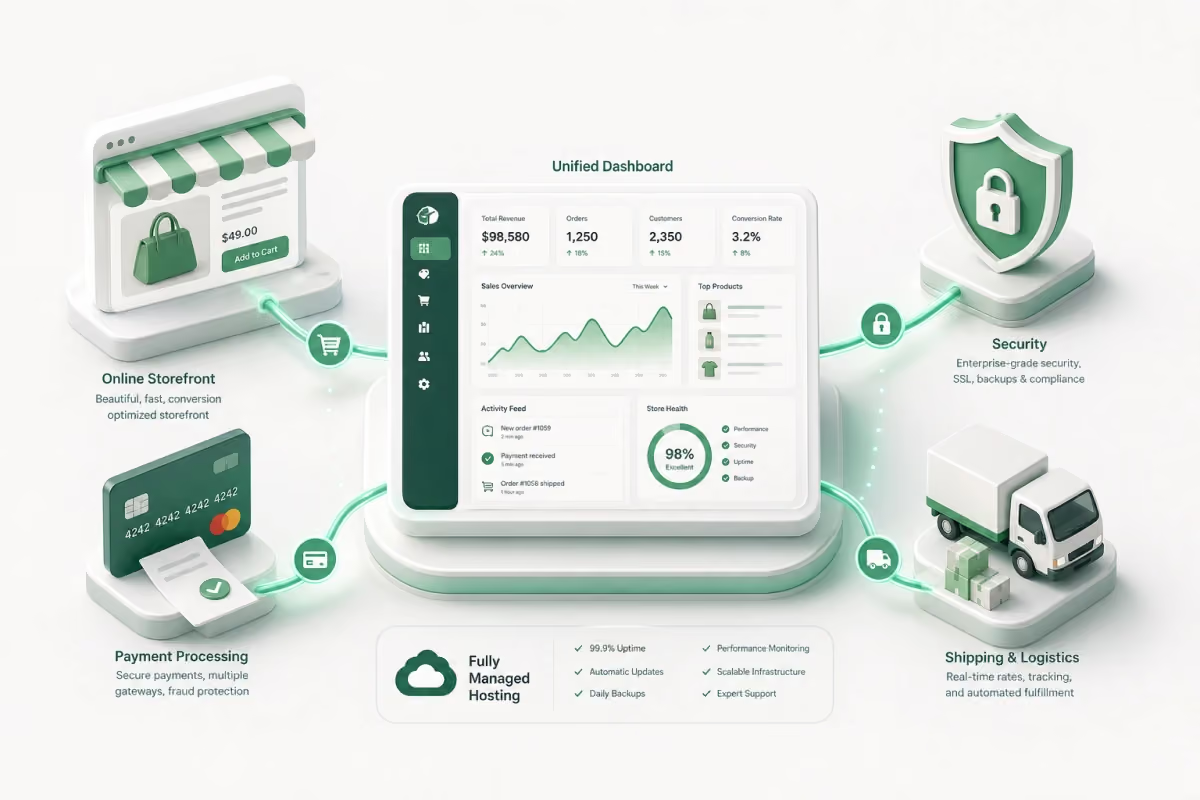
Unlike WordPress, where you rely on a hosting provider and multiple plugins, Shopify operates as a complete, dedicated eCommerce platform. It includes built-in web hosting, SSL certificates, PCI compliance, and payment processing. In such a way, merchants do not need to configure or maintain server-level infrastructure. This makes Shopify especially attractive for users who want to focus purely on selling online rather than managing a website stack.
Shopify operates on a subscription model. This recurring subscription structure is common in modern SaaS product development, where infrastructure and platform maintenance are bundled into predictable operating costs. As of recent official pricing (subject to updates), its core plans typically include:
- Basic Shopify: around $29–$39/month
- Shopify: around $79–$105/month
- Advanced Shopify: around $299–$399/month
- Shopify Plus: enterprise tier, usually starting around $2,300+/month with custom pricing
These plans include core eCommerce features such as product management, checkout, inventory tracking, and access to the Shopify App Store, where merchants can extend functionality through additional apps.
From a use-case perspective, Shopify is designed for entrepreneurs, startups, and established brands that want to launch quickly and scale without managing technical complexity. A Shopify store can go live in hours or days without the need to hire a back-end developer. It makes Shopify one of the fastest ways to start selling online.
However, Shopify is not primarily a content-first system. While it includes a basic blogging platform and CMS capabilities, its built-in content management tools are rather limited compared to WordPress. This means it is less suited for content-heavy strategies that rely on deep editorial workflows or advanced SEO-driven publishing.
Overall, Shopify is built for simplicity, speed, and reliability, trading deep customization for operational ease and predictable infrastructure.
WordPress vs Shopify: ease of use and setup
Shopify is significantly faster to set up than WordPress. A non-technical user can launch a Shopify store in 1–5 days. WordPress + WooCommerce typically takes 2–3 weeks for someone unfamiliar with the stack, because it involves buying hosting, installing WordPress, choosing a theme, installing WooCommerce, and configuring payments, shipping, and taxes separately. This difference is one of the most important factors in the Shopify vs WordPress decision. This factor is especially important for early-stage eCommerce businesses that want to start selling quickly.
With Shopify, setup is streamlined through a guided onboarding flow. You choose a plan, pick a theme, add products, and your store is immediately connected to Shopify Payments for fast payment processing. Most configuration happens inside a single theme editor and unified dashboard. It reduces fragmentation and technical decision-making. This makes Shopify especially appealing for founders who want a fast, low-friction launch of an eCommerce store.
In contrast, WordPress setup is modular and more technical. You first select a web hosting provider such as Bluehost, SiteGround, Kinsta, or WP Engine. After installing the WordPress software, you configure your site, choose a theme (often from the WordPress theme directory or premium marketplaces), and then install an eCommerce plugin like WooCommerce. From there, you manually configure shipping zones, taxes, payment gateways, and often multiple additional plugins for SEO, caching, backups, and security.
The learning curve reflects this difference. Shopify has a steep but short learning curve. Most Shopify users understand the platform within 20 minutes and then scale gradually. WordPress has a more moderate learning curve that spans several days or weeks, and while it never fully disappears, its flexibility rewards long-term use as expertise compounds.
Support is another major differentiator. Shopify provides centralized 24/7 chat and phone support, along with extensive documentation. WordPress support is distributed across your hosting provider, plugin developers, community forums, and sometimes paid developers. As a result, such an approach can slow down troubleshooting.
In short, Shopify prioritizes simplicity and speed. WordPress prioritizes control and flexibility, but requires more hands-on setup and technical ownership. Consider that teams without in-house technical leadership may benefit from CTO as a service before committing to a platform or architecture.
WordPress vs Shopify pricing and total cost of ownership
Pricing is one of the most misunderstood parts of the Shopify vs WordPress comparison. Most comparisons focus only on monthly subscription fees rather than the real total cost of ownership. In reality, both platforms involve multiple layers of cost, including infrastructure, apps or plugins, payment processing, and ongoing maintenance. The real question is not which is cheaper on paper, but which cost structure better matches your business stage and technical capacity.
Shopify cost
Shopify operates on a subscription model with predictable pricing:
- Basic Shopify: ~$29–$39/month
- Shopify plan: ~$79–$105/month
- Advanced Shopify: ~$299–$399/month
- Shopify Plus: enterprise pricing starting around $2,300+/month
On top of the monthly fee, there are transaction fees. If you use Shopify Payments, you typically pay around 2.9% + $0.30 per transaction (varies by region and plan). If you use third-party payment gateways, Shopify adds 0.5–2% fee.
Most Shopify stores also rely on apps from the Shopify App Store for marketing, upsells, subscriptions, or analytics. A realistic setup includes 3–8 apps, typically costing $10–$50/month each. A premium theme may add a one-time cost of $150–$500, and a custom domain costs around $14–$20 per year.
When all layers are combined, a realistic total cost for a small-to-mid-sized eCommerce store typically ranges from $89 to $549/month, depending on traffic, app usage, and sales volume.
WordPress + WooCommerce total cost
With WordPress, the WooCommerce plugin itself is free, but the ecosystem is more fragmented. WordPress costs are distributed across hosting, plugins, and maintenance.
- Hosting: $10–$30/month (shared) or $25–$150/month (managed web hosting recommended for stores)
- Domain: ~$15–$20/year
- Premium themes: $50–$200 one-time
- Premium plugins: $200–$700/year (SEO tools like Yoast SEO, caching, security plugins, subscriptions, abandoned cart recovery, etc.)
- Payment processing: ~2.9% + $0.30 via Stripe/PayPal (no platform markup)
A realistic Year 1 cost for a competitive eCommerce website is typically $1,200–$1,600, depending on setup complexity and plugin stack.
However, one of the most overlooked costs in comparing Shopify vs WordPress is developer and maintenance time. WordPress requires ongoing updates to WordPress core, themes, and plugins, plus security monitoring and conflict resolution. Many businesses end up paying for a maintenance contract or freelance developer support, especially when scaling.
Which is actually cheaper?
There is no universal winner in Shopify vs Wordpress pricing. For very lean, technically capable setups with minimal plugins, WordPress + WooCommerce can be cheaper, especially long-term. But once you factor in maintenance, development time, and system management, Shopify often becomes cost-competitive, or even cheaper, for non-technical teams.
The real trade-off is simple: WordPress offers cost flexibility with higher operational responsibility, while Shopify offers predictable monthly fee pricing in exchange for managed infrastructure, security, and support.
Design and customization
Design flexibility is one of the clearest dividing lines in the WordPress and Shopify comparison. It directly affects how your eCommerce site looks, scales, and converts. Both platforms offer modern design systems, but they differ significantly in depth, control, and implementation complexity.
In terms of themes, Shopify provides around 140+ premium themes, including 10–12 free options and paid themes typically ranging from $150–$500. These are tightly curated, performance-optimized, and consistent in quality.
WordPress, on the other hand, offers thousands of free themes in the WordPress theme directory, plus tens of thousands of premium themes across marketplaces. This makes WordPress the clear winner in quantity, while Shopify wins in quality control and consistency.
Customization depth is where the gap becomes more pronounced. Shopify uses the Liquid templating language. It allows merchants to customize layouts and presentation layers, but not the underlying business logic. This means you can adjust how a Shopify store looks, but not fundamentally change checkout behavior or core eCommerce functionality on standard plans. Advanced checkout customization is only available on Shopify Plus, which typically starts at enterprise pricing levels (around $2,300+/month).
WordPress, by contrast, is built on PHP and offers full access to the WordPress software codebase. When combined with WooCommerce, this allows deep customization of everything from product pages to checkout flows and pricing logic. If you want full control over how your eCommerce store behaves, WordPress provides significantly more flexibility.
Page-building tools also highlight the difference in philosophy. WordPress supports mature visual builders like Elementor, Divi, Beaver Builder, and Bricks, enabling near full drag-and-drop control for non-developers. Shopify offers a modern block-based theme editor, which is fast and intuitive but more constrained in layout complexity.
From a branding perspective, Shopify themes tend to be more standardized and polished out of the box, which reduces risk but can feel restrictive. WordPress allows near-limitless design freedom, but that flexibility comes with a trade-off: without strong design or development expertise, a WordPress website can easily become inconsistent or visually fragmented compared to a default Shopify build.
In short, Shopify prioritizes structured, reliable design systems, while WordPress prioritizes full creative control, at the cost of higher complexity and responsibility.
Ecommerce features compared
When evaluating WordPress and Shopify, feature parity often looks similar on the surface, but the implementation model is fundamentally different. Shopify focuses on tightly integrated core eCommerce features. At the same time, WordPress relies on an ecosystem of eCommerce plugins to match similar capabilities. This distinction impacts store management complexity, scalability, and operational overhead across every eCommerce store.
Product management and inventory
Both platforms support unlimited products, which is essential for growing eCommerce businesses. Shopify includes native inventory tracking, product variants, SKUs, and bulk editing tools directly inside its dashboard. Everything is centralized, which simplifies store management and reduces the need for additional tools.
WooCommerce (via WordPress) also supports robust product management in its WordPress dashboard. However, many advanced capabilities require additional plugins. While this enables deep flexibility, it also increases configuration complexity and dependency on third-party extensions.
Payment gateways
Shopify integrates Shopify Payments as its primary solution, allowing merchants to accept payments without extra platform fees. It also supports 100+ third-party payment gateways, but using them typically introduces an additional 0.5–2% transaction fee on top of standard processing rates.
WooCommerce supports over 140 payment gateways, including Stripe, PayPal, and regional providers, with no platform-level transaction fees. This can be a significant advantage for high-volume stores, as merchants only pay standard payment processing fees without platform markups.
Shipping and fulfillment
Shopify includes built-in shipping and fulfillment tools such as Shopify Shipping, discounted carrier rates, label printing, and automation rules. These tools are especially strong for US and Canadian merchants and integrate directly into the Shopify store dashboard.
WooCommerce offers similar functionality through plugins like WooCommerce Shipping, ShipStation, and Easyship. However, setup is more fragmented, requiring multiple integrations and ongoing configuration.
Multi-channel selling
Shopify excels in native multi-channel commerce. It integrates directly with Facebook, Instagram, TikTok Shop, Amazon, wholesale channels like Handshake, and in-person POS systems. These integrations are tightly connected and easy to manage from a single interface.
WooCommerce supports the same channels, but typically through WordPress plugins and third-party extensions. While functional, these integrations require more setup and ongoing maintenance, especially as the eCommerce website scales.
Blogging and content marketing
This is where WordPress clearly dominates. As a content management system, it was built for publishing. It supports advanced editorial workflows, taxonomy structures, internal linking, and author management, making it ideal for content-driven growth strategies. Tools like Yoast SEO further enhance optimization.
Shopify includes a basic blogging module, but it is limited in structure and flexibility. It works for occasional updates but is not designed for deep content marketing strategies.
As a result, if organic traffic and content play a major role in acquisition, WordPress + WooCommerce is significantly stronger for long-term SEO-driven growth compared to Shopify's more commerce-focused architecture.
SEO compared: WordPress vs Shopify
Both platforms are fully capable of strong organic performance in search optimization and excellent seo capabilities. Both of them support essential SEO elements such as custom page titles, meta descriptions, canonical tags, image alt text, XML sitemaps, and structured data. In the WordPress/Shopify debate, SEO differences come down less to capability and more to flexibility, control, and how deeply you want to optimize your eCommerce website for organic growth.
WordPress has a clear advantage in technical and content-driven SEO. Because it is a full content management system, it allows complete control over URL structures, server-level rules (via .htaccess), and advanced configuration. With SEO tools like Yoast SEO, Rank Math, and All in One SEO, users can fine-tune every aspect of on-page optimization, schema markup, and internal linking. This makes WordPress especially powerful for content-heavy strategies where a WordPress blog and supporting content clusters drive acquisition. Combined with complete control over taxonomy and content architecture, it is often the preferred choice for advanced technical SEO strategies.
Shopify, on the other hand, provides strong out-of-the-box SEO performance. Its infrastructure is optimized for speed and stability, delivering solid Core Web Vitals without requiring manual configuration. It includes built-in SEO essentials such as automatic sitemaps, editable meta tags, 301 redirects, and structured product pages. Shopify also benefits from newer agentic commerce capabilities that help surface products in AI-driven environments like ChatGPT, Perplexity, and Google AI Overviews, which is increasingly relevant for modern eCommerce businesses.
However, Shopify has structural limitations. It enforces fixed URL patterns such as /products/, /collections/, and /pages/, which cannot be fully customized. Access to server-level configuration like robots.txt is also more restricted (though partially improved in recent updates). Additionally, advanced schema customization and deeply tailored content structures are more limited compared to WordPress.
In summary, the SEO capabilities of these platforms depend on strategy. WordPress is stronger for content-led, technical, and built in seo features. Shopify excels in streamlined, performance-optimized SEO for product-focused stores with minimal technical overhead.
Security, compliance, and maintenance
Security and maintenance are often underestimated when choosing a platform. However, they have a direct impact on uptime, risk, and long-term operational cost for any eCommerce store. The difference between the two platforms deals with responsibility. Shopify manages everything for you, and WordPress requires ongoing ownership.
Shopify is a fully managed eCommerce platform with enterprise-grade security features built in. It is PCI DSS Level 1 compliant by default, includes SSL certificates on all plans, and handles all platform updates automatically. Merchants also benefit from SOC 2 Type II and SOC 3 compliance reports, built-in fraud analysis, and continuous infrastructure monitoring. This means users do not need to manage server security, patch vulnerabilities, or maintain uptime manually. In practical terms, Shopify removes most technical risk from running an online store.
WordPress takes the opposite approach. While the WordPress software itself is secure when maintained properly, responsibility is distributed. Merchants must manage SSL certificates (usually through their hosting provider), update WordPress core, maintain themes and WordPress plugins, and ensure backups are running correctly. Security often depends on third-party tools like Wordfence, Sucuri, or iThemes Security. Plugin vulnerabilities remain one of the most common attack vectors in WordPress ecosystems, especially when multiple additional plugins are installed.
From a compliance perspective, Shopify simplifies GDPR, CCPA, and PCI DSS adherence by providing infrastructure-level compliance tools. WordPress users must configure compliance manually using plugins for cookie consent, data requests, and policy enforcement, along with properly structured legal pages and workflows.
Maintenance cost is another key differentiator. Shopify includes updates, hosting, and security within its monthly fee, making costs predictable. WordPress maintenance typically ranges from $100–$500/month if handled by a managed web hosting provider or a developer retainer. Many growing stores reduce long-term maintenance costs by learning how to hire remote developers for ongoing plugin, infrastructure, and security support.
Scalability and enterprise fit
Both platforms can support large eCommerce businesses, but they scale in fundamentally different ways.
Shopify is a fully hosted, dedicated eCommerce platform that scales automatically. Infrastructure, caching, and performance optimization are handled at the platform level, meaning merchants do not need to manage servers or traffic spikes. Shopify Plus supports enterprise brands generating anywhere from $1M to $500M+ in annual revenue, including global names like Gymshark and Allbirds. The trade-off is that businesses operate within Shopify's ecosystem rules and pricing structure, which increases with scale but reduces operational complexity.
WordPress + WooCommerce scales differently. They have a strong dependence on your infrastructure. With optimized web hosting providers like Kinsta or WP Engine, or a custom AWS/GCP setup, a WordPress website can handle hundreds of thousands of orders and complex catalogs. However, scaling requires engineering expertise, performance optimization, and ongoing system monitoring. Unlike Shopify, scalability is not automatic. It is built and maintained by your team or development partner.
Both platforms also support headless commerce architectures. Shopify offers Hydrogen and Oxygen along with Storefront APIs for modern decoupled frontends, while WooCommerce relies on REST API and WPGraphQL to enable similar setups using frameworks like React or Next.js. This allows both systems to power high-performance eCommerce sites with custom frontends.
When neither platform is sufficient, businesses may move to fully custom systems. If product logic, pricing models, or integrations exceed what Shopify or WooCommerce can support, custom development on frameworks like Laravel, Django, or Node.js becomes necessary. In such cases, choosing the right custom website development company like Empat can help design scalable architecture across either platform or beyond both.
When to choose WordPress vs Shopify: decision framework
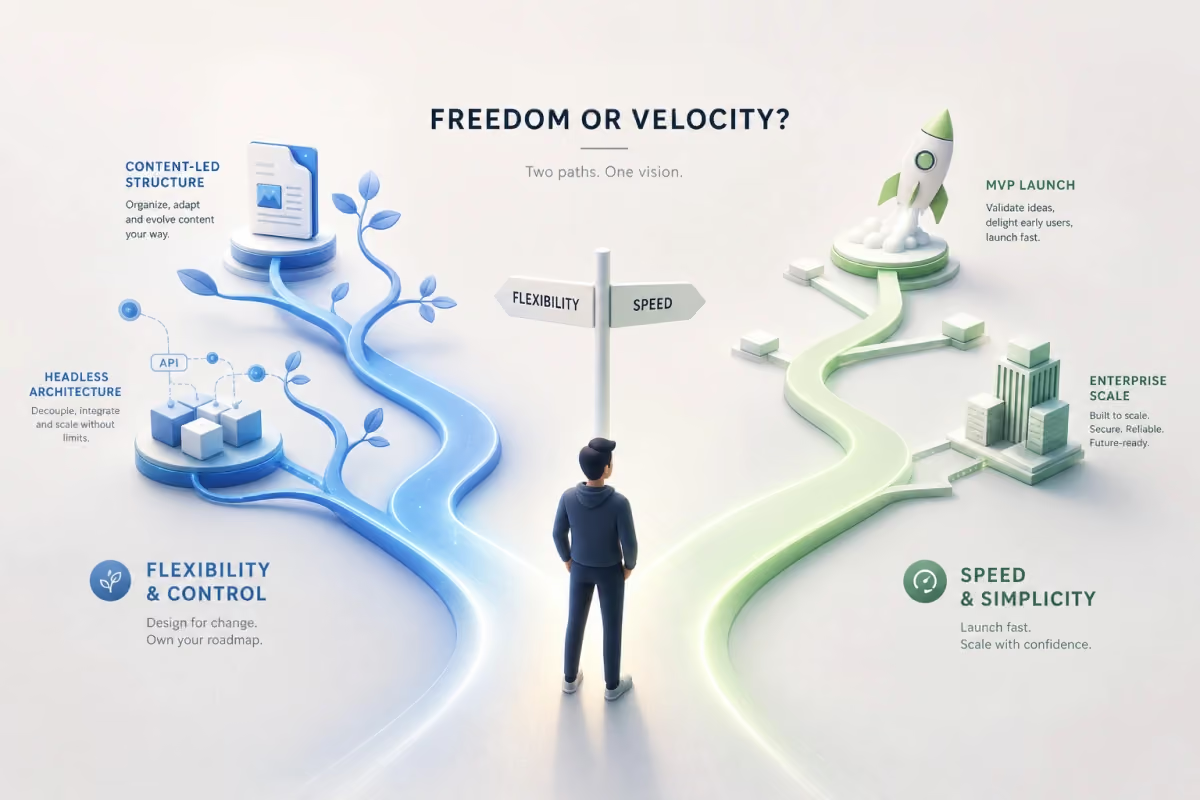
When you choose between WordPress and Shopify, it's better to focus not on features but on the business model, team capacity, and growth stage. Both can power a successful eCommerce store. However, the right choice depends on how much control, speed, and operational overhead you're prepared to handle.
- Choose Shopify if:
You want to launch fast, prefer a fully managed eCommerce platform, and don't want to deal with hosting, updates, or security. Shopify is ideal if your business is primarily focused on selling online rather than building a content-heavy ecosystem. It's especially strong for founders who want predictable operations and a fast time-to-market for a Shopify store. - Choose WordPress + WooCommerce if:
You already run a WordPress website, rely heavily on content marketing and a WordPress blog for acquisition, or need deep customization in your eCommerce functionality. It's also a better fit if you have access to development resources or plan to work with a technical team to manage plugins, performance, and scaling. - Choose Shopify Plus if:
You are an enterprise-level brand (typically $1M+ GMV) and need advanced SLAs, dedicated support, and higher platform flexibility within Shopify's ecosystem. Shopify Plus extends Shopify Payments, automation, and checkout capabilities for high-growth brands operating at scale. - Consider headless or custom development if:
Neither platform fully supports your business logic, pricing rules, or multi-region architecture. If you need full ownership of the frontend stack or complex integrations, a headless approach or custom system may be required. In such cases, teams often work with an experienced engineering partner like Empat to design scalable architecture beyond standard platform limits. - Don't overthink it for an MVP:
A simple $29/month Shopify setup launched this week will teach you more about your business than weeks of building a complex WordPress stack. Early validation matters more than perfect architecture. You can always migrate later once product-market fit is clearer.
Migrating between platforms
Migrating between Shopify and WordPress is possible in both directions, but it requires planning.
Moving from Shopify to WordPress + WooCommerce typically involves exporting data via CSV files or tools like WP All Import. Products, customers, and basic order history can be transferred, but subscription logic and checkout behavior may require rebuilding using additional plugins.
Moving from WordPress + WooCommerce to Shopify is often simpler, as Shopify provides built-in migration tools for WooCommerce and similar platforms. However, careful handling of URL redirects is essential to preserve SEO rankings and avoid losing organic traffic from your existing eCommerce website.
For both directions, a realistic migration timeline is 2–6 weeks for mid-sized stores, and longer for enterprise setups. It is also strongly recommended to avoid migrations during peak sales periods to reduce risk to revenue and customer experience.
Summary: Finding the Best Fit for Your Business Context
Summing up, it's important to say that there's no single best choice in the WordPress vs Shopify debate. You need to find a better fit for a specific business context. Both platforms are capable of powering high-performing eCommerce stores, but they solve different problems in fundamentally different ways.
Shopify is the safer default for most first-time founders and early-stage brands. It is a fully managed eCommerce platform that prioritizes speed, simplicity, and operational stability. Due to its built-in hosting, security, and payment processing, Shopify reduces technical overhead and allows teams to focus on launching and selling quickly. For many businesses, this predictability is more valuable than deep customization in the early stages of growth.
WordPress + WooCommerce, on the other hand, is the stronger choice for content-driven brands, businesses with complex or non-standard requirements, and teams that have access to technical resources. It offers far greater control over content management, design, and eCommerce functionality. That's why it is ideal for companies where SEO, publishing, and custom workflows play a central role in acquisition and growth.
In practice, the decision often comes down to one question: do you want to optimize for speed and simplicity, or for flexibility and control? Shopify leans toward execution efficiency, while WordPress prioritizes adaptability and long-term customization potential.
For teams that are still unsure, the right approach is often not a theoretical comparison, but practical validation. The fastest way to understand which direction fits your business is to build and test.
Still weighing Shopify vs WordPress? Empat builds and scales eCommerce websites on both WordPress (WooCommerce) and Shopify, as well as custom solutions when neither platform fully fits your needs. You can book a free 30-minute discovery call.
Or explore their custom development approach and recent eCommerce case studies.
FAQ
What is the difference between WordPress and Shopify?
WordPress is an open-source content management system that can become an e-commerce platform through plugins like WooCommerce. Shopify is a hosted SaaS platform built specifically for online stores. WordPress offers unlimited customization and a lower upfront cost, but requires more technical setup. Shopify offers faster setup, built-in hosting, and managed security at a predictable monthly subscription starting around $29/month.
Is Shopify better than WordPress for e-commerce?
Shopify is generally better for beginners, fast-launch stores, and businesses that want a fully managed platform. WordPress with WooCommerce is often better for content-led brands, stores with unusual requirements, or teams with development resources. Neither is universally better — Shopify powers millions of stores globally, while WooCommerce is widely used across open-source eCommerce. The right choice depends on your launch speed, customization needs, and technical capacity.
Is WordPress cheaper than Shopify?
WordPress can be cheaper upfront since the software is free, but the total cost of ownership varies significantly. A realistic WordPress + WooCommerce setup costs around $1,200–$1,600 in Year 1, including hosting, plugins, and setup. Shopify typically costs $89–$549/month depending on plan, apps, and sales volume. Once maintenance and developer time are included, Shopify is often comparable or even cheaper for non-technical founders.
Can I switch from Shopify to WordPress (or vice versa)?
Yes, both platforms support migration in either direction. Shopify provides migration tools for WooCommerce and other platforms, while WordPress migrations often use CSV exports and plugins like WP All Import. Products, customers, and basic order data can usually be transferred, but design, checkout logic, and subscriptions may require rebuilding. A typical migration takes 2–6 weeks for a mid-sized eCommerce store, and careful URL redirects are essential to preserve SEO rankings.


