

How to Choose a Logistics Software Development Company in 2026
How to evaluate and choose a logistics software development company in 2026 — the capabilities that matter, build vs. buy, typical pricing, and vendor red flags to watch for.

Choosing a logistics software development company in 2026 comes down to three things: does the team have real transportation and warehouse domain depth, can they integrate with your existing ERP/EDI and carrier systems without a six-month discovery phase, and will they build something you can maintain after launch. Below is a practical checklist, honest build-vs-buy guidance, and what the engagement should cost.
What does logistics software development involve?
Logistics software development covers building or customizing the systems that move, track, and optimize freight and inventory — transportation management (TMS), warehouse management (WMS), fleet and route optimization, real-time shipment visibility, and the integrations that connect all of it to your ERP and carrier network. In 2026, most new builds also add an AI layer for demand forecasting and dynamic route planning rather than treating that as a separate project.
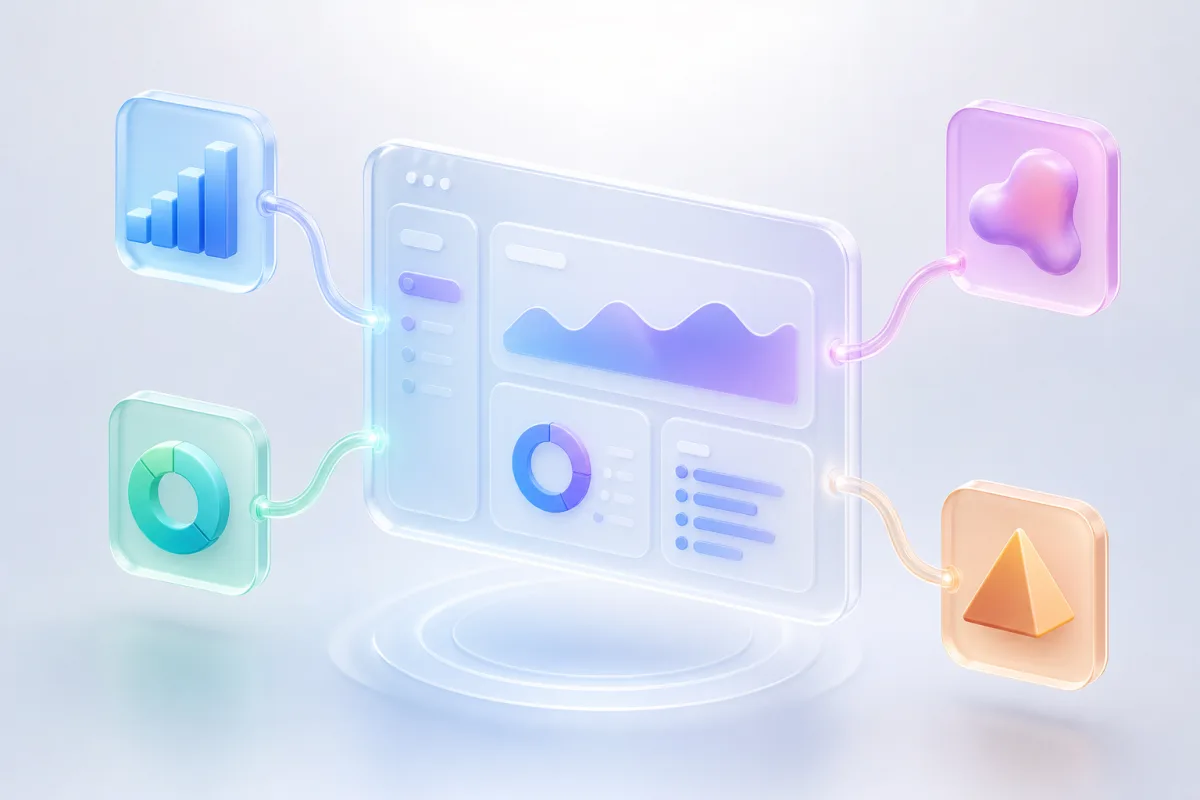
Capabilities checklist: what to look for in a logistics software partner
Before comparing vendors, confirm they can actually deliver against this list — not just describe it on a sales call.
- Transportation management (TMS) — carrier selection, load planning, freight-rate management.
- Warehouse management (WMS) — inventory tracking, picking/packing workflows, slotting logic.
- Fleet and route optimization — dynamic routing that accounts for traffic, delivery windows, and vehicle capacity, not just shortest-path routing.
- Real-time visibility — live shipment status for both internal ops teams and end customers.
- IoT telematics — integration with vehicle sensors and tracking hardware where fleet ownership is involved.
- ERP/EDI integration — clean data flow to and from your existing ERP and carrier EDI connections; this is usually the most underestimated part of the project.
Build vs. buy: when custom logistics software makes sense
Build custom when your workflow doesn't fit an off-the-shelf TMS/WMS without heavy configuration, or when integration with a proprietary or legacy system is the real bottleneck. Buy (or heavily customize an existing platform) when your process is close to standard and speed to launch matters more than a perfect fit.
TMS platforms alone hold roughly a third of the broader logistics-software market by revenue, which tells you most of the market is still buying rather than building — but that share is concentrated among companies whose operations map cleanly to a standard workflow. If yours doesn't, custom development stops being a luxury and becomes the only way to avoid working around software that fights your process every day.
What logistics software development costs
Cost scales with integration complexity more than with feature count. A focused TMS or WMS module with one or two carrier/ERP integrations sits at the lower end of a typical custom-software budget; a multi-warehouse platform with IoT telematics, real-time tracking, and several EDI connections sits well above it. As a reference point, Empat's own engagement bands — from a $5,000 discovery phase through a $30,000+ MVP to $50,000+ for a full platform — reflect that same complexity-driven scaling, and a logistics build with several integrations typically lands in the MVP-to-full-product range rather than the discovery end.
Comparing engagement models
| Model | Speed to launch | Fit to your process | Best for |
|---|---|---|---|
| Off-the-shelf TMS/WMS | Fast | Good if your workflow is standard | Standard operations, speed-sensitive launches |
| Off-the-shelf + heavy customization | Moderate | Moderate, capped by the platform's extensibility | Mostly-standard operations with a few real deviations |
| Custom development partner | Slower to start, no platform ceiling | Built to your exact process and integrations | Non-standard workflows, legacy/proprietary system integration |

What to look for in a logistics software development partner
Domain-literate engineers matter more here than in most verticals — a team that has to learn what a bill of lading is mid-project will cost you in rework, not just calendar time. Beyond domain fit, look for transparent pricing with no hidden infrastructure fees, a clear integration plan for your specific ERP/EDI setup before the contract is signed, and a realistic answer about what AI-driven routing or forecasting can and can't do for your specific volume — vendors overselling AI capability on a small dataset is a common red flag. Empat's AI-driven delivery process and product development practice are built around exactly that kind of complex-integration, AI-augmented work.
FAQ
What does logistics software development involve?
It covers building or customizing TMS, WMS, fleet/route optimization, real-time visibility, and the ERP/EDI integrations connecting them, increasingly with an AI layer for forecasting and dynamic routing added from the start rather than bolted on later.
How much does it cost to build logistics software?
Cost tracks integration complexity more than feature count. A focused module with one or two integrations sits at the lower end of a typical custom-software budget; a multi-warehouse platform with IoT telematics and several EDI connections lands in the MVP-to-full-product range, generally $30,000 and up.
What's the difference between TMS and WMS?
A TMS (transportation management system) manages carrier selection, load planning, and freight movement between locations. A WMS (warehouse management system) manages what happens inside a warehouse — inventory tracking, picking, packing, and slotting. Many operations need both, integrated together.
How long does a logistics software project take?
A focused module can launch in a similar timeframe to a standard MVP (roughly 6-12 weeks); a full multi-warehouse platform with several integrations typically runs 3-12+ months, mirroring the same complexity-driven scaling as cost.


