
AI Software Development for Machine Learning & Predictive Analytics
Empat adds machine learning and predictive analytics to products that already have real users and data without rebuilding. We can add churn models, recommendations, scoring, and forecasting into your existing stack.






Since 2013, we delivered
over 300 projects for 23 markets

.svg)




AI Tools we use at Empat






What is ML and predictive analytics
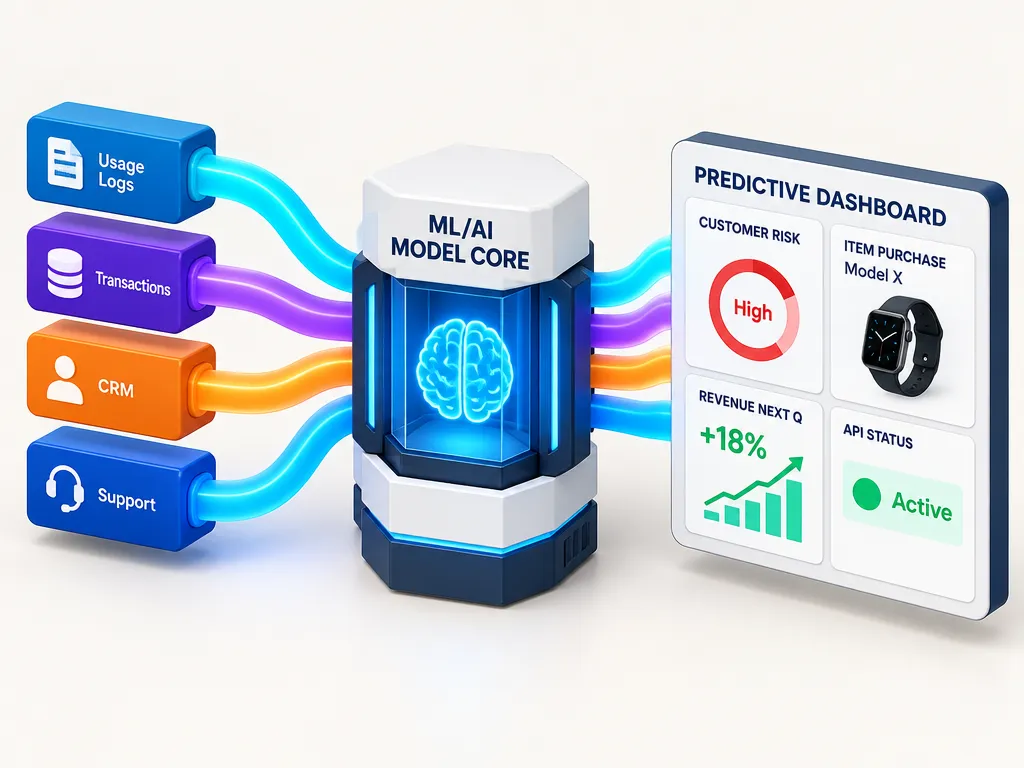
In practice, machine learning means your product starts making educated guesses instead of showing the same thing to everyone. Predictive analytics means it uses your historical data to guess what happens next. For example, it helps understand when the customer is about to leave, which item this user is likely to buy, which applicant is a credit risk, how much revenue next quarter will bring.
None of this requires training a model from scratch or hiring a research team. Most of the time it means combining the data you already have (such as usage logs, transactions, support tickets, CRM records) with a model that's tuned to your specific product, then serving its output through an API your existing app already calls. The hardest part isn’t the algorithm itself. It’s connecting clean, reliable data and building a pipeline that can keep running and scaling after launch.
ML Expertise in Practice
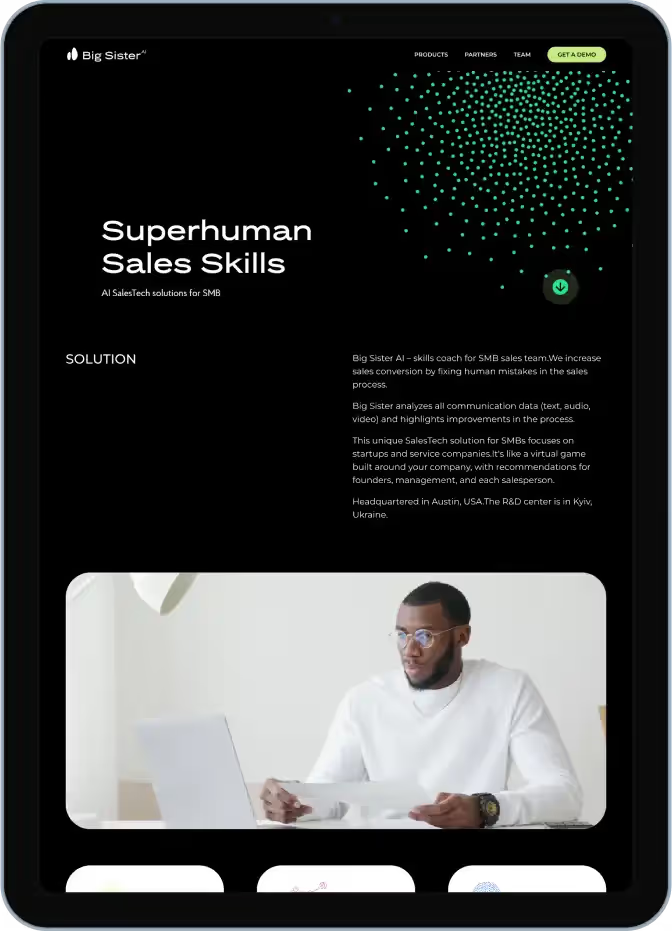
BigSister AI: How Empat Helped Turning Sales Data Into Decisions. We built BigSister AI, a sales analytics platform that brings data from different sources and CRM systems into one place. The project is a good example of how we approach ML in existing products: connect fragmented data, build the intelligence layer around it, and make the output useful inside the product — not just in a standalone model or dashboard.

VitalAI

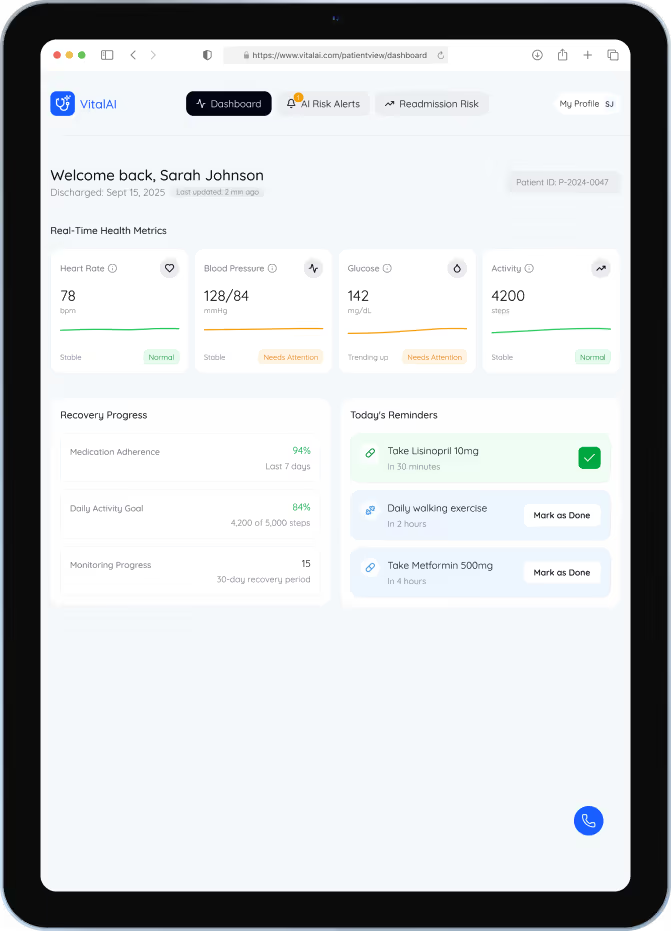
We built an AI-driven remote monitoring system that helps hospitals and care teams track patients after discharge using wearable data and predictive alerts. As a result, patients stay engaged, risks are identified early, and readmissions are reduced.
HealUa
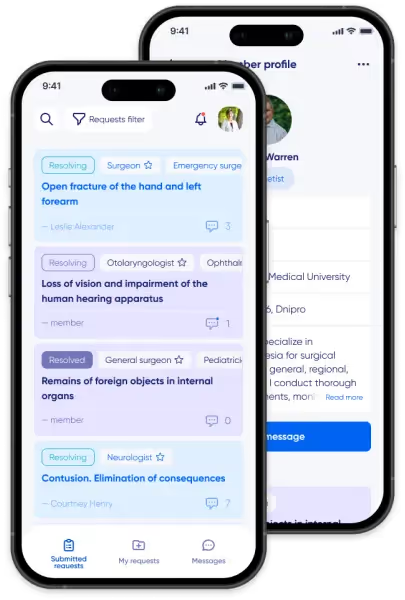
The HealUA app facilitates Ukrainian doctors in seeking expert assistance from colleagues worldwide.

Our AI Development Services
Custom AI development services for production-grade software products with scalable architecture, launch readiness, and strong technical oversight.

AI MVP development services for rapid startup validation, clear deliverables, and GPT-powered workflows — built as a fast fixed-scope MVP.
Production AI agents for customer support automation, knowledge systems, sales intelligence, and workflow automation.
Enjoy being ahead of the curve
Check out reviews and press mentions. Short and sweet, find out what we do that customers love us.



Get your Personalized Software cost & time estimates
Generate Personalized Software cost & time estimates.
Machine Learning We Add to Existing Products
Churn Prediction
We build models that flag users likely to cancel or go inactive before they do, scored on signals like usage decline, support tickets, and billing events. Your team gets a ranked list and a reason code, not a black box. In such a way, the retention campaigns target the right accounts with the right message at the right time.
Recommendation Engines
We build recommendation systems that surface the next product, article, or action each user is most likely to want. We use collaborative filtering, content-based models, or a combination of both, depending on your data and use case. The system runs on your existing catalog and event data, with A/B testing built in to measure the lift before rolling it out to 100% of traffic.
Credit, Risk & Lead Scoring
We turn data like application details, payment history, and user behavior into scores your team can actually use. The score can help decide which applications to approve, which leads to prioritize, or which transactions need a closer look. We also make the models explainable, so your team can understand where a score came from and explain the decision to a customer or regulator.
Demand & Revenue Forecasting
We build forecasting models for demand, revenue, inventory, or churn-adjusted MRR using your historical time-series data, seasonality, and external signals. Output feeds straight into the planning tools your finance or ops team already uses, instead of living in a one-off spreadsheet nobody maintains.
Fraud & Anomaly Detection
We build models that spot transactions, logins, and usage patterns that stand out from the norm. They can help catch fraud, account takeovers, billing errors, and unusual activity in near real time. Each alert comes with a confidence score your team can adjust to find the right balance between catching more issues and avoiding false positives.
Personalization & Dynamic Pricing
We build models that adapt what users see and pay based on their behavior and context. That can mean personalized offers, dynamic pricing, or onboarding flows tailored to different user groups. The models connect to your existing product and data stack, so recommendations and pricing can update as user behavior changes.
How We Add ML to a Product That Already Exists
You don’t need to rebuild your product or replace your backend to add ML. We work with what you already have and add the ML layer where it makes sense.
We start with the data you already have: what’s available, where it lives, how clean it is, and what’s missing. We also check how well your systems connect. If the data isn’t ready for ML, we’ll tell you upfront and explain what needs to change before you spend money on a model that won’t deliver useful results.

Next, we test the idea on a real, usually anonymized, sample of your data. You get something concrete to evaluate — predictions, scores, recommendations, or whatever the use case calls for. A PoC typically takes 2–4 weeks and gives you a chance to see whether the model works before committing to a full build.

Once the PoC proves the concept works, we build and train the production model on your full dataset. We compare a few approaches, tune for the metrics that matter to your business (not just accuracy), and document how the model makes decisions so your team isn’t left with a black box.
Once the PoC shows real value, we put the model into your existing product. It might run through an API, a scheduled job, or behind a feature flag, depending on the use case. Your current codebase, database, and UI stay in place. ML simply becomes another capability your product can use.

Before a model touches real users, we test it against edge cases, biased inputs, and failure scenarios, and set thresholds for when it should defer to a human instead of guessing. We also run a shadow-mode or limited rollout to compare model output against real outcomes before it drives decisions.

We roll the model out gradually, usually behind a feature flag or to a small percentage of traffic first, so we can catch issues before they affect every user. Once the numbers hold up, we expand to full rollout.

A model that works today can perform differently six months from now as users, products, and data change. We set up monitoring to catch performance and data drift, along with retraining workflows when the model needs an update. Your team can see how it performs in production and act on problems before they become bigger ones.

Machine Learning & Predictive Analytics Development Costs
Scope has a bigger impact on machine learning development costs than almost anything else. A churn prediction model built on existing CRM data is a very different project from a fraud detection system processing millions of events a day. Data volume, model complexity, integrations, infrastructure, and ongoing monitoring all affect the final cost.
Here's how Empat typically scopes ML and predictive analytics development projects:
An Experienced ML Team Across Industries
We’re a Claude-certified, OpenAI-partnered team with 50+ AI-powered projects delivered since 2022 and a 5.0 rating across 146 verified Clutch reviews. We’ve worked with ML and predictive analytics across several industries, including:
Healthcare
The Empat team has created predictive models for patient risk stratification and remote monitoring, using clinical and wearable data to identify patients who may need attention sooner. The models fit into existing healthcare workflows and privacy requirements.
FinTech
We’ve built models for credit scoring, fraud detection, and transaction risk across digital wallets and lending products. The models integrate with existing KYC and AML workflows and provide enough visibility into how decisions are made to support compliance reviews.
Retail & E-commerce
Empat has developed recommendation engines, demand forecasting, and dynamic pricing models using real catalog, customer, and transaction data. These models become part of the existing storefront or product instead of living in a separate analytics dashboard.
Education
We’ve built predictive models that help identify changes in student engagement and potential dropout risk using LMS and product usage data. The results can feed into the tools instructors and advisors already use, giving them a signal they can act on rather than another dashboard to check.
Have a product that's ready for ML?
Tell us what you want to predict — churn, demand, risk, or the next best action. We’ll look at your data, tell you what’s realistic, and outline what a PoC could look like, including the expected timeline and cost. No commitment. Just a straightforward conversation about whether ML makes sense for your product.
FAQ
Can I add machine learning to my product without rewriting it from scratch?
Yes. That's the default approach at Empat — we audit your existing data and architecture, then integrate the model as an additional service (API endpoint, scheduled job, or feature flag) that your current product calls. A full rebuild is rarely necessary and we'll tell you directly if your case is one of the exceptions.
How long does it take to add predictive analytics to an existing product?
A Proof of Concept, which validates model accuracy on your real data, typically takes 2–4 weeks. Getting a pilot version live for a limited user segment usually takes 6–12 weeks after that. Full production integration with monitoring depends on data complexity and scale, generally 3 months or more.
What data do I need to have before starting an ML project?
You need historical data connected to the outcome you're predicting — past churn events for churn models, past transactions for scoring, past sales for forecasting. It doesn't need to be perfectly clean; our Data Audit identifies gaps and tells you what's missing before you commit to a build.
Do you build custom models, or do you use pre-built AI APIs?
Both, depending on the use case. Some problems are solved faster and more reliably with a fine-tuned use of an existing model or API; others — especially scoring and forecasting on proprietary data — need a custom model trained on your data. We recommend the approach that gets you a working, maintainable result, not the one that's more impressive on paper.
How do you handle data privacy and compliance during ML development?
We work within your existing compliance boundaries — HIPAA for healthcare data, KYC/AML for financial data, and standard data protection practices for everything else. Sensitive data is handled inside your infrastructure wherever possible, and we're explicit about what leaves your systems and where it goes.
What happens after the model is live — do you just hand it off?
No. Every ML integration includes a monitoring plan for accuracy drift and a retraining path, because models degrade as real-world data shifts. We can hand this fully to your team, stay on for ongoing monitoring and iteration, or split the difference — that's scoped during the Data Audit.
How much does it cost to add machine learning to an existing product?
It depends on how far you go. A Data Audit runs about $5,000 and tells you whether the idea is even viable. A Proof of Concept is around $15,000 and gives you working predictions on your own data. Full production integration starts around $50,000 depending on scope. We recommend starting with the smaller, cheaper steps so you’re only committing to the full number once you know the model actually works.
Will you work with our in-house engineering or data team, or does Empat do everything independently?
Both — it depends on what you need. We can run the whole project independently, or work alongside your existing engineering or data team, sharing code, models, and decisions as we go. Which model makes sense is usually clear by the end of the Data Audit, once we know what your team already has in place.
Read our blog


Healthcare IT Consulting: When You Need It and What It Covers
Most people looking for healthcare IT consulting know something is wrong but not whether they need advice, a build, or permission to stop. This covers what the work includes, what it excludes, and how to tell which you need before paying anyone.

