
AI Automation Services: What to Automate First, What It Costs, and How to Choose a Partner
AI automation services hand the repetitive judgement inside a business process to a system built from language models and integrations. This guide covers which processes to automate first, how AI automation differs from RPA and no-code tools, what it costs in 2026 and how to choose a partner.

AI automation services take a specific business process — support triage, document intake, sales operations, finance back-office — and hand the repetitive judgement inside it to a system built from language models, integrations and, where it still fits, classic robotic process automation. The deliverable is a working system in production, not a tool licence or a slide deck.
This guide is for the operations lead, COO or founder who has been told to "automate with AI" and now has to decide what to automate first, whether to buy a tool or hire a partner, and what the whole thing will cost. It covers the processes that pay back fastest, how AI automation differs from RPA and no-code tools, what an engagement looks like, and the failure patterns that sink most projects.
The short version: start with one high-volume process that has a clear success metric, prove it in weeks, and budget for the run cost as well as the build. Most disappointing AI automation projects skip at least one of those three.
What are AI automation services?
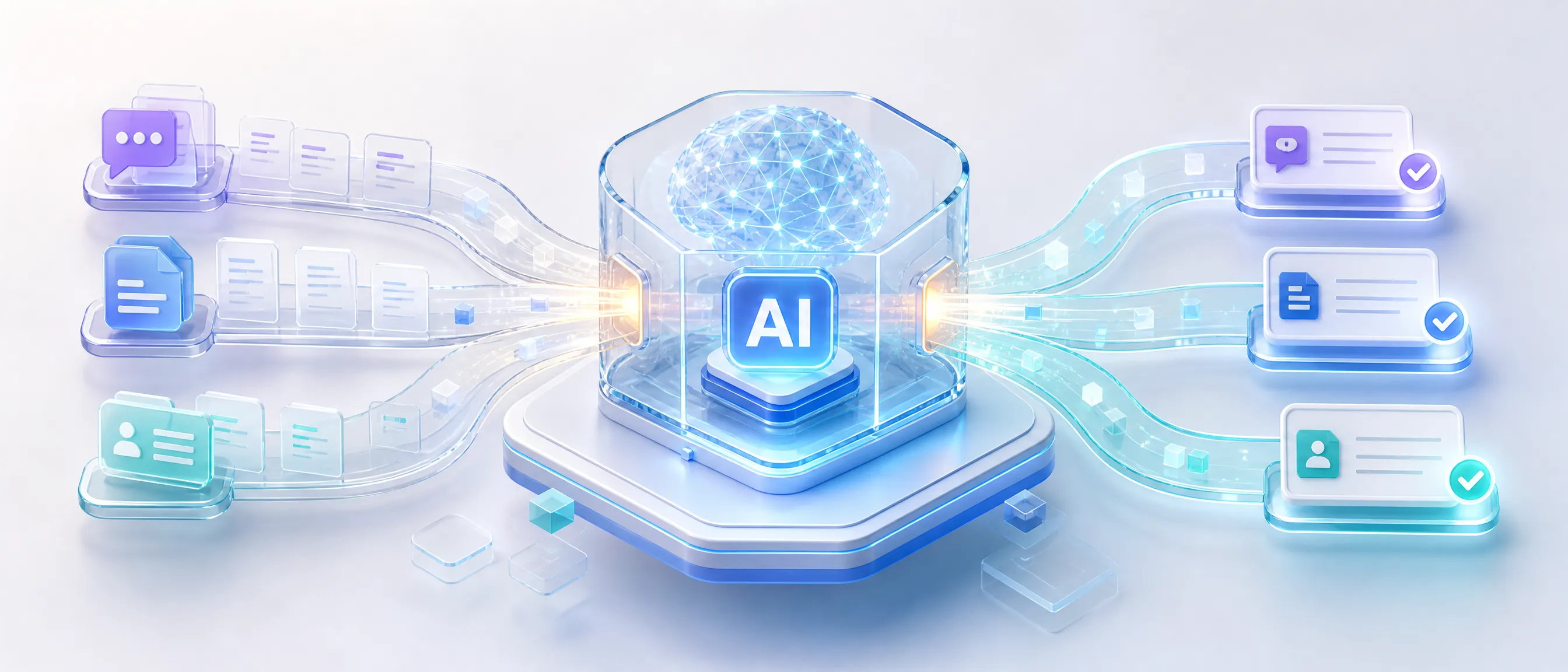
AI automation services design, build and run systems that complete business tasks which used to need a person reading, deciding and typing. A language model does the reading and deciding; integrations with your CRM, helpdesk, ERP or inbox do the typing. A good provider also owns the unglamorous parts: evaluation, error handling, human review and monitoring.
That last part is what separates a service from a tool. Tools give you building blocks. A service is accountable for the outcome — the tickets actually get routed, the invoices actually get posted — and for what happens when the model is wrong.
The gap between the two is large. MIT's 2025 "GenAI Divide" study found that 95% of enterprise generative AI pilots produced no measurable P&L return, and put the cause less on the models than on tooling that couldn't learn from feedback or fit the workflow around it. Automation that is built into the process, with a feedback loop, is the part that pays.
Which business processes should you automate with AI first?
Automate first the process with the highest volume of repetitive, text-heavy decisions and a success metric you already track. Support triage, document intake and sales operations usually win, because they combine volume, unstructured input and an easy before-and-after comparison. Rare, high-stakes or poorly defined processes make bad first projects.
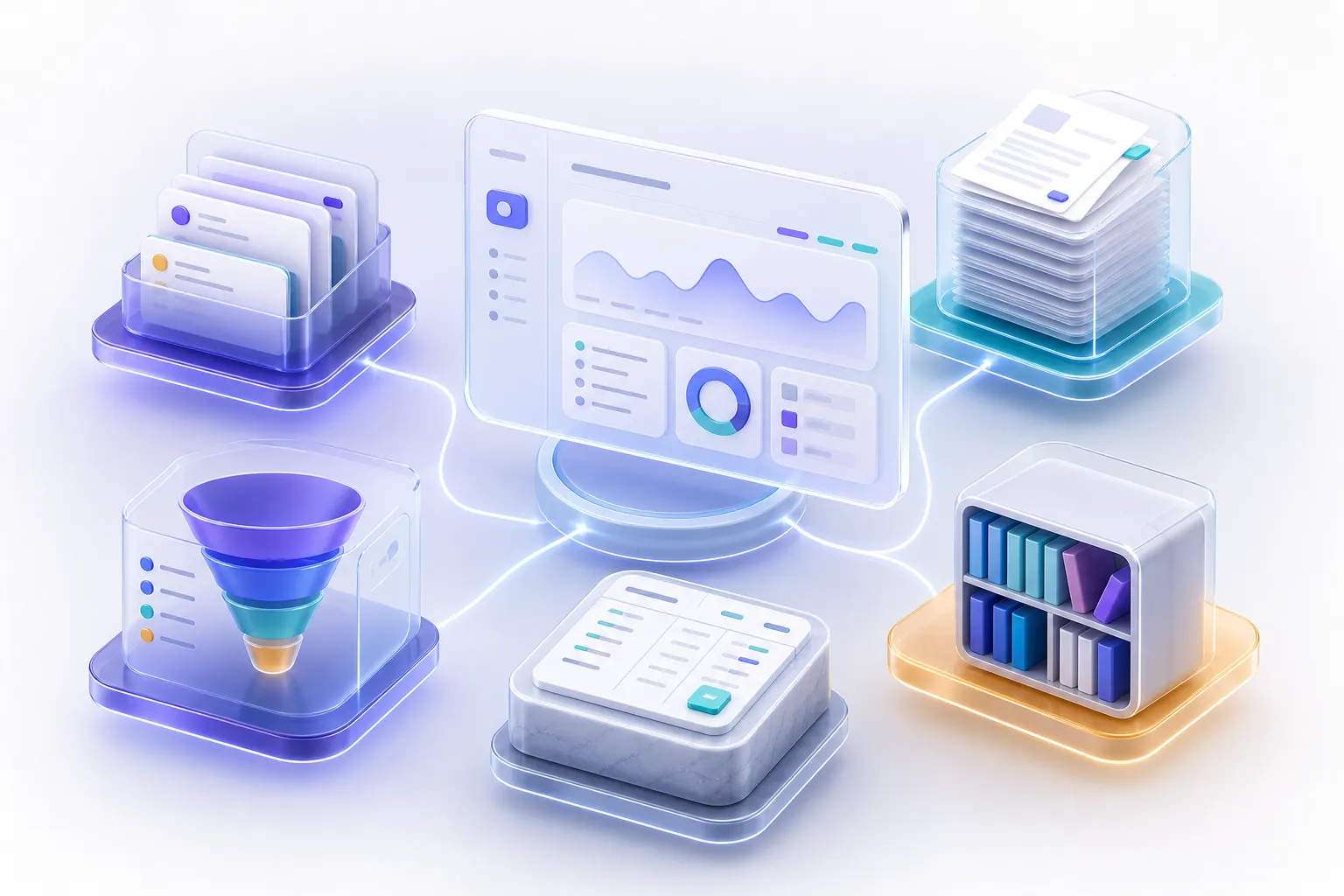
Use this as a starting map rather than a menu:
| Process | Typical AI approach | Signal that it pays back |
|---|---|---|
| Support triage | Classify intent and urgency, draft replies, route to the right queue | First-response time and share of tickets resolved without an agent |
| Document intake | Extract fields from invoices, contracts, forms and emails into structured records | Hours of manual data entry per week, error rate on keyed data |
| Sales operations | Enrich leads, summarize calls, update the CRM, flag at-risk deals | Rep time spent on admin, CRM data completeness |
| Finance back-office | Match payments, reconcile, prepare payout and commission runs | Close time, reconciliation exceptions per cycle |
| Internal knowledge | Retrieval-based assistant over policies, docs and past tickets | Repeat questions to senior staff, onboarding time |
Two filters decide the order. First, volume: automating a task that happens ten times a month rarely covers its build cost. Second, tolerance for error: a triage mistake gets corrected by the next person in line, while a wrong payment does not. Start where mistakes are cheap and visible, then move toward processes where the automation needs stronger guardrails.
How is AI automation different from RPA and no-code tools?
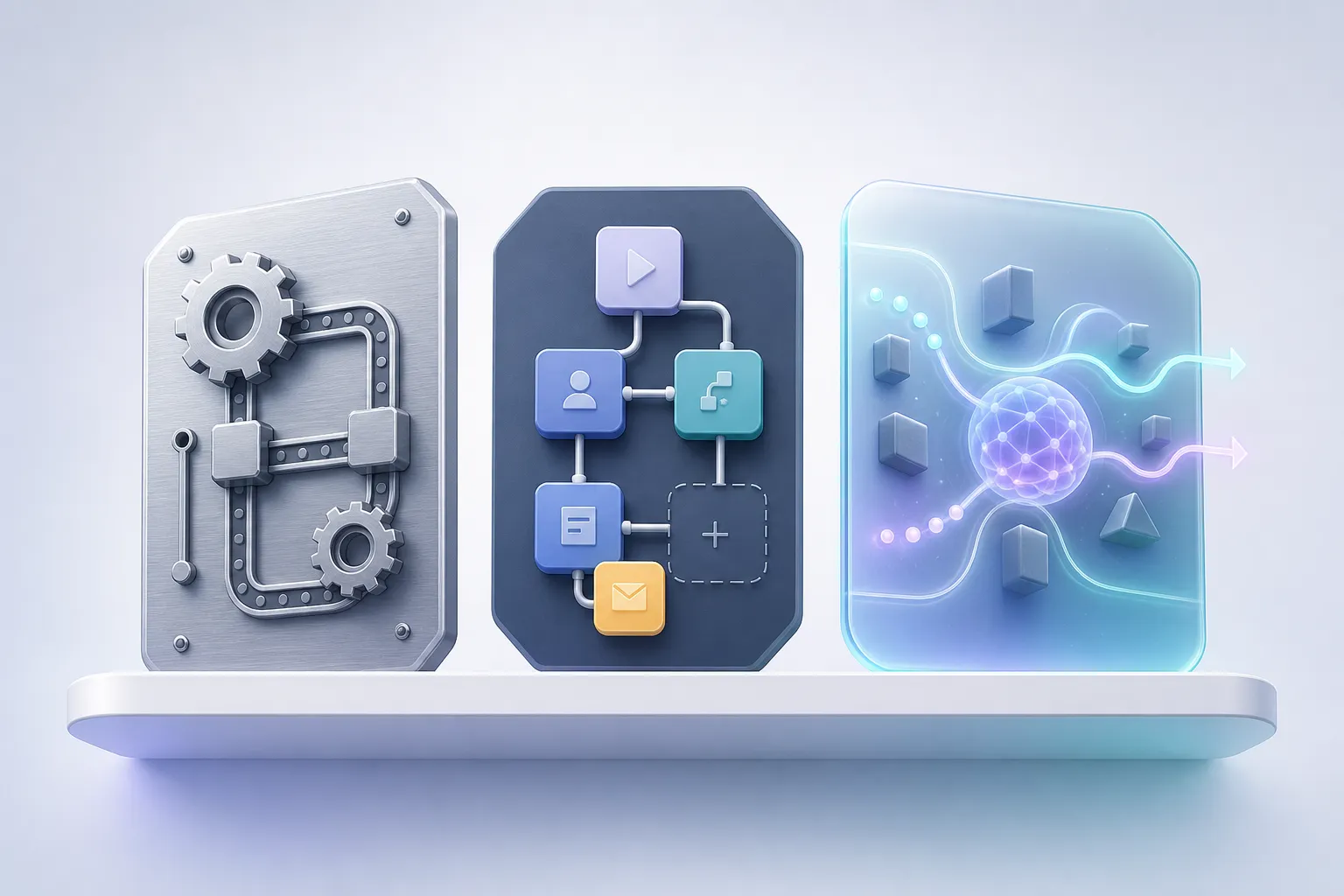
RPA follows fixed rules on structured screens and breaks when the input changes. No-code tools such as Zapier or Make connect apps with simple triggers and are ideal for predictable hand-offs. AI automation handles unstructured input — emails, documents, conversations — and makes judgement calls. Most real systems combine all three.
| RPA | No-code workflow tools | AI automation | |
|---|---|---|---|
| Best at | Repeating exact clicks in legacy systems without an API | Moving data between apps on simple triggers | Reading, classifying and deciding on unstructured input |
| Breaks when | A screen or field changes | Logic needs judgement or many branches | There is no evaluation, fallback or success metric |
| Who builds it | RPA developers | Ops teams themselves | Engineers with AI and integration experience |
| When it is enough | Stable, rules-only back-office steps | Fewer than a handful of apps, predictable data | Volume is high and the input is messy |
The practical consequence: if a no-code tool solves your problem, use it and skip the agency. Hire a partner when the process involves unstructured input, several systems, sensitive data or a need for evaluation and monitoring — the parts that no-code tools leave to you. For the build side of this, see our guide to AI workflow automation, and for deterministic back-office steps, RPA development services.
What does an AI automation engagement look like?
A sound engagement runs in four stages: discovery to pick the process and define the metric, a proof of concept on real data, a production build with integrations and human review, then monitoring and iteration. Each stage ends with a go or no-go decision, so you stop cheaply if the numbers don't hold.
What you need to bring: one named process owner who can make decisions, access to the systems and data involved, and a baseline for the metric. Without a baseline, nobody can say whether the automation worked.
How much do AI automation services cost?
At Empat, AI automation work follows a staged ladder: discovery from $5,000 over one to two weeks, a proof of concept from $15,000 over two to four weeks, an MVP from $30,000 over six to twelve weeks, and a full product from $50,000. Model and API usage, hosting and monitoring are a separate running cost.
Budget the run cost as its own line from day one. It scales with volume and model choice, and it is the number finance will ask about six months after launch. A useful partner gives you a run-cost estimate per thousand transactions before the build starts. Our project cost calculator gives a first-pass build estimate.
How do you choose an AI automation partner?
Choose a partner by how they handle failure, not by the demo. Ask how they evaluate accuracy, what happens to low-confidence cases, who owns the prompts and workflows after handover, where your data is processed, and what the system will cost to run per month. Vague answers to any of these are a warning sign.
Where do AI automation projects go wrong?
AI automation projects usually fail for organizational reasons, not model quality: they automate a broken process, launch without a success metric, have no fallback when the model errs, or ignore run cost until the invoice arrives. Each is preventable in discovery, which is why discovery is the cheapest insurance in the project.

Gartner is blunt about the stakes: it expects more than 40% of agentic AI projects to be canceled by the end of 2027, mostly over escalating costs, unclear business value or weak risk controls. Narrow scope and a measured pilot are the defense.
How Empat approaches AI automation
Empat builds AI automation as product engineering: one process, one metric, measured on real data before anything scales. Our AI practice is led by Vladyslav Fedenko, a Claude Certified Architect, and every line of AI-assisted code is reviewed by an engineer. We will tell you when a no-code tool is the better answer.
Two examples from our own work show the range. For BigSister AI we built a system that tracks and analyzes sales-team performance in real time, with predictive reporting — the hard part was making it work across different data sources and CRM systems. For PayFlow Engine we built a modular platform that automates seller payouts and commissions for niche marketplaces, integrating with providers such as Stripe and Wise and replacing custom-built systems. The second is a reminder that not every automation needs a language model: when the rules are clear, deterministic code is cheaper and safer.
If you want to see what an agent-based system would look like for your process, our AI Agent Blueprint Workshop produces that design in a fixed engagement, and our AI agent development team takes it to production.
When the automation is conversational — answering customers or qualifying leads rather than processing back-office work — our guide to AI chatbot development services covers that side of the decision.
FAQ
What are AI automation services?
AI automation services design, build and run systems that complete business tasks which used to need a person to read, decide and type — support triage, document intake, sales operations, finance back-office. A language model handles the reading and deciding, integrations handle the actions, and the provider is accountable for accuracy, human review, monitoring and what happens when the model is wrong.
How much does AI automation cost?
At Empat, discovery starts from $5,000 over one to two weeks, a proof of concept from $15,000 over two to four weeks, an MVP from $30,000 over six to twelve weeks, and a full product from $50,000. Model and API usage, hosting and monitoring are a separate running cost that scales with volume, so ask for a per-transaction estimate before the build starts.
What business processes should be automated with AI first?
Start with a high-volume process full of repetitive, text-heavy decisions and a metric you already track — support triage, document intake and sales operations are the usual winners. Avoid rare, high-stakes or poorly defined processes for a first project. Pick a case where mistakes are cheap and visible, prove it on real data, then expand to processes that need stronger guardrails.
Is AI automation the same as RPA?
No. RPA follows fixed rules on structured screens and breaks when the input or interface changes. AI automation reads unstructured input such as emails, documents and conversations and makes judgement calls on it. They work well together: AI interprets the messy input and decides, while RPA or plain integrations carry out the resulting steps in systems that don't have an API.


