
AI Chatbot Development Services: What to Build, What It Costs, and How to Choose a Partner
Rule-based, LLM, RAG or agentic: which chatbot to build, what a production assistant is made of, what it costs at Empat, and seven checks for choosing a development partner.

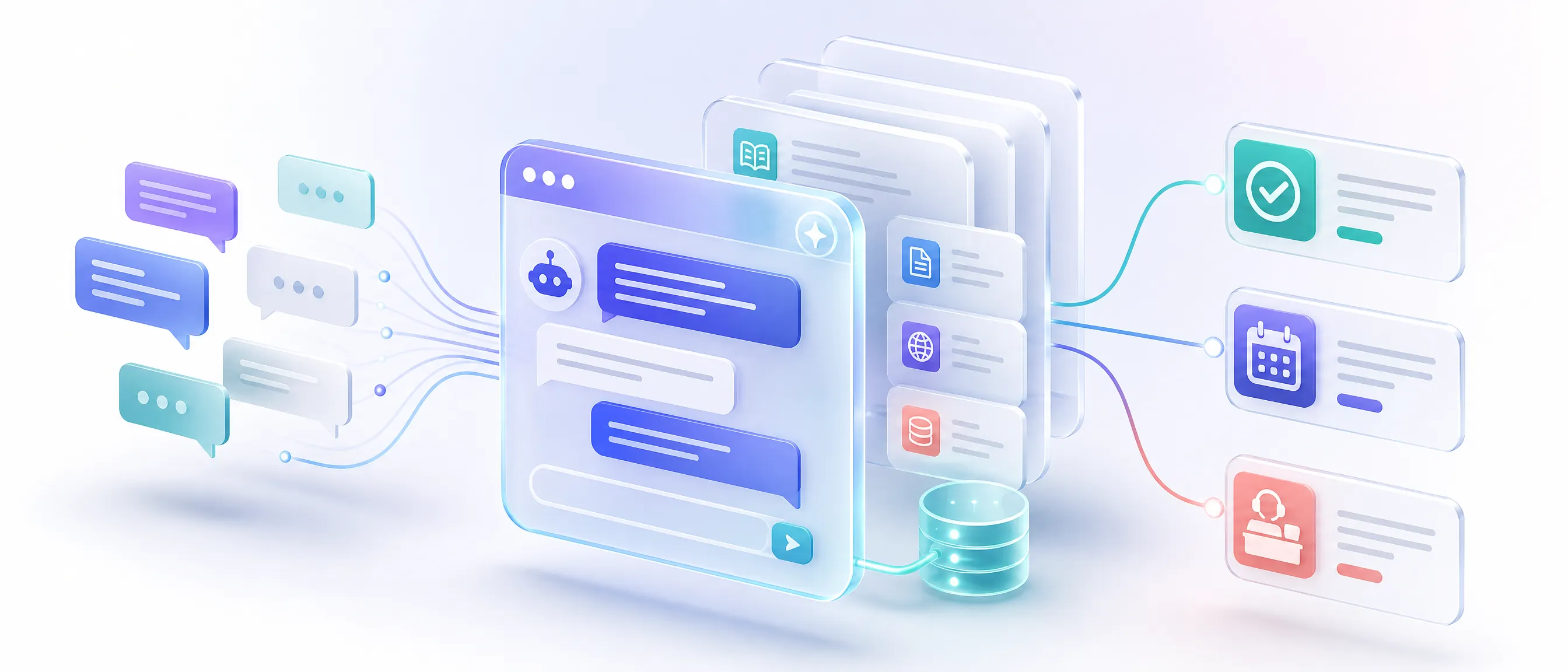
AI chatbot development services design, build and run a conversational assistant that is wired into your data and your systems, so it can answer real questions and complete real tasks — resolving a support ticket, qualifying a lead, booking a slot — rather than reciting a script. The deliverable is a production system with evaluation, guardrails and monitoring, not a website widget.
This guide is for the product, support or operations lead who has been asked to "add a chatbot" and needs to decide what kind to build, what a production-grade one is made of, what it will cost to build and to run, and how to tell a real development partner from a platform reseller.
The short version: decide what the bot must actually do before you pick a technology, insist on an evaluation set built from your own conversations, and budget the running cost from day one. Most disappointing chatbot projects skipped one of those three.
What do AI chatbot development services include?
A full chatbot development engagement covers conversation design, the language-model layer, retrieval over your documents and data, integrations with the systems the bot needs to act in, guardrails and human hand-off, evaluation against real conversations, deployment, and monitoring after launch. Anything that stops at "we connected a model to a chat window" is a demo, not a service.
The reason the full list matters is that the model is rarely the hard part any more. The hard parts are getting the right facts in front of it, letting it take safe actions, and knowing when it is wrong. A partner that only talks about which model they use has not built many of these.
Which kind of chatbot should you build?
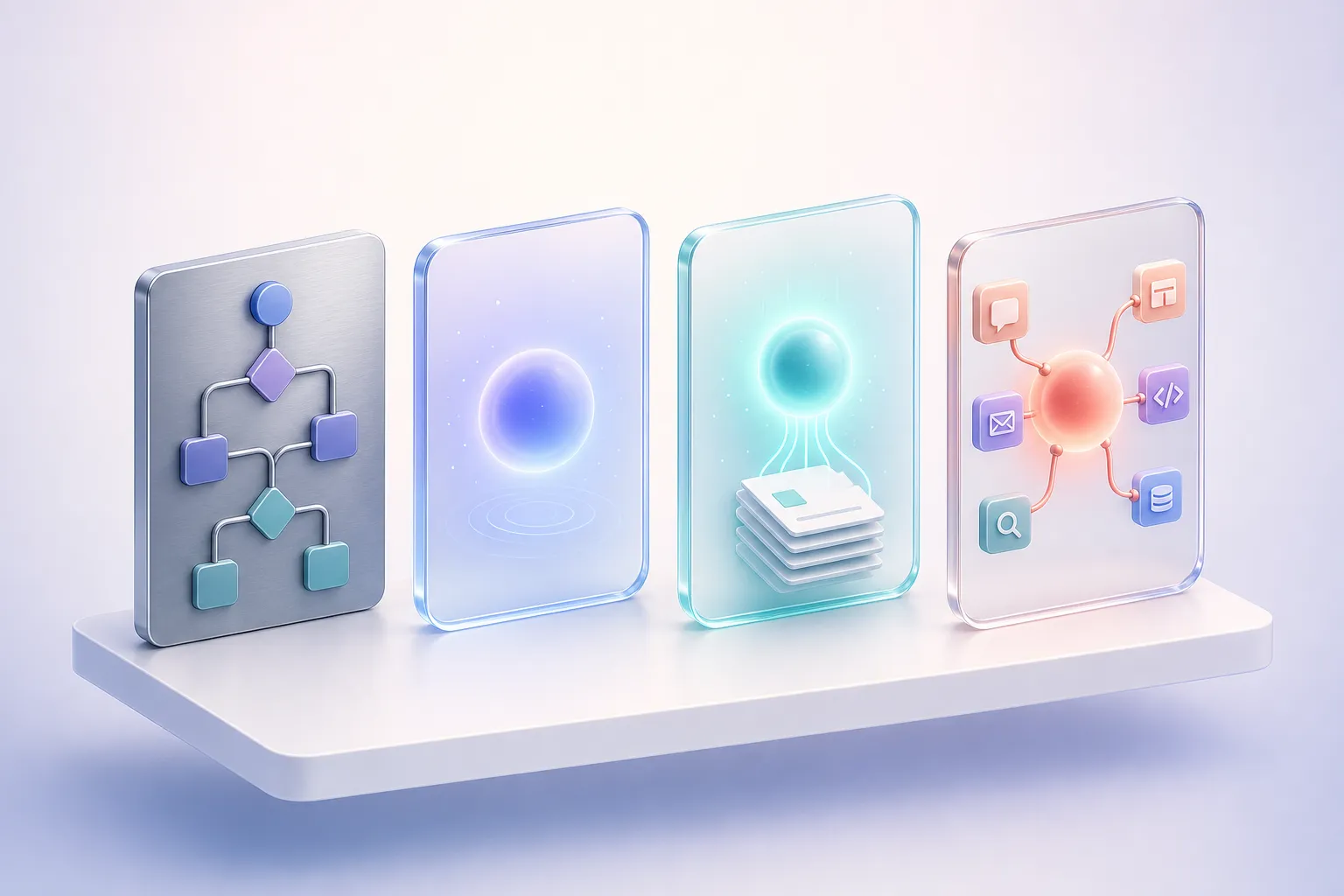
There are four kinds of chatbot in 2026, and the right one depends on what the bot must do, not on what is fashionable: rule-based flows for fixed processes, a plain language-model bot for open conversation without your data, a retrieval-augmented bot when answers must come from your documents, and an agentic bot when it has to take actions in other systems.
| Type | Best for | What it needs from you | Main risk |
|---|---|---|---|
| Rule-based flow | Fixed processes with few branches: order status, password reset, appointment reminders | A defined process and the API behind it | Breaks the moment a user says something off-script |
| LLM-only | General conversation, drafting, tone — where your own data is not required | Prompting, tone guidelines, a topic boundary | Confident answers about your business that it has no way of knowing |
| Retrieval-augmented (RAG) | Support, internal knowledge, policy and product questions answered from your documents | Clean, current documents and a way to keep them current | Stale or contradictory sources produce confident wrong answers |
| Agentic | Bots that act: create tickets, book, update a CRM, issue refunds within limits | Integrations, permissions, a human review path | An action taken on a misunderstanding; needs confirmation steps and limits |
Most production bots are a combination: retrieval for answers, a small set of agentic actions with confirmation, and rule-based flows for the handful of processes where a fixed path is safer. For the retrieval layer specifically, our RAG implementation guide covers vector databases, chunking and hallucination controls in depth; this article stays at the decision level.
What is a production chatbot made of?
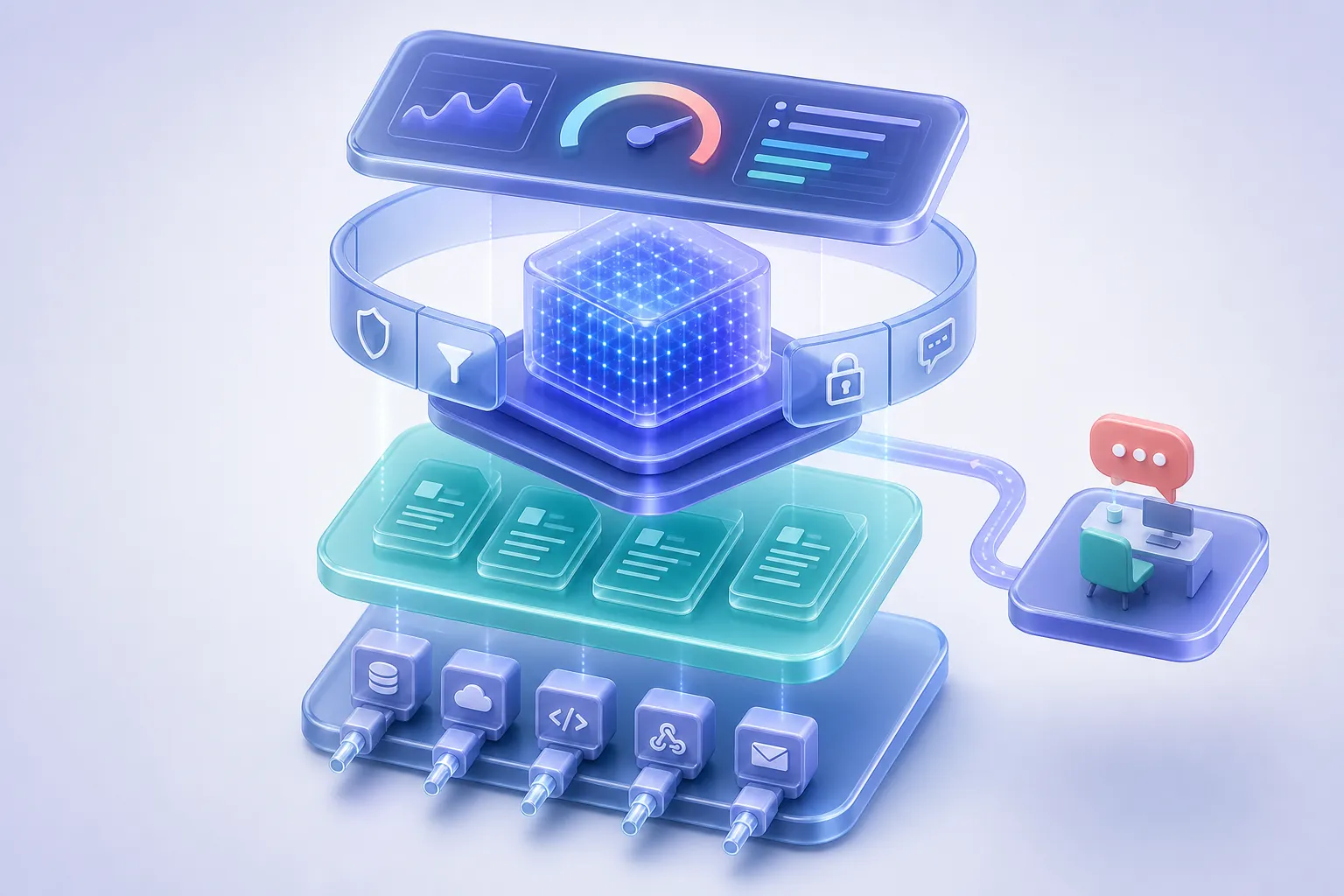
A production chatbot has six parts: the model, a retrieval layer over your content, integrations into the systems it reads from and acts in, guardrails that keep it on topic and within limits, a human hand-off path for what it cannot handle, and analytics that show what it is actually doing. Leave out any one of them and you will discover its absence in the first month.
- Model. Chosen for the job and the budget, not the headline. A smaller model with good retrieval often beats a larger one without it, at a fraction of the run cost.
- Retrieval. Your help center, policies, product data or past tickets, chunked and indexed, with a process for keeping them current.
- Integrations. Helpdesk, CRM, calendar, order system, identity. This is where most of the engineering time goes.
- Guardrails. Topic boundaries, confidence thresholds, action limits, and refusal behaviour for what the bot must never do. Prompt injection — a user or a retrieved document slipping instructions into the conversation — is first on the OWASP Top 10 for LLM applications, so test for it before launch, not after.
- Hand-off. A clean transfer to a person, with the conversation context attached, when confidence is low or the user asks.
- Analytics. Resolution rate, hand-off rate, the questions it fails on, cost per conversation. The failure list is what you improve next.
Where do chatbots pay back first?
Chatbots pay back fastest where conversation volume is high, the questions repeat, and the answer lives in documents you already have: tier-one support, lead qualification on the website, internal knowledge for employees, and customer onboarding. Each has a metric you already track, which is what makes the payback measurable.
- Support deflection. Metric: share of conversations resolved without an agent, and first-response time.
- Lead qualification. Metric: qualified conversations handed to sales, and time to first reply.
- Internal knowledge. Metric: repeat questions to senior staff, onboarding time for new hires.
- Onboarding and activation. Metric: share of new users who complete setup, support tickets in week one.
Start with one of these, not all four. A bot that does one job well earns the trust to be given the next one.
How much does it cost to develop an AI chatbot?
At Empat, chatbot work follows a staged ladder: discovery from $5,000 over one to two weeks, a proof of concept from $15,000 over two to four weeks, an MVP from $30,000 over six to twelve weeks, and a full product from $50,000. Model and API usage, hosting and monitoring are a separate running cost that scales with conversation volume.
- Discovery — from $5,000, 1–2 weeks. Which conversations to automate, what data exists, which systems the bot must reach, the success metric, and an honest recommendation — sometimes "start with a rule-based flow".
- Proof of concept — from $15,000, 2–4 weeks. The bot answering real historical conversations from your data, with measured accuracy.
- MVP — from $30,000, 6–12 weeks. One job in production with integrations, guardrails, hand-off and analytics.
- Full product — from $50,000, 3–12+ months. Several jobs, several channels, actions with permissions, governance.
Ask for the running cost per thousand conversations before the build starts. It depends on model choice, how much context each answer needs, and how many model calls a single conversation makes. A partner who cannot estimate it has not run one at scale. Our project cost calculator gives a first-pass build figure.
Chatbot vs AI agent: what is the difference?
A chatbot converses; an AI agent pursues a goal, taking multiple steps and actions across systems to get there, often without a person in the conversation at all. An agentic chatbot sits between the two: it talks to a user and can take a bounded set of actions on their behalf. Which you need depends on whether the work is a conversation or a workflow.
If the job is answering and routing, build a chatbot. If the job is processing — reconciling, enriching, triaging in bulk — it is probably an agent, and our guide to what an AI agent is and our AI agent development practice cover that side.
How do you choose an AI chatbot development company?
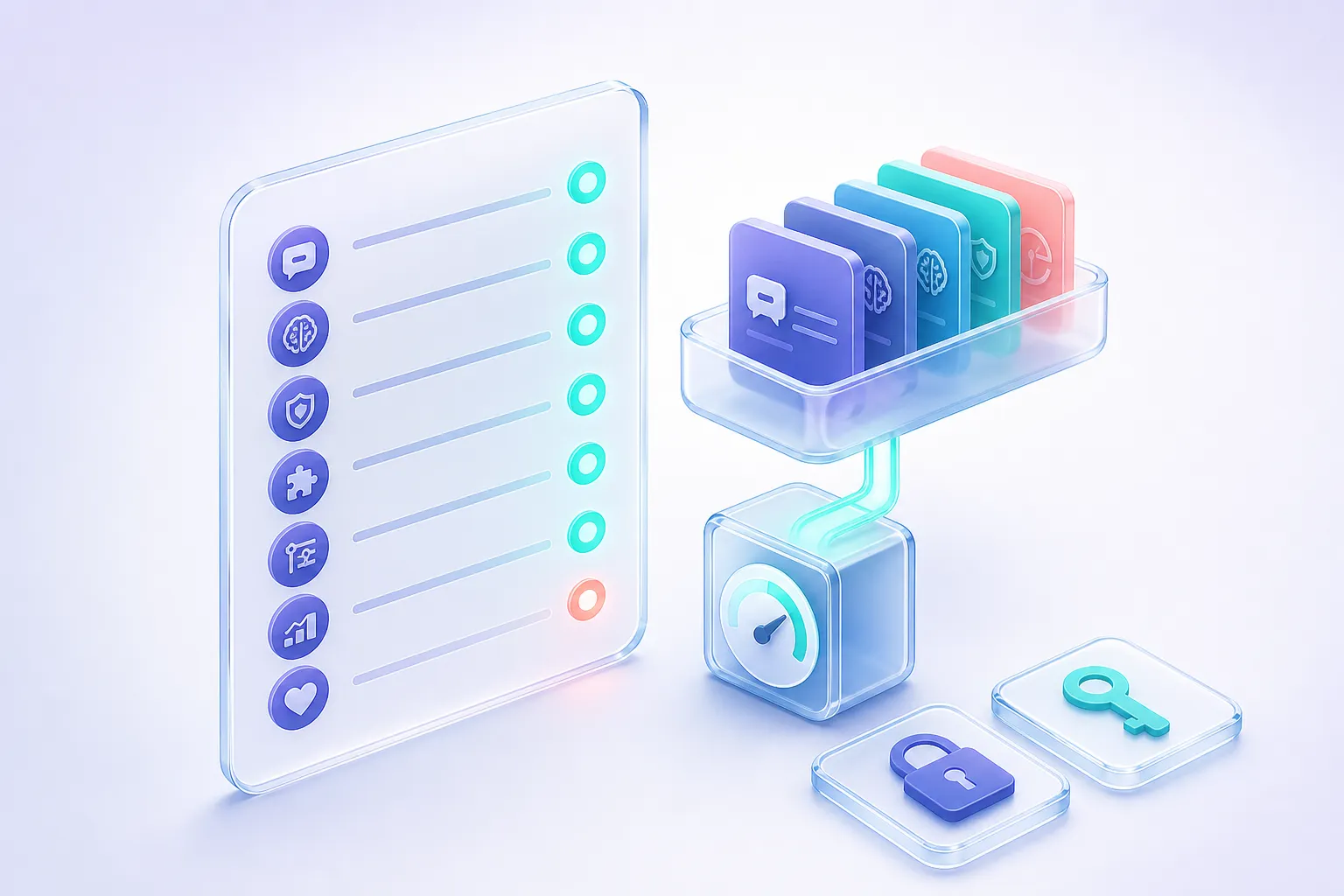
Choose a chatbot development company by how it handles the failure cases, not by the demo. Ask how accuracy will be measured before launch, what happens when the bot is unsure, where your data is processed, who owns the prompts and the index afterwards, what it costs to run, and how monitoring and handover work. The demo always looks good; the answers to these separate builders from resellers.
| Check | What a good answer sounds like |
|---|---|
| Evaluation | "We build a test set from your real conversations and report accuracy before go-live." |
| Hallucination controls | "Answers are grounded in retrieved sources, cited, and the bot declines when nothing relevant is found." |
| Data residency | Named providers, regions and retention periods; a business associate agreement if health data is involved. |
| Hand-off design | A confidence threshold, a human queue, and the conversation context passed along. |
| Ownership | You own the prompts, the index, the integrations and the analytics — documented well enough for another team. |
| Run cost | A per-thousand-conversations estimate, with the model choice explained. |
| Monitoring and handover | Dashboards, a weekly failure review in the first months, runbooks, a named contact. |
Where do chatbot projects go wrong?
Chatbot projects usually fail on the edges rather than the model: they launch on stale documents, they have no confidence threshold so every answer sounds equally sure, they cannot hand off cleanly, or nobody reviews the conversations it failed on. All four are design decisions, and all four are cheap to get right in discovery.
- Stale or contradictory sources. The bot is only as current as the documents behind it. Assign an owner to the content.
- No confidence threshold. The bot should say "I'm not sure, let me get someone" far more often than most launches allow.
- Bad hand-off. Making the user repeat everything to a human undoes the goodwill the bot earned.
- No failure review. The list of questions it could not answer is the roadmap. Someone has to read it.
The cost of getting this wrong is not only reputational. In Moffatt v. Air Canada (2024), a Canadian tribunal held the airline liable for a bereavement-fare policy its website chatbot described incorrectly, and rejected the argument that the bot was responsible for its own answers. Whatever the bot says, the business has said.
The wider pattern is the same one MIT documented in its 2025 "GenAI Divide" study: most enterprise generative AI pilots showed no measurable return, less because of the models than because the tools could not learn from feedback or fit the workflow. A chatbot with a failure loop is on the right side of that divide.
How Empat builds AI chatbots
Empat builds chatbots as product engineering: one job, one metric, an evaluation set from your real conversations before anything goes live, and retrieval grounded in your documents rather than the model's memory. Our AI practice is led by Vladyslav Fedenko, a Claude Certified Architect, and every line of AI-assisted code is reviewed by an engineer.
The method behind the retrieval layer is the one in our RAG implementation guide. When the bot needs to take actions rather than only answer, we design it as a bounded agent with confirmation steps, using the same approach as our AI agent development work. If you would like a concrete design for your case before committing to a build, the AI Agent Blueprint Workshop produces exactly that in a fixed engagement, and our guide to AI integration services covers how the bot fits into an existing product.
If the chatbot is one part of a wider generative AI product rather than a standalone assistant, our guide to generative AI development services covers scope, stack and cost at the product level.
FAQ
What do AI chatbot development services include?
Conversation design, the language-model layer, retrieval over your documents and data, integrations with the systems the bot reads from and acts in, guardrails and a human hand-off path, evaluation against real conversations, deployment, and monitoring after launch. A service is accountable for the bot's accuracy and behaviour in production; a tool only gives you the building blocks.
How much does it cost to develop an AI chatbot?
At Empat, discovery starts from $5,000 over one to two weeks, a proof of concept from $15,000 over two to four weeks, an MVP from $30,000 over six to twelve weeks, and a full product from $50,000. Model and API usage, hosting and monitoring are a separate running cost that scales with conversation volume, so ask for a per-thousand-conversations estimate before the build.
What is the difference between a chatbot and an AI agent?
A chatbot converses with a user and answers or routes; an AI agent pursues a goal across multiple steps and systems, often with no person in the conversation. An agentic chatbot sits in between: it talks to the user and can take a bounded set of actions on their behalf with confirmation. If the job is a conversation, build a chatbot; if it is a workflow, it is probably an agent.
How long does it take to build a custom AI chatbot?
A proof of concept on your real data takes two to four weeks. A production MVP that handles one job with integrations, guardrails, hand-off and analytics typically takes six to twelve weeks. Timelines stretch most often on the client side — access to systems and clean, current documents — rather than on the model work, so line those up during discovery.


