

How to Choose a Custom Software Development Company in 2026
A buyer’s guide to choosing a custom software development company in 2026: when custom is the right call, the four engagement models, what it costs and how long it takes, an eight-point vendor scorecard, contract essentials, red flags and the questions to ask on the first call.
A custom software development company designs, builds and maintains software made for one client's specific business — a product, a platform or an internal system that off-the-shelf SaaS can't cover. You hire one when the software is part of how you compete, when no existing product fits your workflow, or when you need a team faster than you can hire one.
Choosing the company is the decision that shapes everything after it: cost, timeline, code quality and whether you can keep building once the engagement ends. This guide covers when custom is the right call, the engagement models on offer, what custom software costs in 2026, a scorecard for comparing vendors, the red flags that predict a failed project, and the questions to ask on the first call.
The one-line answer: choose the company whose process you can verify, not the one with the best pitch — real case depth, named engineers, clear code ownership and a written plan before a large contract.
When is custom software the right call?
Custom software is the right call when the software itself is a differentiator, when no SaaS product fits a core workflow without heavy workarounds, or when integration and data ownership matter more than time to launch. If a standard tool covers most of the need, buy it and spend the budget on the parts that are genuinely yours.
That third option is skipped surprisingly often. A good custom software company will raise it before you do, even though it means a smaller contract.
What engagement models do custom software companies offer?
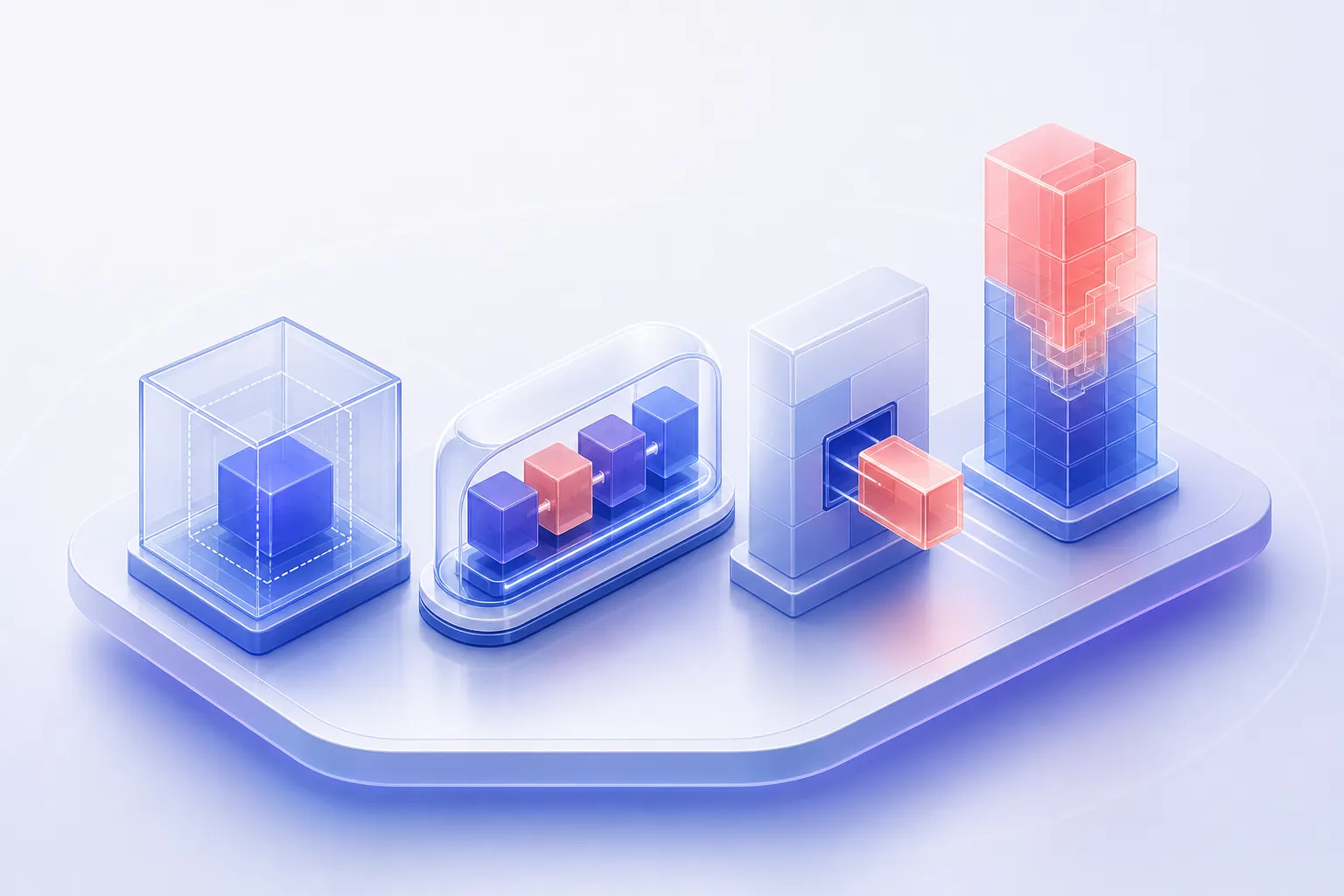
Most custom software companies offer four engagement models: a fixed-scope project, a dedicated team, staff augmentation and a longer product partnership. They differ in who owns delivery risk and how pricing works. Pick by how settled your requirements are and how much product management you can do in-house.
| Model | Best for | Who owns delivery risk | Pricing shape |
|---|---|---|---|
| Fixed-scope project | A well-defined MVP or feature set with a clear finish line | Mostly the vendor, within the agreed scope | Fixed price per phase; changes go through change requests |
| Dedicated team | An evolving product that needs a stable, full team for months | Shared; you set priorities, the vendor runs delivery | Monthly fee per team member |
| Staff augmentation | Filling a specific skill gap inside your existing team | You — the engineers work under your management | Hourly or monthly rate per engineer |
| Product partnership | Founders who need product, design and engineering leadership, not just code | Shared, with the vendor accountable for outcomes | Phased budget, often discovery → MVP → scale |
A common mistake is choosing staff augmentation to save money while having no one in-house to manage the engineers. You then pay for capacity without direction. If you don't have a technical leader, a dedicated team or product partnership is usually cheaper in practice. For the difference in detail, see our pages on staff augmentation and dedicated developers.
How much does custom software development cost in 2026?
Custom software cost is driven by scope, team location and engagement model. At Empat, work follows a staged ladder: discovery from $5,000 over one to two weeks, a proof of concept from $15,000, an MVP from $30,000 over six to twelve weeks, and a full product from $50,000 over three to twelve months or more.

Hourly rates vary widely by region — North American and Western European agencies sit at the top, Eastern European teams in the middle and South and Southeast Asian vendors at the lower end. The total-cost gap is narrower than the rate gap, because management overhead, rework and time-zone friction are paid for in hours too. Compare quotes on total cost to a working release, not on hourly rate.
Three things move the number more than location:
- Integrations. Every external system — payments, an ERP, an EHR, a legacy database — adds design, testing and vendor coordination. Count them before you compare quotes.
- Compliance. HIPAA, PCI DSS or SOC 2 requirements add security work, audit logging and documentation that a consumer app does not need.
- Decision speed. A product owner who answers in a day keeps a team moving; one who answers in a week turns a twelve-week MVP into a twenty-week one.
For a first-pass number on your own project, use our project cost calculator. For stage-specific detail, see MVP development services and web application development services.
How long does custom software development take?
A focused MVP typically takes six to twelve weeks after one to two weeks of discovery; a full product takes three to twelve months or more, depending on integrations and compliance. The fastest projects are not the ones with the biggest teams, but the ones where scope and decision-making are settled early.
Timelines slip most often for reasons on the client side: slow feedback on designs, late access to third-party systems, or a decision-maker who joins in month two and reopens the scope. Naming one product owner with authority to decide is the single cheapest way to protect a schedule.
How do you evaluate a custom software development company?
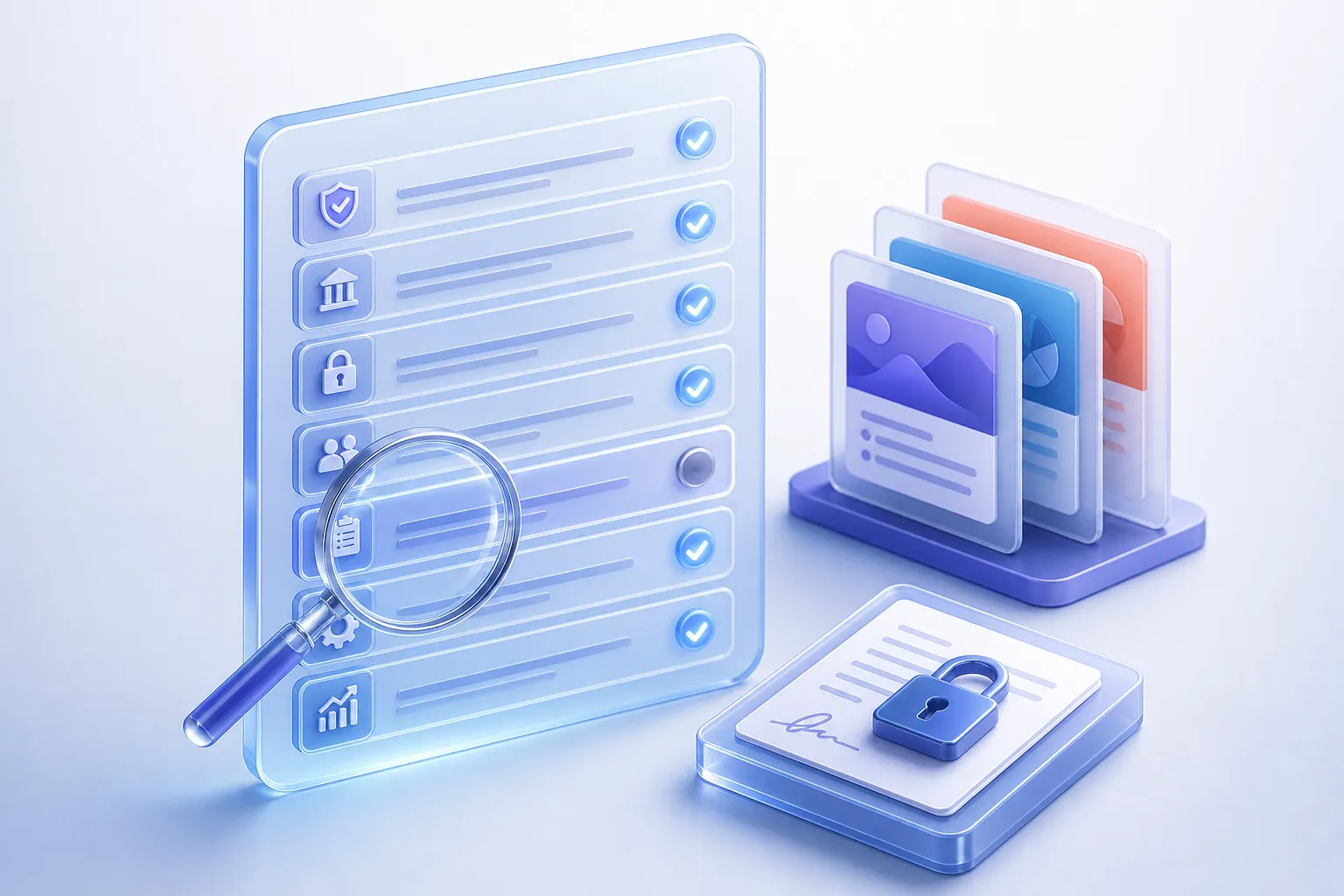
Evaluate a custom software company against a fixed scorecard rather than by impression: case depth, who actually writes the code, delivery process, review quality, security and compliance, code and IP ownership, communication overlap and exit terms. Score every shortlisted vendor on the same criteria and ask for evidence, not assurances.
For the security row, use a public yardstick instead of the vendor's own wording: NIST's Secure Software Development Framework (SP 800-218) lists the practices a mature team follows, from defining security requirements and reviewing code to handling vulnerabilities after release. Ask which of them the vendor applies and where each one shows up in their process.
| Criterion | What good looks like | How to verify |
|---|---|---|
| Case depth | Shipped products in a similar domain or of similar complexity | Ask for a walkthrough of one case: the problem, the trade-offs, the result |
| Who writes the code | A named team with seniority you can see | Meet the tech lead who would run your project, not only sales |
| Delivery process | Short iterations, demos, visible backlog | Ask to see a real sprint report or status update, anonymized |
| Reviews | Detailed, verified client reviews that mention specific work | Read the text of Clutch reviews, not the star average |
| Security and compliance | Documented practices for access, secrets and data handling | Ask how they would handle your regulated data, step by step |
| Code and IP ownership | You own the code and repositories from day one | Check the contract and who creates the repositories |
| Communication overlap | Several shared working hours per day with your team | Ask which hours the team is available and who attends your calls |
| Exit terms | Clean handover, documentation, no lock-in | Ask what happens, concretely, if you end the contract in month three |
The pattern behind this list is ownership. Gartner's CIO survey found that only 48% of digital initiatives meet or exceed their business outcome targets, while the group that co-owns delivery between technology and the business reaches 71%. A vendor that treats you as a co-owner — shared backlog, shared metrics, shared decisions — is the one to pick.
What should a custom software development contract include?
A sound contract gives you ownership of the code and all project assets from day one, defines how scope changes are priced, states the acceptance criteria for each release, sets confidentiality and data-protection terms, and describes the handover if either side ends the engagement. If any of these is missing, ask for it before signing.
What red flags predict a failed custom software project?
The clearest red flags are a fixed price before any discovery, a sales team you never get past, no named engineers, reluctance to give you repository access, and an estimate with no stated assumptions. Each one hides risk that you will pay for later, usually as delays or change requests.
What should you ask on the first call?
Use the first call to test how the company thinks, not to hear its pitch. Ask them to describe a project that went wrong and what they changed, who would lead yours, how they estimate, what they need from you, and how you would leave if it didn't work out. The answers separate partners from vendors quickly.
For more on vetting individual developers rather than companies, see how to find an app developer, and for the broader outsourcing decision, our guide to software outsourcing.
How Empat works as a custom software development company
Empat has delivered 300+ projects for clients in 23 markets since 2013, with offices in San Francisco, London and Kyiv and a 5.0 rating on Clutch. We start with a paid discovery that produces a written plan, give clients repository access from day one, bill transparently and use an AI-augmented workflow in which every line is reviewed by an engineer.
One example: the consumer app Obimy, which connects people who live apart, has passed 10 million downloads on iOS and Android and reached the top of the US App Store, ahead of Tinder, Pinterest and Netflix. On the platform side, PayFlow Engine is a white-label payouts and commissions engine for marketplaces that replaced custom-built systems. You can browse the rest in our case studies or see how we run product development.
If you are not ready to commit to a build partner, software development consulting is the lighter first step: an independent view of scope, stack and estimate before you sign. And if the system you need is a CRM, our guide to custom CRM development covers that build-versus-buy decision in detail.
FAQ
What does a custom software development company do?
A custom software development company designs, builds and maintains software made for one client's specific needs — a product, platform or internal system that off-the-shelf SaaS can't cover. A full-service company handles discovery, UX and UI design, engineering, QA, deployment and ongoing support, and can work as a fixed-scope project team, a dedicated team or an extension of your own engineers.
How much does custom software development cost in 2026?
It depends on scope, integrations, compliance and team location. At Empat, discovery starts from $5,000 over one to two weeks, a proof of concept from $15,000, an MVP from $30,000 over six to twelve weeks, and a full product from $50,000 over three to twelve months or more. Compare vendors on total cost to a working release rather than on hourly rate alone.
How do I choose a custom software development company?
Score every shortlisted company on the same criteria: case depth in similar work, the named team who would build your product, delivery process, the substance of client reviews, security practices, code and IP ownership, time-zone overlap and exit terms. Ask for evidence on each — a case walkthrough, a real sprint report, a meeting with the tech lead — rather than accepting assurances.
Should I hire a custom software company or freelancers?
Hire freelancers for a well-defined, self-contained task you can manage yourself. Hire a custom software company when the product needs several disciplines working together — design, frontend, backend, QA, DevOps — or when you don't have in-house technical leadership. A company also absorbs the risk of someone leaving mid-project, which a single freelancer cannot.


